





Choose Your Four Easy Herbs
The key to a successful first-time herb garden is choosing plants that are forgiving and grow well indoors. Starting with established small plants from a nursery is often easier than growing from seed. For a versatile and beginner-friendly setup, we recommend
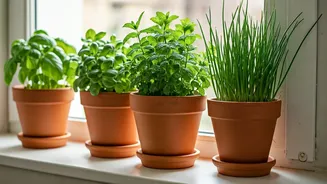
these four culinary staples: Basil is a fast-growing favourite perfect for a sunny spot. Mint is famously hardy and forgiving, but it grows so aggressively it should always be kept in its own pot to avoid crowding out its neighbours. Chives are incredibly low-maintenance, taste great on everything, and can tolerate less light than other herbs. Finally, Parsley, whether flat-leaf or curly, is a cooking essential that does well in the medium light of an east or west-facing window.
Gather Your Simple Supplies
You don’t need much to get started. The most critical items are your pots. Choose containers that are at least 15 cm deep to give roots space to grow. Most importantly, ensure every pot has drainage holes at the bottom; without proper drainage, roots can get waterlogged, which is the most common reason indoor herbs fail. Terracotta pots are a great choice because their porous nature helps prevent soil from becoming too saturated. You will also need a high-quality indoor potting mix, not heavy garden soil, which is too dense for containers. A small watering can and trays or saucers to place under the pots will complete your setup.
Find the Perfect Sunny Spot
Light is the single most important factor for growing healthy herbs indoors. Most herbs, especially sun-lovers like basil, need at least six hours of direct sunlight each day. A south-facing window is the ideal location. If you don’t have one, a west-facing window is the next best option. Herbs like parsley and chives are more tolerant of lower light and can manage in east-facing windows. To prevent your plants from leaning towards the light and growing lopsided, give them a quarter turn every few days. If you notice the stems becoming long and spindly with small leaves, it's a sign your herbs need more light.
Potting Your Herbs for Success
Now for the fun part. Fill your pots with the potting mix. If you bought starter plants, gently remove them from their original plastic containers. You may need to turn them upside down and tap the bottom. Place each plant in its new pot, ensuring the top of its soil base is level with the new soil. Gently fill in the gaps with more potting mix, pressing lightly around the plant. Water them well immediately after planting, allowing the excess to drain out completely. Place the pots on their saucers in your chosen sunny spot. Be mindful of temperature; avoid placing herbs too close to a cold window on a chilly night or right next to a heating vent.
Ongoing Care and Harvesting
Overwatering is a bigger risk than underwatering for most indoor herbs. Before you water, stick your finger about an inch into the soil. If it feels dry, it's time to water; if it's still moist, wait another day. Basil prefers consistently moist soil, while mint is also a moisture-loving plant. When you harvest, snip leaves from the top of the plant. This encourages the herb to grow bushier and fuller. Regular trimming not only gives you fresh ingredients for your meals but also keeps the plants healthy and productive. Don't be afraid to use them—that’s what they’re there for!