


India’s Next Giant Leap in Space
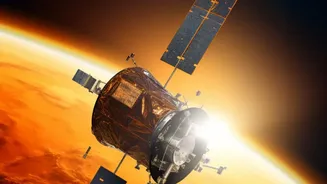
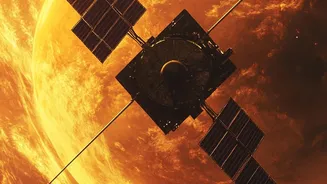
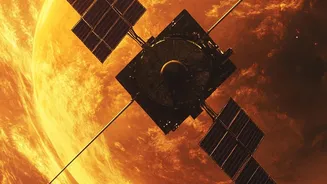
Following the resounding success of its lunar and Martian missions, the Indian Space Research Organisation (ISRO) is setting its sights on the second planet from the Sun. Formally named the Venus Orbiter Mission, Shukrayaan represents India's first dedicated
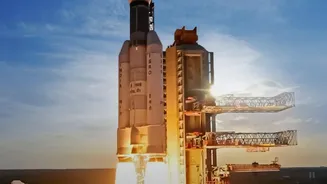
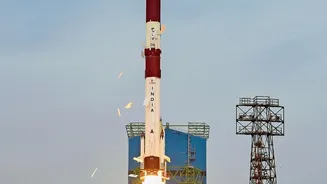
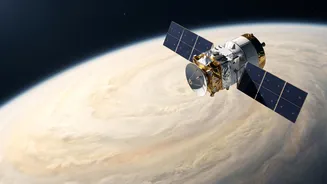
mission to our mysterious planetary neighbour. Approved by the Union Cabinet in September 2024, the mission is currently scheduled for a March 29, 2028 launch aboard the powerful LVM-3 rocket. After a journey of about 112 days, the spacecraft is expected to enter a large elliptical orbit around Venus, beginning a new chapter in India’s interplanetary exploration. The primary goals are to conduct a comprehensive global survey, mapping its volcanic surface, studying its bewildering atmosphere, and investigating its interaction with the solar wind.
The Hostile World of Venus
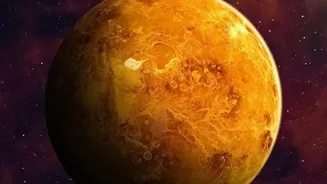
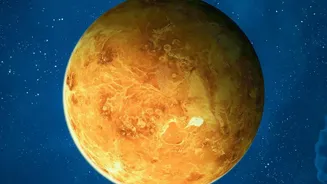
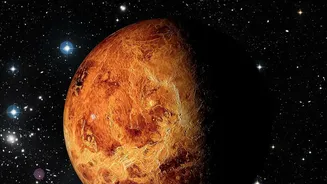
Understanding Shukrayaan’s mission requires appreciating the extreme challenge Venus presents. While similar to Earth in size and mass, it evolved into the most hostile planet in our solar system. Its atmosphere is over 96% carbon dioxide, creating a runaway greenhouse effect that pushes surface temperatures to a staggering 460°C, hot enough to melt lead. The atmospheric pressure at the surface is more than 90 times that of Earth's, equivalent to being 900 meters deep in our ocean. Blanketing the entire planet are thick, corrosive clouds of sulfuric acid, which make visual observation of the surface impossible. Scientists want to understand why this terrestrial planet’s evolution diverged so catastrophically from Earth's, a study that could offer cautionary lessons about our own climate.
A Toolkit for an Alien Atmosphere
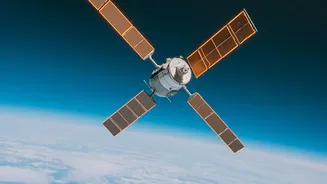
To peer through the thick clouds and analyze the complex chemistry at play, Shukrayaan will carry a suite of sophisticated instruments. Around 19 scientific payloads are planned, comprising a mix of Indian and international contributions. A key instrument for atmospheric study is the Venus Infrared Atmospheric Gases Linker (VIRAL), a collaborative effort with Russia and France. This sensor is designed to analyze the composition of the atmosphere. Another set of instruments will use spectroscopy—observing in infrared, ultraviolet, and submillimeter wavelengths—to identify the chemical fingerprints of various gases and map their distribution. The orbiter will also feature a thermal camera to map cloud temperatures and a lightning sensor to detect electrical discharges, providing clues about atmospheric dynamics. This multi-faceted approach aims to create a holistic picture of Venus's atmospheric structure and behaviour.
The Search for Telling Gases
The mission's sensors are tasked with measuring specific gases that could hold the key to Venus's biggest secrets. The presence and distribution of carbon dioxide, carbon monoxide, and sulfuric acid are central to understanding the planet’s extreme greenhouse effect. But the mission will also hunt for more elusive molecules. Following the contested 2020 detection of phosphine gas in the Venusian clouds, Shukrayaan's VIRAL instrument has the capability to search for this gas. On Earth, phosphine is associated with anaerobic life, so confirming its presence could be a significant, though not definitive, sign of biological processes. Furthermore, sensors like the Venusian Neutrals Analyser (VNA), a contribution from Sweden, will study how particles from the solar wind strip away atmospheric gases, helping explain how Venus lost any water it might have once had.
Beyond the Clouds
While atmospheric study is a major focus, Shukrayaan will also pioneer the exploration of Venus's surface and subsurface. Its flagship instrument is a high-resolution Synthetic Aperture Radar (SAR), which uses radar waves to pierce the dense cloud cover and create detailed maps of the volcanic landscape below. This radar is expected to have up to four times the resolution of NASA's Magellan orbiter from the 1990s. In a world-first for Venus exploration, the mission will also carry a ground-penetrating radar designed to study the shallow subsurface, giving us the first-ever look beneath the planet's scorching crust to understand its geological layers. This combination of atmospheric and geological investigation makes Shukrayaan one of the most comprehensive missions ever sent to Venus.