






Why a One-Way Journey Makes Sense
Vietnam is a long, narrow country stretching over 1,600 kilometres from top to bottom. A typical round-trip flight to either Hanoi or Ho Chi Minh City forces you to waste at least one full day, and the cost of a domestic flight, just to travel all the way
back to your arrival airport. This backtracking is inefficient and eats into your precious holiday time. By booking what is known as an “open-jaw” or “multi-city” ticket, you can fly into one end of the country and fly out from the other. This linear route allows you to explore the nation in a logical, continuous journey. You’ll spend less time in transit and more time immersing yourself in the culture, food, and landscapes that make Vietnam so special. It’s about travelling smarter, not harder.
Booking Your North-to-South Trip
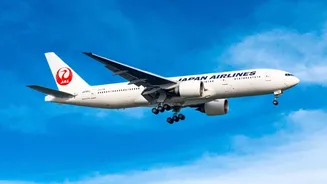
Booking an open-jaw flight is surprisingly simple. When using airline websites or online travel agencies, simply select the “multi-city” search option instead of “round-trip”. You would then enter your flight from India to Hanoi as the first leg and Ho Chi Minh City to India as the second. Contrary to a common myth, this is not the same as booking two expensive one-way tickets; airlines often price these multi-city routes competitively, sometimes on par with a standard return fare. For Indian travellers, the logistics are further simplified by Vietnam's straightforward e-Visa system. The 90-day e-Visa can be applied for entirely online for a modest fee, removing a major hurdle and making a multi-city trip more accessible than ever.
The Northern Start: Hanoi and Ha Long Bay
Begin your adventure in Hanoi, Vietnam's captivating capital. This city is a whirlwind of history, with the French colonial architecture of the Old Quarter, the serene Hoan Kiem Lake, and a legendary street food scene. After a few days soaking in the city's culture, take an essential side trip to one of the country's most iconic landscapes: Ha Long Bay. An overnight cruise on a traditional junk boat amidst thousands of towering limestone karsts is an unforgettable experience. Alternatively, nearby Ninh Binh province offers a similar landscape of karst mountains and winding rivers, often called “Ha Long Bay on land.” This northern leg provides a perfect introduction to the natural beauty and deep-rooted traditions of Vietnam.
The Journey South: Hue and Hoi An
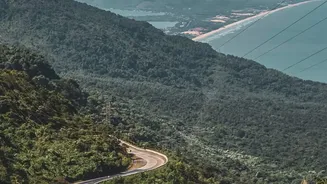
From the north, your journey continues southward into Central Vietnam. For speed, a short domestic flight of about an hour will take you to Da Nang or Hue. For a more scenic and immersive experience, consider the Reunification Express train. This epic rail journey takes over 30 hours to traverse the entire country but can be broken up with stops along the way. A key stop is Hue, the former imperial capital, where you can explore the vast Citadel and the majestic tombs of ancient emperors. A short distance away is the enchanting town of Hoi An. Famous for its well-preserved Ancient Town, which glows with thousands of silk lanterns at night, Hoi An is a hub for bespoke tailoring, charming cafes, and some of the best food in the country.
The Southern Finale: Ho Chi Minh City
Your journey culminates in the vibrant, high-energy metropolis of Ho Chi Minh City (HCMC), still often referred to by its former name, Saigon. This city is the economic heart of Vietnam and feels distinctly more modern and fast-paced than Hanoi. Here, you can delve into the country's recent history with a visit to the War Remnants Museum and the famous Cu Chi Tunnels, an immense network of underground passages used during the Vietnam War. HCMC also serves as the gateway to the lush, tropical expanse of the Mekong Delta, a region of rivers, swamps, and floating markets. After exploring the city's dynamic streets and the surrounding delta, you will be perfectly positioned at Tan Son Nhat International Airport for your direct flight home, concluding an epic, seamless adventure.