



The Dangers of an Unprotected Aadhaar
Your 12-digit Aadhaar number is more than just an ID; it's a key linked to your bank accounts, mobile number, and other critical services. When you provide a full, unmasked photocopy, you are handing over a complete set of your demographic data. According
to cybersecurity experts, this information can be exploited by criminals if it falls into the wrong hands. Unsecured copies of Aadhaar cards, often stored carelessly by various establishments, can be a goldmine for fraudsters. The data can be misused for a range of illegal activities, including identity theft, opening fraudulent bank accounts, obtaining SIM cards in your name, or carrying out financial scams. The risk isn't just theoretical; numerous cases have highlighted how leaked Aadhaar details have been used to commit financial and identity fraud.
Official Advice: Avoid Sharing Photocopies
The Unique Identification Authority of India (UIDAI), the body that issues Aadhaar, has repeatedly cautioned the public against freely sharing photocopies of their Aadhaar cards because they can be misused. Official guidelines state that unlicensed private entities, including many hotels and cinemas, are not permitted to collect or keep copies of Aadhaar cards under the Aadhaar Act 2016. The Future Crime Research Foundation (FCRF) also recently issued an advisory, warning travellers that the routine procedure of providing Aadhaar photocopies at hotels could expose them to cyber fraud. Instead of full copies, both UIDAI and security experts strongly recommend using a safer alternative for verification purposes.
The Solution: What is a Masked Aadhaar?
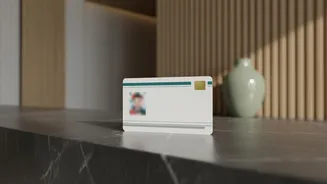
The recommended safer alternative is the Masked Aadhaar. This is an official version of your e-Aadhaar where the first eight digits of your 12-digit Aadhaar number are replaced with characters like 'XXXX-XXXX', leaving only the last four digits visible. Your name, address, photograph, and QR code remain unchanged. This simple redaction prevents the unnecessary disclosure of your full Aadhaar number, significantly reducing the risk of misuse while still serving as a valid proof of identity. UIDAI has clarified that the Masked Aadhaar is a legally valid document for identity verification in most situations, including at airports and hotels.
How to Download Your Masked Aadhaar
Getting a copy of your Masked Aadhaar is a straightforward process that you can do online. You will need your Aadhaar number and access to the mobile number registered with it to receive a one-time password (OTP).
1. Visit the official MyAadhaar portal (myaadhaar.uidai.gov.in).
2. Log in using your Aadhaar number and the captcha code. Enter the OTP sent to your registered mobile number.
3. Once logged in, navigate to the 'Download Aadhaar' service.
4. Before you download the document, you will see a checkbox option that asks, “Do you want a masked Aadhaar?”.
5. Select this checkbox.
6. Click 'Download' to save the password-protected PDF file to your device. The password is a combination of the first four letters of your name in capital letters and your year of birth (e.g., NAME1990).
You can also download a Masked Aadhaar through the mAadhaar app or your DigiLocker account.
Using Your Masked Aadhaar Confidently
When asked for ID at a hotel or any other private entity, you can confidently present a printout of your Masked Aadhaar or show the digital version. It is a valid proof of identity. While an establishment can have its own internal policies, they cannot legally claim that a Masked Aadhaar is invalid, as UIDAI has confirmed its validity for verification. In fact, UIDAI is moving towards a system where hotels and other private entities will be required to register and use digital verification methods like QR code scanning instead of collecting physical photocopies, further strengthening data security. If an establishment insists on a full, unmasked copy, you can question the need for it and explain the security risks, offering the masked version as a secure and legally valid alternative.