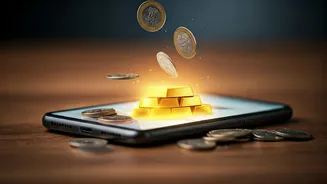









What is Spare Change Investing?
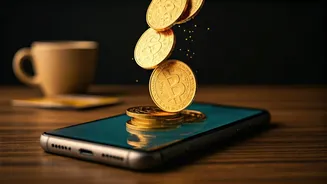
Imagine every time you pay for your chai, groceries, or a cab ride using UPI, the app rounds up the amount to the nearest ₹10. If your bill is ₹87, the app rounds it to ₹90, and that extra ₹3 is automatically invested for you. This is the core idea behind
'spare change' or 'micro-investing' apps. They are designed to make saving and investing a seamless, almost invisible habit. Instead of you having to remember to set aside money, the technology does it for you in small, manageable increments that you barely notice leaving your account. This approach removes the psychological barrier of needing a large sum to start investing, making it incredibly popular among young, digitally-native users who are new to the world of finance.
How This Works for Digital Gold
These spare change apps have cleverly applied this model to one of India’s most-loved assets: gold. When you link your bank account or UPI to one of these platforms (like Jar, Gullak, or Siply), they track your digital spending. With each transaction, the rounded-up 'spare change' is collected. Once this small change accumulates to a certain amount (often as little as ₹10), the app uses it to buy 24K digital gold on your behalf. This gold is not a cryptocurrency or a complex derivative; it's a digital record of real, physical gold held in secure, insured vaults by third-party providers like Augmont Goldtech or MMTC-PAMP. You are essentially buying tiny fractions of a gram of gold with every purchase, slowly building your holdings without any active effort.
The Key Advantages
The primary appeal is accessibility. You can start investing in gold with just a few rupees, a feat impossible in the physical market where the minimum purchase is usually one gram. This democratises gold ownership. Secondly, it fosters a disciplined saving habit. The automatic nature of the investment means you are consistently accumulating an asset without feeling the pinch. For many who struggle to save, this 'set it and forget it' method is a game-changer. Finally, digital gold is highly liquid. You can sell your holdings through the app anytime at live market rates, and the money is typically credited to your bank account quickly. Many apps also offer the option to have your accumulated gold delivered to your doorstep in the forms of coins or bars, though this involves making charges.
Understanding the Costs and Risks
While convenient, this method isn’t free. When you buy digital gold, a 3% Goods and Services Tax (GST) is levied, just as with physical gold. This is an upfront cost you must factor in. While most platforms offer free, insured storage for a few years, long-term storage might attract a small fee. If you choose to convert your digital gold into physical coins or bars, you'll have to pay 'making charges' and delivery fees, which can be significant. It's also crucial to remember that gold prices are volatile. The value of your investment can go down as well as up. Furthermore, unlike mutual funds or stocks regulated by SEBI, the digital gold sector is still relatively new and operates in a less-regulated environment, making platform choice and due diligence important.
Is This Right For You?
Spare change gold investing is an excellent tool for beginners or those who want to build a saving habit with minimal effort. It’s a low-friction way to start accumulating a traditional asset. However, it shouldn't be your only investment strategy. For more serious, long-term gold allocation, instruments like Sovereign Gold Bonds (SGBs) offer a tax-free maturity and an additional 2.5% annual interest, making them financially superior. Gold ETFs are another option, traded on stock exchanges with high liquidity and lower costs than physical gold. Think of spare change apps as your 'digital piggy bank' for gold—perfect for getting started and building a small corpus, but more seasoned investors should compare it with other regulated, cost-effective options for larger investments.