



Our Sun's Turbulent Temper
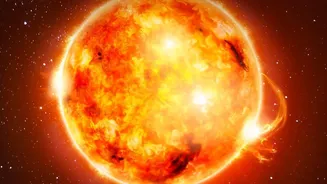
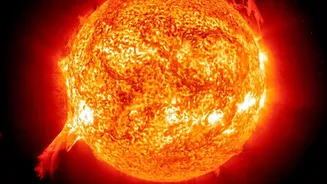
Space weather refers to the changing conditions in space, driven primarily by the Sun. Our star is not always a calm, steady source of light and heat. It can have a turbulent temper, unleashing powerful solar flares, which are intense bursts of radiation.
It also ejects massive clouds of charged particles and magnetic fields known as coronal mass ejections (CMEs). These CMEs travel through space as solar wind, and when they are aimed at Earth, they can cause significant disruptions. Think of it like weather on Earth, but instead of wind and rain, space weather involves streams of high-energy particles and powerful magnetic fields. These phenomena become more frequent during the Sun's 11-year cycle of activity, which we are currently in.
The Invisible Threat to Orbiting Tech
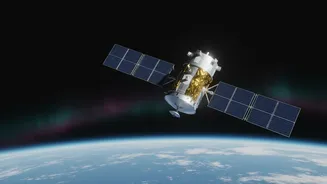
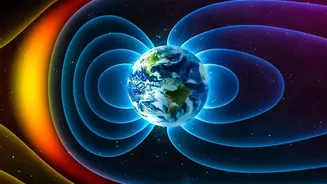
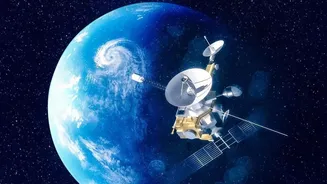
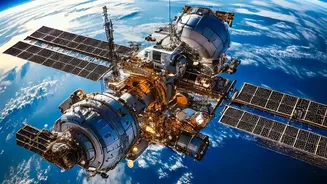
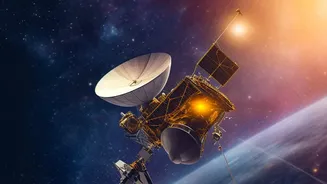
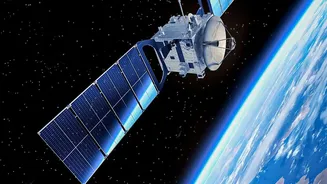
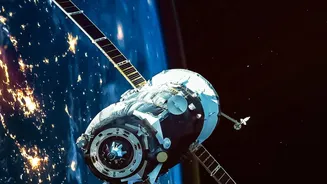
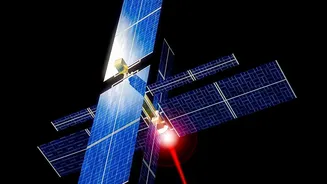
When a solar storm hits Earth, our planet's magnetic field offers substantial protection to life on the ground. However, the thousands of satellites in orbit are far more exposed. The effects are numerous and dangerous. High-energy particles can damage or destroy sensitive satellite electronics, effectively 'frying' their circuits. The intense radiation can also cause what is known as 'satellite drag'; it heats and expands Earth's outer atmosphere, creating more resistance for satellites in low-Earth orbit. This increased drag can slow them down, causing their orbits to decay and potentially leading to premature re-entry or even collisions. Furthermore, these solar events disrupt the very radio signals satellites use to communicate with us, leading to blackouts for GPS, television broadcasts, and mobile satellite phones.
Seeing the Solar Storm Coming
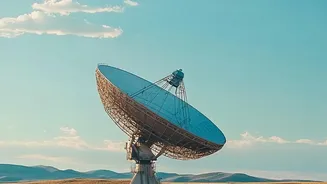
This is where better forecasting becomes essential. Scientists believe that by improving our ability to predict space weather, we can give satellite operators crucial lead time to protect their assets. Historically, warnings for severe geomagnetic storms might have been just 15-30 minutes. However, new missions and technologies are aiming to extend this warning window significantly. Advanced models, often incorporating artificial intelligence, are being developed to analyse data from solar observatories and predict the size, speed, and trajectory of CMEs with greater accuracy. This is less like predicting if it will rain and more like tracking a cyclone, allowing for proactive preparation rather than reactive scrambling.
Ducking and Covering in Orbit
With a reliable forecast in hand, satellite operators are not helpless. An advance warning allows them to take protective measures. One common strategy is to put a satellite into 'safe mode'. This involves temporarily shutting down sensitive, non-essential systems and orienting the spacecraft to best protect its vital components from the incoming storm of particles. For satellites facing increased atmospheric drag, operators can perform course corrections to boost them back into a stable orbit, preventing long-term damage or loss of the asset. In essence, better forecasting gives operators time to 'duck and cover' in space, safeguarding multi-million dollar hardware and the services it provides.
Securing India’s Digital Lifeline
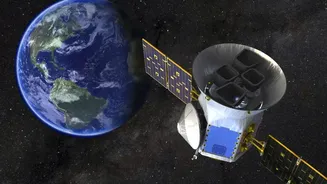
For India, the stakes are incredibly high. The nation's push towards a 'Digital India' relies heavily on a robust satellite infrastructure. From the UPI payments system to agricultural monitoring and national defence, satellites are the backbone of our modern economy and security. A major space weather event could disrupt these services, with significant economic and strategic consequences. Recognising this, India is at the forefront of monitoring these threats. ISRO's Aditya-L1 mission, India's first dedicated solar observatory, is a critical tool in this effort. Positioned 1.5 million kilometres from Earth, it provides a frontline view of the Sun's activity, feeding vital data into global forecasting models and helping to protect India's assets in space.