






Genuine Empathy and Human Connection
Artificial intelligence can simulate conversation and even detect sentiment, but it cannot genuinely empathize. True empathy—the ability to understand and share the feelings of another—is fundamental to building trust with clients, resolving conflicts
between colleagues, and leading a team through change. Think of nurses providing compassionate care, managers mentoring their teams, or social workers navigating complex family dynamics. These roles require an emotional intelligence that goes beyond processing data to form real human connections, something AI can only mimic. While an AI can handle routine inquiries, a human is needed to resolve sensitive and emotionally charged issues.
Critical Thinking and Complex Problem-Solving
AI is a powerful tool for finding patterns in vast datasets, but it struggles with critical thinking and applying judgment to its own outputs. Heavy reliance on AI can even diminish our own critical thinking skills. Humans possess the unique ability to ask the right questions, challenge assumptions, and solve problems in novel situations where no historical data exists. When faced with ambiguous information or an unexpected crisis, people can use intuition and context to make a judgment call. This skill is about more than just finding an answer; it’s about interpreting meaning, identifying when an AI-generated result feels wrong, and charting a course through uncertainty.
Ethical Judgment and Moral Reasoning
AI operates on the data and rules it is given, which means it can inherit and amplify human biases. It lacks a true conscience or the ability to navigate moral grey areas. Ethical dilemmas require a deep understanding of values, culture, and the potential human impact of a decision—qualities that cannot be programmed into an algorithm. Whether it’s a leader deciding on layoffs with compassion or an engineer weighing the societal impact of a new product, these moments require a moral compass. This capacity for ethical reasoning and accountability remains a profoundly human domain, ensuring that strategic decisions align with societal values, not just operational efficiency.
Creativity and Strategic Vision
While generative AI can produce text, images, and code, it creates based on existing patterns and data. It remixes, but it doesn't originate from lived experience. True creativity and originality—the kind that leads to breakthrough innovations or a compelling brand vision—stems from human imagination and strategic intent. AI can accelerate brainstorming, but people are still the ones who decide which problems are worth solving and what a company's purpose should be. Leaders use intuition, market understanding, and a vision for the future to set a direction, a task that is far beyond mere computation.
Adaptability and Physical Dexterity
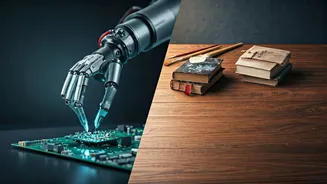
Many roles require the ability to adapt to unpredictable physical environments. Skilled trade professionals like plumbers, electricians, and mechanics must troubleshoot unique problems on-site, often in messy and varied conditions. Surgeons performing complex operations require a combination of fine motor skills, adaptability, and on-the-spot judgment that current robotics cannot match. While robots excel at repetitive tasks on an assembly line, they lack the adaptability and nuanced physical dexterity of a human craftsperson. This ability to respond to the real world in real-time ensures that many hands-on professions remain resilient against automation.