




The Monsoon Cleanse
The monsoon season, typically from June to September, offers a much-needed respite. The consistent and often heavy rainfall acts as a natural scrubber for the atmosphere. Rain droplets capture and wash away particulate matter and other pollutants, leading
to a significant improvement in air quality. This cleansing effect provides some of the clearest skies of the year in otherwise heavily polluted urban centres. However, this relief is temporary. As soon as the rain stops for a day or two, pollution levels from traffic, industry, and waste burning can quickly rebound. Furthermore, while heavy rain is effective, light drizzles can sometimes worsen conditions by increasing humidity, which causes certain pollution particles to swell and linger in the air.
The Post-Monsoon Turn
As the southwest monsoon retreats around October and November, a combination of factors creates a perfect storm for pollution, especially across the Indo-Gangetic Plain. Firstly, the weather becomes dry and winds slow down, meaning there's no rain to wash pollutants away and not enough wind to disperse them. This period coincides with the harvest of the paddy crop in neighbouring states like Punjab and Haryana. Farmers burn the leftover crop stubble to quickly clear their fields, a practice that releases enormous plumes of smoke containing fine particulate matter (PM2.5). These smoke plumes are carried by northwesterly winds and descend upon cities like Delhi, often contributing 30-40% of the city's particulate pollution on peak days. This agricultural smoke mixes with local urban emissions and pollutants from Diwali fireworks, triggering the first severe pollution episodes of the season.
The Great Winter Trap
Winter is when India's urban air quality crisis becomes most visible, with cities frequently blanketed in a thick, toxic smog. The primary culprit is a meteorological phenomenon called a temperature inversion. On cold, clear winter nights, the ground cools rapidly, making the air near the surface colder than the layer of air above it. This warmer air acts like a lid, trapping the cold, dense, and polluted air below and preventing it from mixing vertically and dispersing. This effect is worsened by calm, slow-moving winter winds that fail to blow the accumulated pollutants away. The mixing height—the altitude to which pollutants can disperse—can shrink from a kilometre in the summer to just a few hundred metres, concentrating emissions in a much smaller volume of air. Delhi's geography, landlocked and partially enclosed by the Himalayas, further exacerbates this trapping effect.
Summer's Haze and Dust
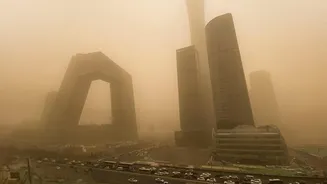
While often considered a 'cleaner' season than winter, summer brings its own set of air quality challenges. The pollution mix shifts from being dominated by PM2.5 to higher levels of coarse PM10 particles and ground-level ozone. Intense heat and dry conditions make it easy for dust to be lifted from unpaved roads, construction sites, and barren land. This is compounded by powerful, hot winds known as the 'Loo', which transport vast quantities of dust from the Thar Desert and West Asia across northern India. At the same time, the combination of intense sunlight and high temperatures accelerates chemical reactions in the atmosphere. These reactions convert pollutants like Nitrogen Oxides (NOx) from vehicle exhaust and Volatile Organic Compounds (VOCs) into ground-level ozone, a harmful pollutant that can damage the lungs.