


A Digital Society's Hidden Vulnerability
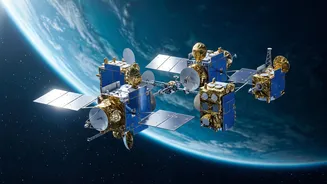
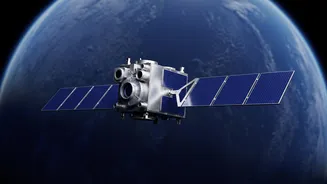
Few of us think about the network of machines orbiting hundreds of kilometres above our heads, but they have become the unsung backbone of modern India. The nation's space economy, though still a small percentage of GDP, has a profound impact, enabling
everything from cyclone warnings that save thousands of lives to the financial transactions and logistics that power our cities. Satellite communications and navigation services are the two largest components of this burgeoning sector. This growing reliance, however, creates a critical vulnerability. As geopolitical tensions rise, space is increasingly seen as a potential warfighting domain, and our dependence on satellites becomes a strategic weakness.
The Simulation's Stark Warning
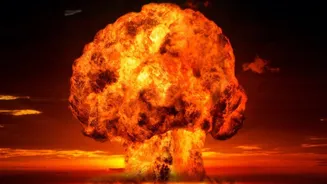
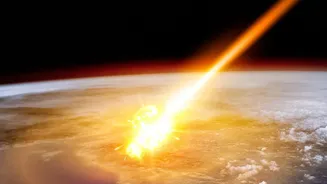
The headline of this story refers to a recent simulation by physicists at the University of Wisconsin-Madison and Princeton University, which paints a devastating picture. Published on the preprint server arXiv in November 2026, their research modelled the impact of a single one-megaton nuclear detonation at an altitude of 500 kilometres. The findings are stark: such an event could disable approximately 98% of all satellites in low-Earth orbit (LEO) within a single week. With over 13,000 satellites currently operating in LEO, this would represent a catastrophic loss of the infrastructure that supports global communications, weather monitoring, and military operations.
It's Not the Blast, It's the Aftermath
Counterintuitively, the initial explosion isn't the main threat. The simulation showed that the first flash of X-rays would instantly disable only about 3% of satellites. The real danger comes from what happens next. The detonation releases a massive number of energetic electrons from nuclear fission. These particles become trapped by the Earth's magnetic field, creating a vast, persistent 'artificial radiation belt'. Satellites orbiting the planet are then forced to fly through this highly radioactive zone again and again. With each pass, their sensitive electronics absorb more radiation, leading to cumulative damage and eventual failure. Within a day, a quarter of the LEO fleet would fail; by day three, 78% would be gone.
A Lesson From History: Starfish Prime
This is not just a theoretical threat. In 1962, the United States conducted the 'Starfish Prime' test, detonating a 1.4-megaton warhead 400 kilometres above the Pacific Ocean. The resulting electromagnetic pulse (EMP) knocked out streetlights in Hawaii, nearly 1,500 kilometres away. More significantly, the artificial radiation belt it created damaged or destroyed roughly one-third of the world's few dozen satellites in orbit at the time, including the pioneering Telstar 1 communications satellite. A similar event today would happen in an orbital environment that is thousands of times more crowded, making the consequences exponentially worse.
Cascading Chaos in Orbit and on the Ground
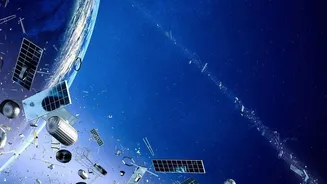
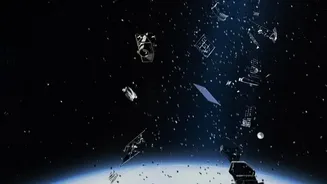
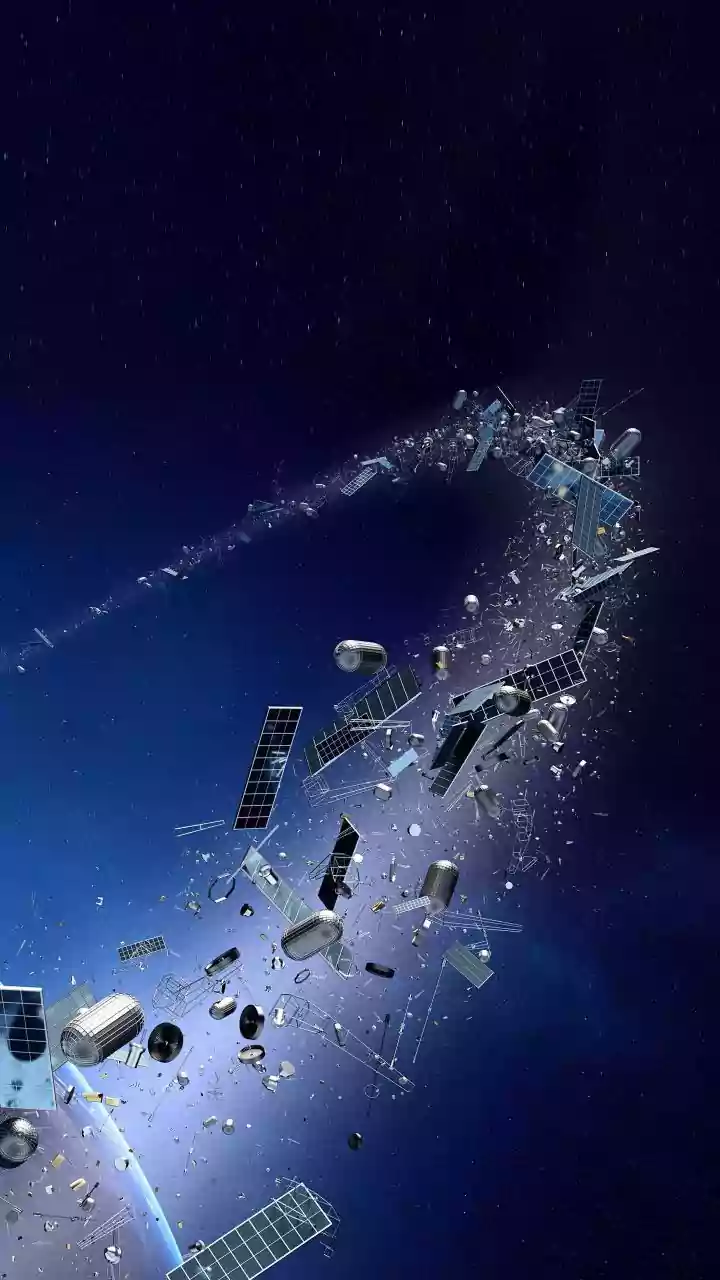
The damage wouldn't stop with the initial wave of electronic failures. As thousands of satellites become defunct, they lose the ability to manoeuvre. The simulation predicts this would lead to about 20 major collisions between dead satellites within two years, compared to just one under normal circumstances. These collisions would generate thousands of new pieces of space debris, creating a cascading chain reaction known as the Kessler Syndrome. This would make launching new satellites incredibly hazardous, as they would face both the lingering radiation and a minefield of debris. On the ground, the loss of services would trigger a prolonged crisis, degrading everything from financial systems to disaster response capabilities.