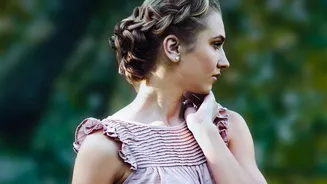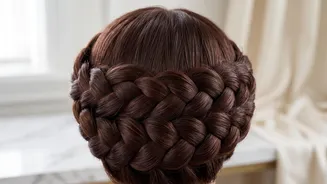


The Classic Dutch Braid Halo
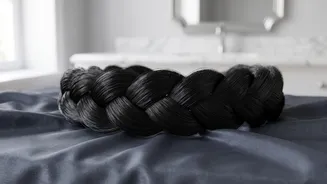
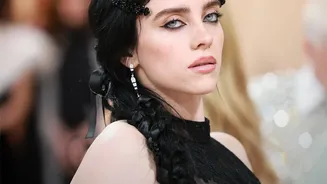
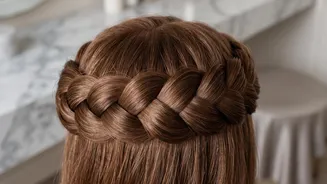
This is the foundational halo style that many others are built upon. It involves creating a single, continuous Dutch braid that starts near one temple and wraps around the entire hairline to meet its starting point. The Dutch braiding technique, where
sections are crossed under instead of over, makes the braid pop for a defined, three-dimensional effect. Pulling out a few soft tendrils around the ears and temples before you start braiding is key. This softens the structured look, making it feel less formal and more romantic while beautifully framing your features. This style is incredibly versatile, working for both special events and elevated everyday wear.
The Messy and Deconstructed Halo
For a more relaxed, bohemian vibe, the messy halo is the perfect choice. This style celebrates texture and imperfection. The key is to start with a texturizing spray to give your hair some grit, which helps hold the 'undone' look. The braid itself is woven more loosely, and once it's pinned in place, you can gently pull and pancake the sections to create volume and a slightly dishevelled appearance. The face-framing tendrils are essential here, often curled into soft waves to blend seamlessly with the romantic, carefree aesthetic. This version is forgiving for braiding beginners and looks effortlessly chic.
The Twisted Rope Halo
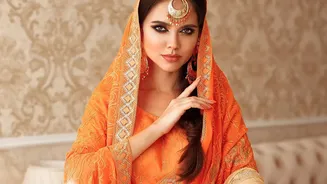
If you find traditional three-strand braiding a bit tricky, the twisted rope halo offers a stunning and simpler alternative. This technique uses two strands of hair twisted around each other to form the 'braid'. You can create two separate rope twists, one on each side of a centre part, and then wrap them up and over the head, pinning them in place like a crown. This method creates a different texture that is soft and elegant. Leaving out tendrils at the front keeps the style feeling gentle and modern. It’s an ideal option for a quick yet sophisticated updo when you're short on time.
The Double Halo Braid
For a look that makes more of a statement, the double halo braid stacks two braids instead of one. This creates a more intricate and layered crown effect. Typically, you would create two parallel braids—one sitting slightly higher on the head than the other—that wrap around completely. This style adds wonderful dimension and visual interest, making it a popular choice for weddings and other formal events. Despite its complex appearance, the technique is simply repeating a classic halo braid twice with smaller sections. The delicate tendrils soften the intricacy of the double braids.
The Half-Up Halo Braid
Combining the best of both worlds, the half-up halo gives you the elegance of a crown braid while still showing off your hair's length. In this variation, only the top section of hair is braided into a halo shape, while the rest is left to flow freely. It's a particularly great style for those with long hair who want the face-framing benefits of an updo without committing to putting all their hair up. After creating the halo with the top sections, you can leave the loose tendrils and the rest of your hair straight, or add soft waves for a cohesive, romantic finish.