



Sailing on Sunlight: A New Kind of Engine
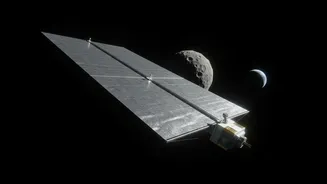
A solar sail works much like a sailboat, but its sail catches light instead of wind. Light is made of particles called photons, which have no mass but carry momentum. When these photons strike a vast, reflective sail in the vacuum of space, they transfer
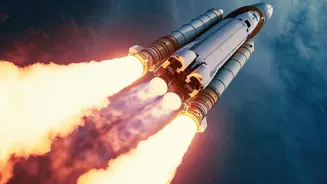
their momentum, giving the spacecraft a tiny, continuous push. Unlike a chemical rocket, which provides a powerful but short-lived burst of energy, a solar sail provides constant acceleration. This relentless, gentle thrust allows a spacecraft to build up tremendous speed over time. The concept eliminates the need for heavy, bulky rocket propellant, which can make up a massive portion of a spacecraft's launch weight. This fundamental shift in propulsion is what makes solar sails a game-changing technology for long-duration missions.
The Engineering Breakthrough: Lighter, Stronger Booms
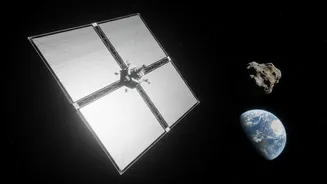
While the theory of solar sailing has been around for decades, making it a practical reality has been a major engineering challenge. The recent breakthrough lies in the materials and deployment systems. NASA's Advanced Composite Solar Sail System (ACS3) mission, which launched in April 2024, is a key technology demonstrator. It is testing new composite booms—the long arms that unfurl and support the sail—that are lighter and more rigid than the metal ones used in previous designs. These advanced carbon fiber materials can be packed into a tiny volume for launch—the entire ACS3 spacecraft is roughly the size of a microwave—before deploying a sail about half the size of a tennis court in space. The ability to create large, stable sails supported by lightweight structures is the critical innovation that makes more ambitious solar sail missions feasible.
The Perfect Tool for Asteroid Hopping
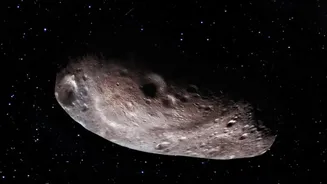
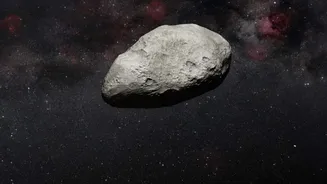
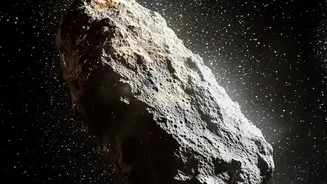
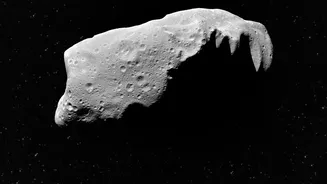
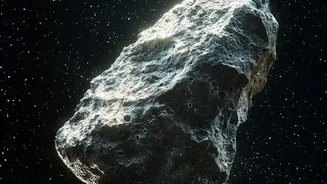
Near-Earth Asteroids (NEAs) are an ideal destination for solar sail-powered probes. There are thousands of them, and their low gravity makes them relatively easy to orbit or fly by. For a conventional rocket, visiting multiple asteroids would require enormous amounts of fuel to repeatedly slow down, enter orbit, and speed up again. A solar sail, however, excels at this kind of cosmic island-hopping. By adjusting the angle of the sail relative to the sun, the spacecraft can slowly but surely alter its trajectory, spiraling from one target to the next without using propellant. This capability was the goal of NASA's NEA Scout mission, which, despite ultimately failing to communicate after launch, was designed to demonstrate this exact concept: a low-cost reconnaissance of a near-Earth asteroid using a solar sail. The continuous thrust is perfect for making the small, precise course corrections needed to navigate the asteroid belt.
Lowering the Cost of Exploration and Defense
The most significant transformation driven by solar sails is economic. By eliminating the need for onboard propellant, probes can be smaller, lighter, and therefore much cheaper to launch. Missions that were once prohibitively expensive are now becoming attainable. This opens the door not just for scientific exploration, but for commercial activities like asteroid mining and crucial planetary defense initiatives. Cheaper probes could be sent to survey a wide range of asteroids, cataloging their composition and identifying potential threats or resources. Solar sails could also be used to move small asteroids, providing a potential method for deflecting a celestial body on a collision course with Earth. The technology enables a future where a fleet of low-cost robotic scouts can constantly monitor our cosmic neighborhood, a task that would be financially impossible with conventional rockets.