







The Official Freeze
Direct trade between the two nuclear-armed neighbours has been effectively frozen since 2019. Following the Pulwama terror attack, India revoked Pakistan's Most Favoured Nation (MFN) status and imposed a 200% tariff on imports. In response, Pakistan suspended
bilateral trade, a policy it reinforced after India's 2019 revocation of Article 370 in Jammu and Kashmir. While Pakistan made a brief exception for essential medicines and pharmaceuticals, the official channels for commerce remain largely shut, with the Wagah-Attari land border—a key trade artery—sealed. This political standoff has, on paper, decimated what was once a billion-dollar trade relationship.
The Dubai Detour
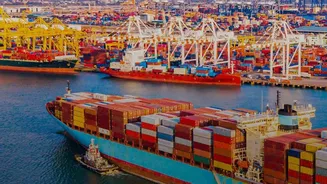
Economic necessity, however, often finds a way. A significant volume of Indian products continues to flow into Pakistan through a well-established grey market. This indirect trade is primarily routed through third-country ports like Dubai, and also Singapore and Colombo. Indian companies export their goods to these hubs, where they are stored in bonded warehouses. Local firms then re-label the products, altering the country of origin on documents before re-exporting them to Pakistan. This workaround allows Pakistani businesses to access much-needed Indian goods, albeit at a higher price, while circumventing direct trade bans. Estimates from the Global Trade Research Initiative (GTRI) suggest this indirect trade could be worth as much as $10 billion annually, dwarfing the official figures from when trade was open.
From Pharma to Textiles
The demand for Indian goods in Pakistan is not arbitrary; it's driven by cost, quality, and geographical proximity. Pakistan's pharmaceutical industry, for instance, has historically relied heavily on raw materials, or Active Pharmaceutical Ingredients (APIs), from India. Resuming direct imports could save the sector an estimated $2 to $3 billion annually. Similarly, Pakistan's textile industry is facing increased costs. A decline in domestic cotton production has forced mills to import from distant markets like Brazil and the United States, adding an estimated $5 billion in extra expenses that could be mitigated by sourcing from India. Other products in high demand include organic chemicals, machinery, sugar, vegetables, and steel, all of which are more expensive to source from farther away.
Growing Calls for a Rethink
The 'fresh attention' on this issue stems from the mounting economic pressure within Pakistan. The Pak-India Business Council recently estimated that the trade suspension has cost Pakistan's economy an estimated $40 billion since 2019. Business leaders are becoming increasingly vocal, urging the government to reconsider its stance. They argue that the current policy is self-defeating, forcing them to pay higher prices for goods that are readily available next door. Proponents of resuming trade point out that it would lower transportation costs, reduce production costs for key industries, and ultimately benefit consumers facing high inflation. Pakistani Foreign Minister Ishaq Dar has publicly acknowledged these demands from the business community, stating the government would examine the possibility of resuming trade.
A Political Tightrope
Despite the compelling economic arguments, the path to normalizing trade is fraught with political obstacles. For Pakistan's government, any move to reopen trade must be balanced against its long-held position on Kashmir. For India, the stance remains that terror and trade cannot go together. While the business communities on both sides see mutual benefit, the deep-seated political and historical tensions present a formidable barrier. The Foreign Office in Pakistan has confirmed it is reviewing proposals but clarified that there is no change in its position for now, highlighting the delicate tightrope Islamabad must walk between economic pragmatism and political principle.