







A Policy Shift Opens the Stars
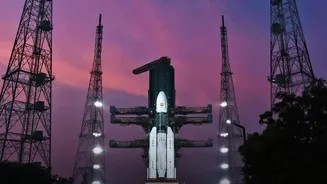
The game-changer was the Indian Space Policy of 2023. This landmark policy framework officially ended the government's monopoly and invited private companies to participate in every aspect of the space value chain. From building rockets and satellites
to providing space-based data services, the door is now wide open. The government established the Indian National Space Promotion and Authorisation Centre (IN-SPACe) as a single-window agency to promote, authorise, and regulate private space activities. This has unleashed a wave of entrepreneurship, with the number of private space startups skyrocketing from just a handful in 2019 to over 400 today. This isn't about replacing ISRO; it's about expanding the entire ecosystem. ISRO will continue to focus on advanced research, scientific missions, and national strategic projects, while private industry drives manufacturing and commercial services.
Upstream and Downstream: Where Are the Jobs?
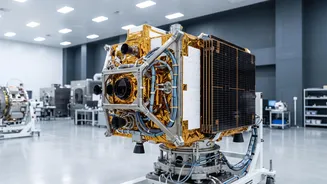
The space economy is broadly divided into two segments. 'Upstream' activities involve the design, manufacturing, and launch of space assets. This is the traditional realm of rocket scientists and aerospace engineers. Startups like Skyroot Aerospace, which is developing the Vikram series of launch vehicles, and Agnikul Cosmos, known for its 3D-printed rocket engines, are major employers in this domain. However, the largest explosion of job growth is expected in the 'downstream' sector. This involves using data from satellites to create applications and services for various industries on Earth. Think satellite communications, high-resolution mapping, agricultural monitoring, disaster management, and financial services. Companies like SatSure and Pixxel are leading the charge, using satellite imagery to provide 'decision intelligence' for sectors like agriculture, infrastructure, and climate research. This part of the industry requires a different but equally crucial set of skills.
The Most In-Demand Roles and Skills
The modern space sector needs more than just rocket scientists. While aerospace, mechanical, and electronics engineers are still core to the industry, the fastest-growing demand is for software and data professionals. Key roles include Aerospace Software Engineers, who develop flight software and mission algorithms, and Data Scientists who can analyse vast amounts of satellite imagery and telemetry. Proficiency in programming languages like Python, C++, and MATLAB is highly sought after. Other critical roles include Avionics Engineers, Propulsion Engineers, and Systems Engineers who understand how all the complex parts of a spacecraft interact. Beyond pure tech, the ecosystem also needs professionals in space law, policy, and business development. Strong analytical and problem-solving skills, creativity, and the ability to work in collaborative teams are universally essential.
Charting Your Course into the Space Sector
For students, the path into the space industry has become much broader. A Bachelor's degree in fields like Aerospace, Mechanical, Electronics, or Computer Science from a reputable institution provides a strong foundation. While the Indian Institute of Space Science and Technology (IIST) remains a direct pipeline to ISRO, graduates from IITs and NITs are now aggressively recruited by private firms. To stand out, gaining practical experience through internships, university space clubs, and personal projects is crucial. For those already in the workforce, upskilling in data science, machine learning, and geospatial information systems (GIS) can open doors to the downstream applications sector. The industry is no longer confined to a few cities; while Bengaluru, Hyderabad, and Chennai are major hubs, the growth of remote work and data services is diversifying opportunities.