





A Mid-Month Darkness for Stargazers
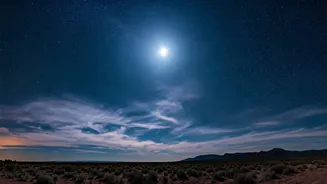
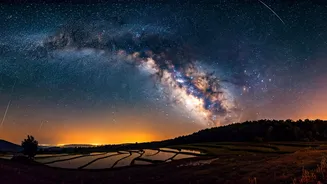
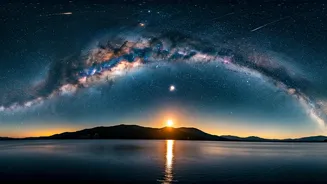
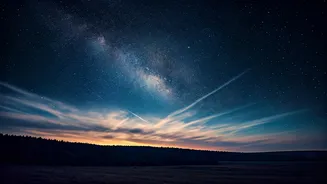
The best time for any deep-sky observation is around the New Moon, when the sky is at its darkest. This month, the New Moon falls on July 14. With no moonlight to wash out the fainter stars, this is the perfect window to gaze upon the sprawling, hazy
band of the Milky Way. For the best view, find a location far from city lights, let your eyes adjust for about 20 minutes, and look towards the southern sky. The New Moon phase also provides an ideal opportunity for those with binoculars or a small telescope to hunt for Comet 10P/Tempel 2, which will be passing through our cosmic neighbourhood.
The Moon's Dance with the Planets
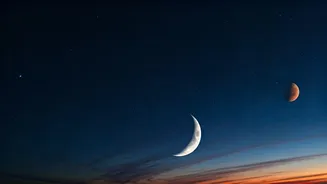
July offers several beautiful opportunities to see our Moon visit its planetary neighbours. In the pre-dawn hours of July 11 and 12, the waning crescent Moon will form a stunning lineup with Mars and Saturn in the eastern sky. Mars will appear as a reddish dot, while brighter Saturn will shine nearby, making for an easy-to-spot celestial gathering. Just a few days later, on July 17, the script flips to the evening sky. Look to the west just after sunset to see a sliver of a crescent Moon paired beautifully with the brilliant planet Venus. This luminous duo will be visible for about two hours after the sun goes down, offering a perfect photo opportunity.
The Main Event: The Full Buck Moon
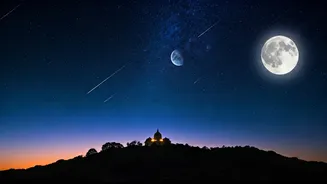
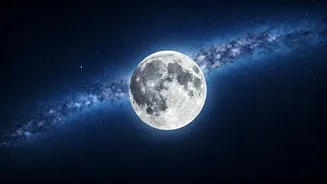
The highlight of the lunar month arrives on Wednesday, July 29, with the Full Buck Moon. This full moon reaches its peak illumination during the day for those in India, but it will appear perfectly full on the nights of July 28 and 29. To see it at its most dramatic, look to the east just after sunset to watch it rise. As it hangs low on the horizon, it may appear unusually large and take on a warm, golden hue—a phenomenon known as the "Moon Illusion".
What's in a Name? The Buck Moon Explained
The name "Buck Moon" comes from Native American traditions, specifically the Algonquin people, who observed that this was the time of year when male deer (bucks) begin to grow their new antlers. This rapid growth symbolizes renewal and maturation. Other traditional names for July's full moon include the "Thunder Moon," referencing the frequent summer storms, and the "Hay Moon," tied to the hay harvest season in Europe. These names all point to the peak of summer, a time of energetic growth and abundance in the natural world.
A Challenging Meteor Shower Finale
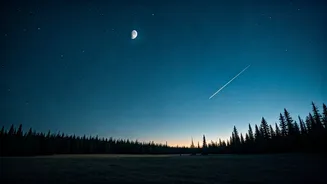
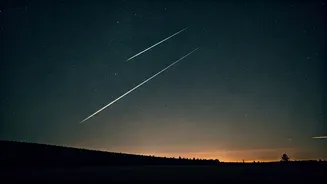
July also hosts the peak of the Southern Delta Aquariids meteor shower, which is active from mid-July to late August and peaks around July 30. This shower is known for producing a steady stream of faint meteors, best viewed from the Southern Hemisphere but still visible in the north. However, in 2026, viewing will be a significant challenge. The shower's peak coincides with the nearly full Buck Moon, whose bright glare will unfortunately wash out all but the brightest shooting stars. While you might still catch a few fireballs if you're patient, dedicated meteor watchers may have better luck waiting for the famous Perseids, which will put on a much better show in the dark skies of August.