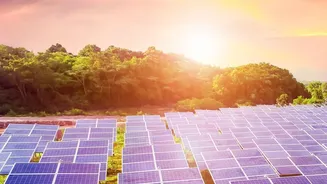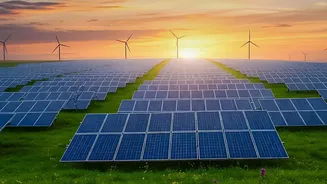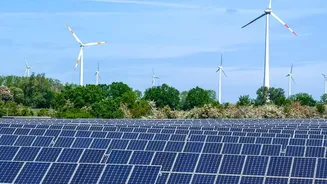






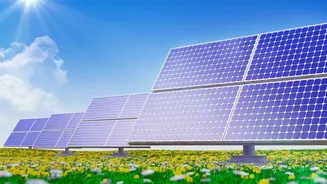
As India grapples with the twin challenges of climate change and growing energy demands, an innovative solution is taking root in its farmlands. Agrivoltaics, or solar panel canopy farming, offers a way to harvest both crops and sunlight.
What is Solar Canopy Farming?
Imagine a farm
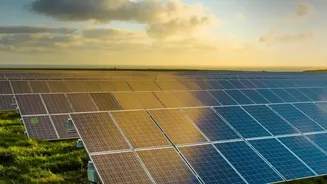
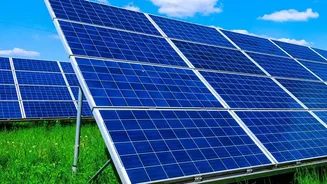
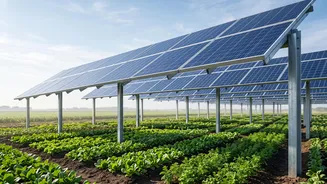
where crops grow under a canopy of solar panels. This is the core concept of agrivoltaics, also known as dual-use solar. Instead of dedicating land exclusively to either agriculture or energy generation, this model integrates them. Solar panels are mounted on elevated structures, typically several metres high, creating a semi-shaded environment underneath where crops can be cultivated. This innovative land-use strategy addresses the growing competition for land, a critical issue in a densely populated country like India. By sharing land, agrivoltaics aims to optimize output, producing both food and clean energy from the same plot.
A Two-Pronged Adaptation Strategy
The primary appeal of agrivoltaics lies in its dual benefits. First, it provides a crucial adaptation tool for farmers facing erratic weather. The shade from the panels protects crops from extreme heat and reduces water loss through evaporation, sometimes by as much as 30%. This creates a more stable microclimate, which can improve yields for certain shade-tolerant crops like leafy greens, tomatoes, and various medicinal plants. Second, it offers farmers a diversified and stable income stream. By generating electricity, they can power their own irrigation pumps—reducing reliance on diesel—and sell surplus power to the grid, creating a reliable 'third crop' beyond their agricultural harvest.
Government Pushes for a Sun-Powered Harvest
The Indian government is actively exploring a policy framework to promote agrivoltaics on a national scale. Recent announcements from the Ministry of New and Renewable Energy indicate that a dedicated program is being planned, potentially as part of the next phase of the PM-KUSUM scheme, which supports solarization in agriculture. Officials estimate that about 30% of India's 160 million hectares of cropland could be suitable for such projects, with states like Maharashtra, Rajasthan, and Karnataka showing significant potential. The initial goal is to target a capacity of 5 GW, with a potential 10 GW component under a revised PM-KUSUM 2.0.
Challenges on the Ground
Despite its promise, the path to widespread adoption is not without hurdles. The primary barrier is cost; agrivoltaic systems are 25–30% more expensive than conventional ground–mounted solar farms due to the need for elevated structures. Furthermore, not all crops are suitable for cultivation under panels, with initial studies suggesting lower yields for sunlight–intensive crops like rice. There are also practical concerns about designing systems that allow for the movement of farm machinery and ensuring that the model benefits India's small and marginal farmers, who make up over 85% of the farming community. Agriculture Minister Shivraj Singh Chouhan has emphasized that any policy must be built around the practical needs of these farmers, ensuring it doesn't compromise cultivation.
The Future of Farming is Integrated
For Indian agritech, solar canopy farming represents a significant leap towards a more resilient and sustainable agricultural sector. It directly addresses the interconnected challenges of food security, water scarcity, energy independence, and climate change. As pilot projects in states like Gujarat and Rajasthan provide more data, and as equipment becomes more specialised, the business case is expected to strengthen. The technology moves the farmer from being a passive recipient of climate shocks to an active participant in the energy transition, turning rural lands into engines of both agricultural and renewable growth. The success of agrivoltaics will depend on creating farmer–centric policies, innovative financing models, and a deep understanding of local agro–climatic conditions.