
The Irresistible Allure of the Curve
It’s easy to see why rounded furniture became so popular. After a long period dominated by sharp minimalism, the design world was ready for a softer touch. Curved sofas, arched cabinets, and round tables feel inherently welcoming and organic. Inspired
by forms found in nature, these pieces can make a room feel calmer and more inviting, a concept backed by environmental psychology. This shift toward more human-centered design prioritises comfort and flow, with curved silhouettes helping to guide movement through a space and encourage conversation by creating more intimate seating arrangements. A curved sofa can define a lounge area in an open-plan home without needing walls, acting as both a functional item and a piece of sculpture.
When Curves Become a Problem
Like any popular trend, the enthusiasm for curves led some to believe that more is always better. The result can be a 'fully rounded' room, where every major piece of furniture features a sweeping line or a soft edge. While it may sound cozy in theory, interior designers warn that an overabundance of curves can make a space feel unstructured and chaotic. Without the grounding presence of straight lines, the special, sculptural quality of a curved piece gets lost in a sea of similar shapes. The room can feel undefined, lacking the anchor points that create a sense of stability and order. Rather than appearing sophisticated, a room with too many curves risks feeling whimsical or thematically overdone, losing the intended elegance.
Finding Balance with Straight Lines
The secret to successfully using the curved furniture trend in its current, more mature phase is simple: balance. The most dynamic and visually interesting rooms create a dialogue between different shapes. It’s the interplay between curved and linear forms that truly makes a space compelling. Think of it as creating contrast. An angular coffee table can highlight the gentle sweep of a sofa, while a rectangular rug can provide a firm foundation for a set of rounded armchairs. This juxtaposition gives each piece room to breathe and allows its unique shape to be fully appreciated. Some designers suggest aiming for a rough ratio, such as 70% straight-lined elements to 30% curved, to ensure the space feels harmonious.
How to Incorporate Curves Strategically
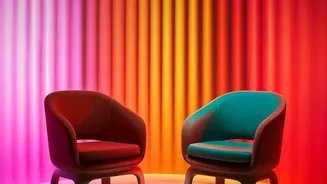
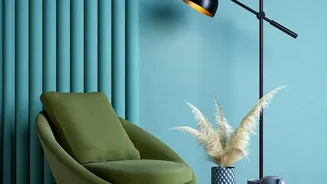
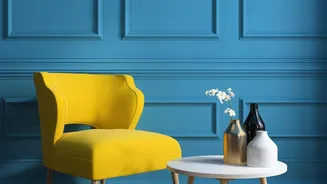
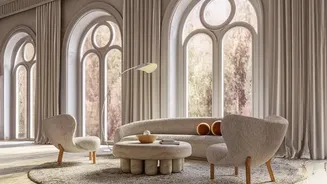
Instead of filling a room with curves, choose one or two statement pieces to serve as focal points. A sculptural, curved sofa or a pair of enveloping armchairs can anchor a living room. Let these larger pieces be the stars and support them with linear elements. For example, frame a curvy sofa with rectangular side tables or place it against a wall with sharp, geometric artwork. If you're hesitant to commit to a large piece, start small. Accessories are an excellent way to introduce the trend without overwhelming your space. An arched floor lamp, a circular mirror, a round ottoman, or even vases with soft silhouettes can add the perfect touch of organic shape. These smaller items can echo the curves of a larger piece, creating a cohesive and thoughtfully layered look.