

Inside the Stellar Cradles
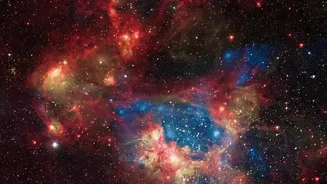
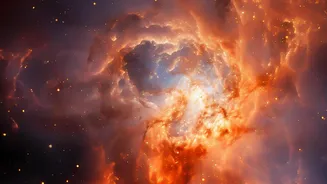
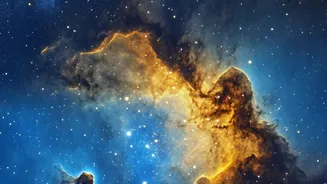
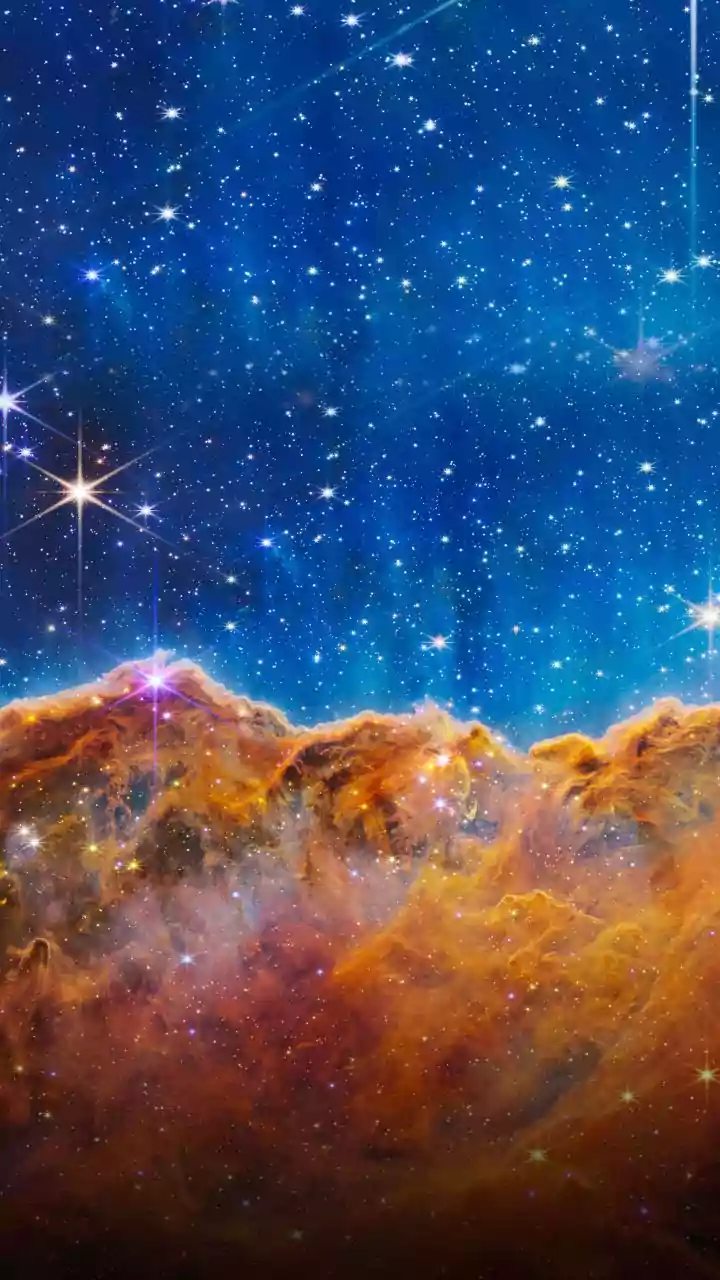
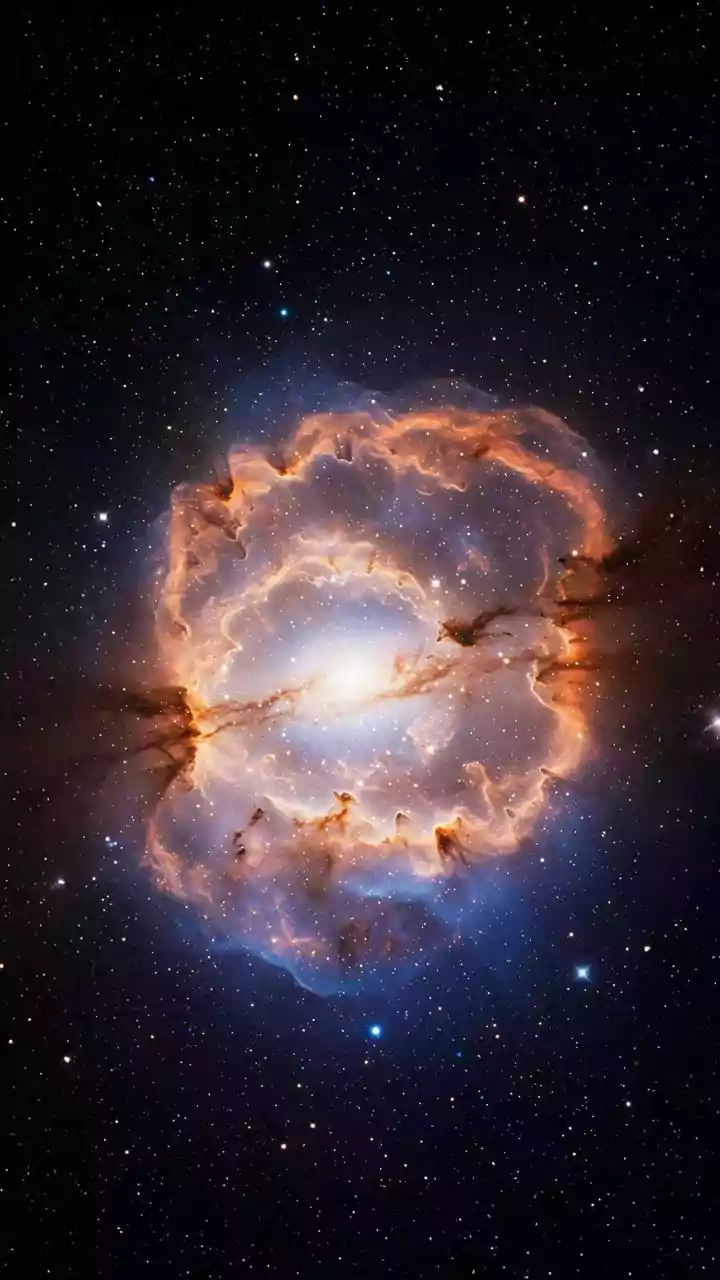
So, what exactly is a 'star nursery'? These are immense, swirling clouds of gas and dust, scientifically known as nebulae. Think of them as cosmic cradles where the raw materials for stars and planets lie in wait. For millennia, these regions have captivated
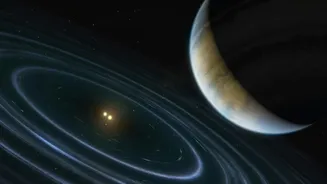
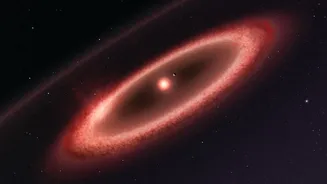
astronomers, but their dense, dusty nature has kept many of their secrets hidden. Within these clouds, gravity slowly pulls clumps of material together. When a clump becomes dense and hot enough, it ignites, and a star is born. What is left over forms a swirling pancake of gas and dust around the newborn star, a structure called a protoplanetary disk. This disk is where the real magic of planet formation happens. It is a chaotic, dynamic environment where tiny dust grains begin to stick together, growing over millions of years from pebbles to boulders, and eventually into full-fledged planets. This is essentially how our own Solar System is believed to have formed billions of years ago.
Webb’s Unparalleled Infrared Vision
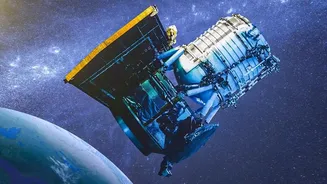
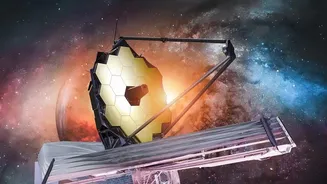
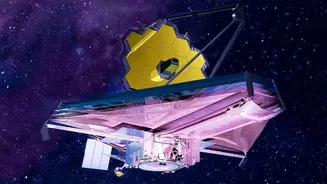
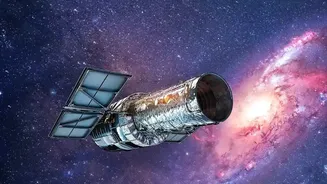
Observing this process is incredibly challenging. The very dust that forms planets also obscures them from view, acting like a thick fog to telescopes that see in visible light, like the Hubble Space Telescope. This is where the James Webb Space Telescope (JWST) has a revolutionary advantage. Webb is designed to see the universe in infrared light. This longer wavelength of light can penetrate through the dense dust clouds, allowing astronomers to peer directly into the heart of these stellar nurseries and witness the planet-forming process up close. Its sensitivity allows it to not only image these regions with stunning clarity but also to perform spectroscopy—breaking down the light to read the chemical composition of the gas and dust. This capability turns the telescope into a cosmic detective, searching for the specific chemical fingerprints of planetary building blocks.
Searching for Planetary Fingerprints
What are these 'signs of planets' that Webb is looking for? It is a combination of chemical and structural clues. Structurally, astronomers look for gaps or rings within the protoplanetary disks. These features are often tell-tale signs that a young, growing planet is carving a path through the disk, sweeping up material as it orbits its star. Chemically, JWST is hunting for the ingredients of life as we know it. By analyzing the light filtering through the disk's gas, it can identify the presence of key molecules like water, carbon dioxide, methane, and ammonia. Recent JWST studies have revealed the richest hydrocarbon chemistry seen to date in a protoplanetary disk around a young star. Finding these molecules in the regions where rocky planets are expected to form provides a tantalizing glimpse into the chemical environment available to new worlds, helping scientists understand if the building blocks for habitable planets are common throughout the galaxy.
Postcards from the Cosmic Frontier
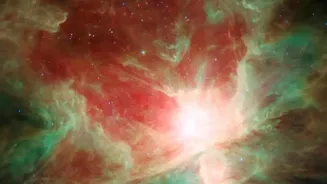
Recent observations have already yielded breathtaking and sometimes baffling discoveries. In the famous Orion Nebula, the nearest massive star-forming region to Earth, Webb has identified hundreds of free-floating, Jupiter-sized objects. Intriguingly, many of these objects exist in pairs, now nicknamed 'Jupiter Mass Binary Objects' or JuMBOs. These objects are too small to be stars but are not orbiting a parent star, challenging current theories of how both stars and planets form. In other studies, Webb has shown that protoplanetary disks around very small stars can last much longer than previously thought—up to 30 million years instead of the typical 10 million—potentially giving planets more time to form. These concrete findings demonstrate that planet formation is a diverse and complex process, with different pathways and outcomes depending on the local cosmic environment.
Connecting the Dots to Our Own Origin
Every image and data point sent back by Webb from these distant nurseries is more than just a pretty picture; it is a piece of our own cosmic history. By studying how new solar systems are assembled, astronomers can refine their models of how Earth and its neighbors came to be. It is a race against time, as the gas and dust in these disks are eventually blown away by the radiation from their parent star, closing the window for planet formation. The telescope's ability to analyze the chemical makeup of these environments is crucial for understanding what kinds of planets might emerge. For instance, discovering a disk rich in carbon could mean any rocky planets that form there might be carbon-poor, as the element evaporated into the surrounding gas. Each discovery helps us understand the variables—time, chemistry, and dynamics—that lead to the vast diversity of planets seen across the galaxy.