








Prioritise Hot, Freshly Cooked Meals
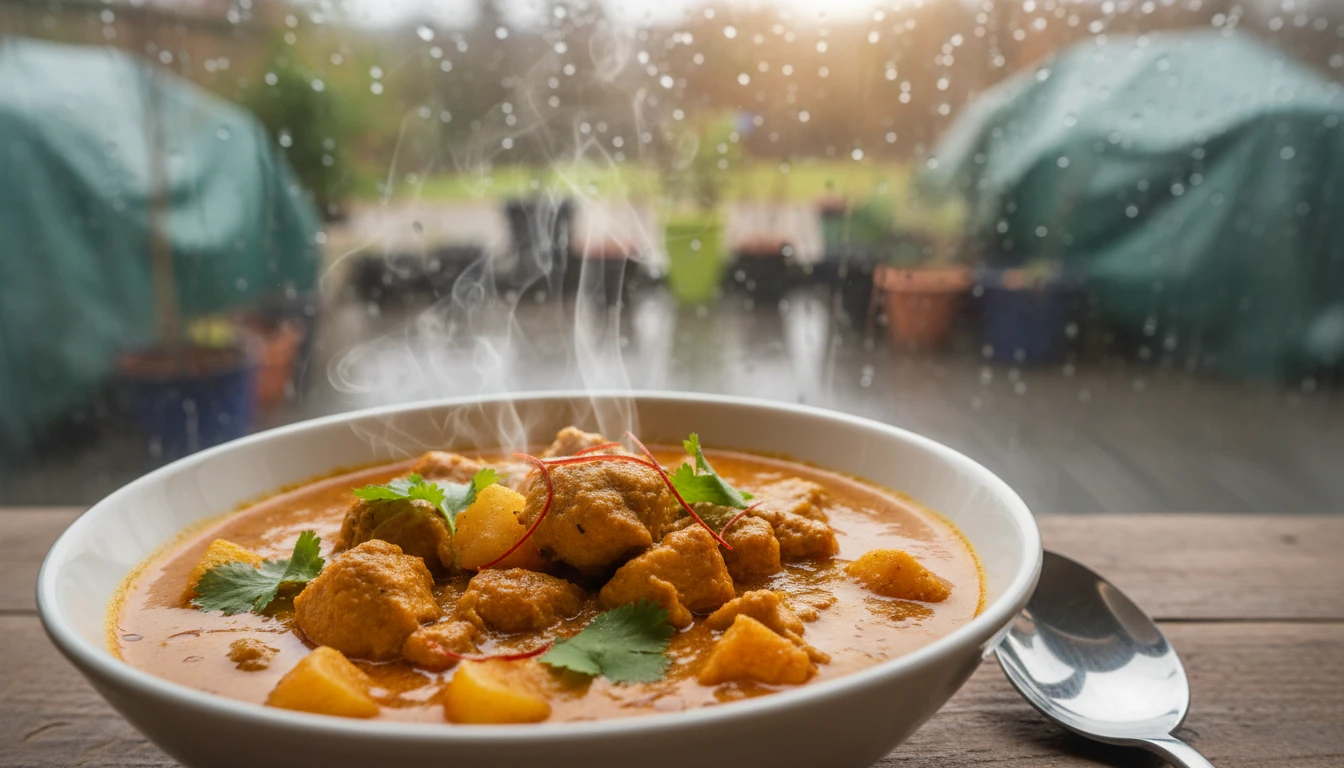
The high humidity during the monsoon creates an ideal breeding ground for bacteria and fungi, causing food to spoil faster. To minimise risks, always opt for meals that are served hot and have been freshly prepared. According to both modern food safety
science and traditional Ayurvedic principles, warm food is easier to digest when the body's metabolism naturally slows down in the damp weather. Simple, light meals like khichdi, dal, and vegetable soups are excellent choices as they are nourishing and easy on the digestive system. Avoid eating food that has been left at room temperature for more than two hours and make sure to reheat leftovers thoroughly until they are steaming hot before consumption.
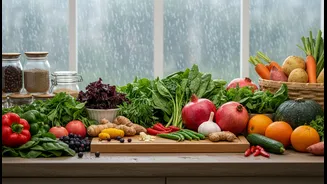
Handle Fruits and Vegetables with Extra Care
Thoroughly washing produce is non-negotiable during the monsoon. Fruits and vegetables can harbour harmful bacteria and germs from contaminated soil and water. Scrub all items under clean, running water. For leafy greens like spinach and coriander, which grow close to the ground and can trap dirt, a soak in salt water or a mild vinegar solution is recommended before cooking. It's also wise to avoid raw salads when eating out, as you cannot be sure of the water quality or hygiene practices. Steaming your vegetables is a safer alternative to eating them raw. When it comes to fruits, choose those with thick, intact skins like bananas and pomegranates, and peel them yourself just before eating.
Be Smart About Street Food Cravings
The temptation of street-side bhutta or samosas is undeniable, but it's a major source of foodborne diseases during this season. If you do indulge, be extremely selective. Opt for vendors who maintain high standards of hygiene, using clean utensils and proper waste disposal systems. Always choose items that are prepared fresh in front of you and served piping hot, as high temperatures kill most harmful germs. It's best to avoid items like pani puri where the water is stored in open containers, and anything with raw chutneys or garnishes like chopped onions and coriander that can easily get contaminated. Fried snacks like freshly made pakoras or samosas are generally safer bets than cold or pre-prepared items.
Boost Your Immunity with Spices and Herbs
Ayurveda has long recommended using specific spices during the monsoon to aid digestion and boost immunity. Incorporating ingredients like ginger, turmeric, garlic, black pepper, and cumin into your daily cooking can help strengthen your body's defences against seasonal infections. These spices have natural antimicrobial and anti-inflammatory properties. Drinking herbal teas made with tulsi, ginger, or cinnamon is another excellent way to stay warm and healthy. A small piece of ginger with rock salt before a meal can also help improve digestion, which tends to be weaker during the rainy season.
Ensure Your Water is Safe
Waterborne diseases like typhoid and cholera are rampant during the monsoon due to the increased chance of water supply contamination. Never drink water from an unknown source. At home, it is safest to drink water that has been boiled for at least one minute or passed through a reliable water purifier. Remember that ice can also be a source of contamination, so avoid drinks with ice from unknown sources, especially from street vendors. When you're out, stick to bottled water to be safe.
Practice Impeccable Kitchen Hygiene
Your kitchen is the first line of defence against illness. The Food Safety and Standards Authority of India (FSSAI) advises keeping all food preparation surfaces clean and sanitised. Use separate cutting boards and utensils for raw meat and vegetables to prevent cross-contamination. Store food in airtight containers to protect it from excess moisture and pests. Regularly clean your refrigerator and ensure it is set to the correct temperature, at or below 4°C, to keep perishables fresh. Lastly, always wash your hands thoroughly with soap and water before handling food and before eating.