


The Ultimate Resupply Problem
For any long-term human presence on the Moon, packing enough supplies is simply not an option. The cost of launching every meal, every litre of water, and every breath of air from Earth is astronomical. For missions longer than about 120 days, constant
resupply becomes unsustainable. This logistical nightmare is forcing space agencies like NASA to think like off-grid farmers. The goal is to build a self-sufficient lunar outpost using 'in-situ resource utilization' (ISRU), which means living off the land. This involves transforming the Moon from a barren rock into a place that can sustain life, a monumental task that begins with solving the most basic human needs: food, water, and air.
Can You Farm on the Moon?
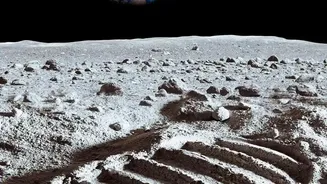
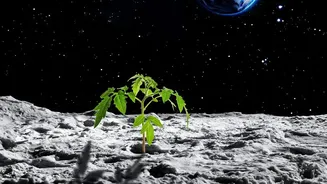
The short answer is yes, but it's incredibly difficult. The Moon's 'soil,' known as regolith, is not like the rich loam in a terrestrial garden. It's essentially crushed rock, devoid of the organic matter and vital nutrients plants need to thrive, like nitrogen. In a landmark 2022 experiment, scientists at the University of Florida successfully grew a small plant called Arabidopsis thaliana in actual lunar regolith samples brought back by the Apollo missions. While the seeds did sprout, the plants showed signs of significant stress, growing slower and remaining smaller than their Earth-soil counterparts. This proved that while regolith isn't toxic enough to prevent germination, it needs serious help to become a viable agricultural substrate.
Turning Moon Dust into Soil
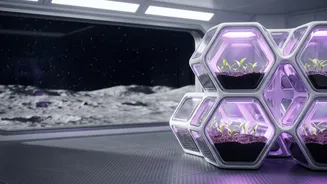
Researchers are exploring several ways to make lunar regolith farm-friendly. One promising method is to treat it like poor-quality soil on Earth and add fertilizer. Experiments have shown that adding even tiny amounts of organic material, like composted astronaut and plant waste, can dramatically improve plant growth in regolith simulants. Another strategy involves creating a beneficial microbiome. On Earth, plants rely on bacteria and fungi to help them access nutrients locked in the soil. Scientists are testing the introduction of nitrogen-fixing bacteria and symbiotic fungi to lunar soil simulants to see if they can create a living soil that naturally supports crops like chickpeas. Alternatively, we might bypass regolith altogether. Hydroponic and aeroponic systems, which grow plants in nutrient-rich water or mist, are being tested for lunar applications. These methods use less water and allow for precise control over the nutrients plants receive.
Closing the Loop: Food and Life Support
Growing food on the Moon is about more than just a fresh salad. Plants are a critical component of a 'bioregenerative life support system' (BLSS). This is a closed-loop ecosystem where the waste from one part of the system becomes the resource for another. Plants would absorb the carbon dioxide exhaled by astronauts and, through photosynthesis, produce breathable oxygen. They would also help purify wastewater through transpiration. Meanwhile, human waste, such as urine and feces, could be processed and converted into fertilizer for the plants. This creates a sustainable cycle where virtually everything is recycled. Ground-based demonstrators like 'Lunar Palace 1' in China have already tested these closed-loop systems with human crews for extended periods, proving the concept is viable.
Testing on Earth and in Space
Before building a greenhouse on the Moon, these systems must be rigorously tested. Much of the initial research is done using lunar regolith simulants, which are materials created on Earth to mimic the chemical and physical properties of Moon dust. International collaborations are also underway. NASA, the Canadian Space Agency, and the German Aerospace Center recently announced plans for a ground-based test facility to develop a Lunar Agriculture Module. The insights gained from experiments on the International Space Station, which have successfully grown crops like lettuce and chili peppers, are also invaluable for understanding how plants adapt to low-gravity and high-radiation environments. Ultimately, robotic missions will likely deploy small-scale, automated test beds on the lunar surface before astronauts begin constructing the first extraterrestrial farms.