







An Ambitious Launch Cadence
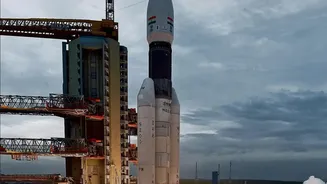
The announcement of seven targeted launches signals a new era of high-frequency operations for ISRO. According to Chairman V. Narayanan, the next mission is scheduled to take place within the next two months, with two satellites already built and several
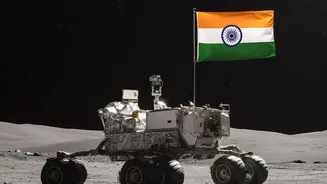
others in the final stages of integration. This increased tempo demonstrates the agency's maturing production capacity and mission planning capabilities, moving from proving its abilities to scaling its operations. This busy schedule is a clear declaration of intent, showcasing India's readiness to ramp up its presence in orbit and solidify its position as a major global player in the space sector.
Paving the Way for Gaganyaan
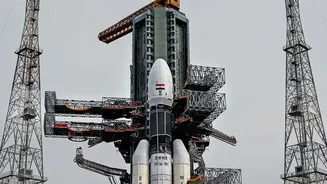
A cornerstone of the upcoming launch schedule is the first uncrewed mission for the Gaganyaan program, India's ambitious endeavor to send astronauts into orbit. This mission is a critical precursor to the eventual crewed flight, designed to test the human-rated launch vehicle, life support systems, and re-entry procedures necessary to ensure astronaut safety. The Gaganyaan project envisages launching a crew of three members to an orbit of 400 km for a three-day mission. Successfully executing this uncrewed flight is a crucial step toward India becoming only the fourth nation in the world to achieve independent human spaceflight capability.
Boosting Commercial and Strategic Capabilities
Beyond the landmark Gaganyaan test, the upcoming launches will deploy a diverse range of satellites for both national and international customers. These missions will enhance India's strategic assets, including satellites for Earth observation, navigation, and secure communications. On the commercial front, the increased launch frequency strengthens the business arm of ISRO, New Space India Limited (NSIL). By providing reliable and cost-effective launch services, ISRO is capturing a larger share of the global space economy. This push is supported by growing infrastructure, including the new launch complex at Kulasekarapattinam in Tamil Nadu, which is expected to be commissioned within the fiscal year to handle more frequent launches, especially for smaller satellites.
The Rise of Private Collaboration
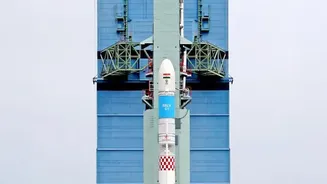
The accelerated schedule comes at a time when India's private space sector is also hitting major milestones. The announcement of the seven launches was made following the successful maiden orbital launch of Skyroot Aerospace's Vikram-1 rocket, a landmark achievement for a private Indian company. ISRO's leadership has championed this collaboration, noting that the number of space startups in India has grown from just one to over 400 since reforms were introduced in 2020. By acting as a mentor and partner, ISRO is fostering a robust ecosystem where public and private entities work together, driving innovation and expanding India's overall capacity in space.