






The Science of Living Light
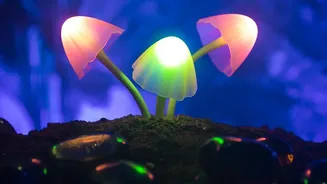
The magic behind glowing plants is a natural phenomenon called bioluminescence, the same process that allows fireflies and certain deep-sea creatures to produce their own light. Scientists are harnessing this by inserting genes from bioluminescent organisms,
most commonly fungi, into the DNA of plants. Early attempts used genes from fireflies, but recent breakthroughs have focused on fungal bioluminescence. This is because the chemical pathway in glowing mushrooms is surprisingly compatible with the natural metabolism of plants. This synergy allows the genetically modified plant to create a self-sustaining glow without needing to be 'charged' by an external light source, unlike fluorescent materials. Researchers in China and companies in the US have successfully engineered several species, including petunias, roses, and tobacco plants, that emit a visible, continuous light.
From Lab Curiosity to Commercial Product
What was once a niche scientific experiment is now a tangible product. US-based biotech company Light Bio made headlines by releasing the 'Firefly Petunia' to the American market, the first commercially available bioluminescent plant. These petunias emit a soft glow, described as similar to moonlight, with the flower buds shining most brightly. The project built on years of research, including earlier crowdfunding attempts like the 'Glowing Plant' project from 2013, which ultimately faced challenges in achieving significant brightness. Today, companies like Light Bio and China's Magicpen Bio are pushing the technology forward, creating more varieties and working to increase the light's intensity. While current products are marketed as novelties for home and garden, the long-term vision remains ambitious.
The Promise of Greener Cities
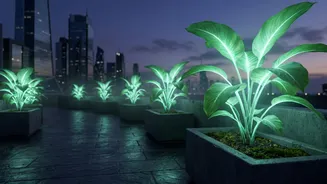
The ultimate goal for this technology is to reduce our reliance on electricity for public lighting. Streetlights are a major source of energy consumption and carbon emissions for cities. Replacing them with self-sustaining, living trees that absorb CO2 could have a profound environmental impact. Proponents envision parks, pathways, and public squares illuminated by glowing flora, creating not only energy savings but also a unique, natural aesthetic that could boost tourism and the nighttime economy. Furthermore, this form of lighting is far gentler than bright, artificial LEDs, potentially reducing light pollution that disrupts nocturnal ecosystems and human sleep patterns.
The Hurdles on the Horizon
Despite the excitement, significant challenges remain before glowing trees can replace streetlights. The most critical issue is brightness. The light emitted by current plants is still far too dim to provide the level of illumination required for public safety on roads and city streets. Researchers are actively working to make the plants ten times brighter, but they are not yet a viable replacement for modern LEDs, which are themselves highly efficient. Another major hurdle is public and regulatory acceptance of genetically modified organisms (GMOs). Releasing GMO trees into the environment on a mass scale raises concerns about unintended ecological consequences, such as the potential for gene transfer to wild relatives. Gaining the trust of both regulators and the public will be crucial for widespread adoption and requires a careful, transparent approach to addressing safety and environmental concerns.