






What Exactly is Agrivoltaics?
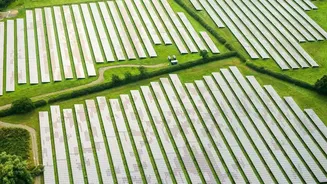
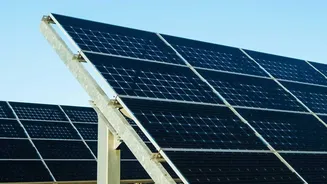
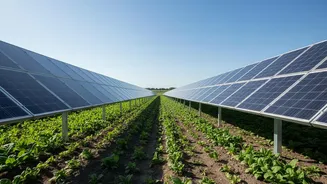
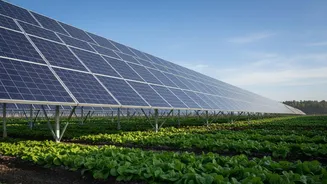
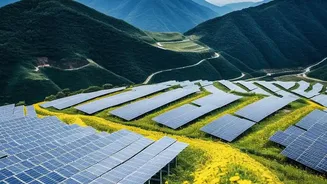
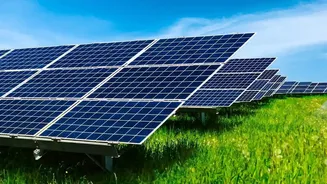
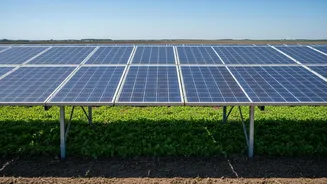
Agrivoltaics, sometimes called agri-PV, is the practice of using the same piece of land for both agriculture and solar power generation. Instead of covering fields entirely with ground-mounted panels, this method installs them on raised structures, several
metres high, allowing crops to be cultivated underneath or between the rows. The concept is a direct response to a growing conflict: India needs vast amounts of land for its ambitious renewable energy targets, but also needs to protect its fertile agricultural land to ensure food security. By making land serve two purposes, agrivoltaics presents a compelling win-win, turning farms into dual-purpose powerhouses that can harvest the sun twice.
The Government's Green Light
India's push for agrivoltaics is increasingly visible in its policy initiatives. The Pradhan Mantri Kisan Urja Suraksha evam Utthan Mahabhiyan (PM-KUSUM) scheme, launched in 2019, is a cornerstone of this effort. The scheme encourages farmers to install solar power plants on their land and sell electricity to the grid, boosting their income. While it initially focused on barren land, it now explicitly allows for agrivoltaic setups on cultivable land. There is strong momentum for a more dedicated approach, with recent discussions around PM-KUSUM 2.0 suggesting a specific component for agrivoltaics, potentially supported by viability gap funding to help offset the high initial costs. This signals a clear government intention to move agrivoltaics from pilot projects to a mainstream agricultural practice.
The All-Important Shade Factor
The central challenge of agrivoltaics lies in managing shade. Solar panels inevitably block some sunlight, which can impact crop growth. However, the effect isn't always negative. Research from institutions like the Central Arid Zone Research Institute (CAZRI) has shown that the microclimate created under panels can be beneficial. The shade reduces heat stress and water evaporation, which can be a major advantage in India's hot and arid regions. Studies have found that while yields for light-hungry crops like wheat can decrease, shade-tolerant crops such as leafy greens, legumes, tomatoes, and certain spices can thrive. The latest updates in the field focus on optimizing this balance through smart design, like using semi-transparent panels, spacing rows strategically, or even employing vertical panels to catch morning and evening sun while minimizing midday shade.
More Than Just a Power Play
The benefits of agrivoltaics extend far beyond electricity generation. For farmers, it offers a crucial diversification of income. The sale of solar power can provide a stable revenue stream, acting as a financial buffer against unpredictable crop yields and market prices—a concept some call the reliable "third crop". This dual income has the potential to dramatically increase earnings, with one pilot project in Rajasthan demonstrating a near ten-fold increase in income per acre. Environmentally, the practice supports water conservation by reducing soil evaporation and contributes significantly to India's climate goals by expanding decentralised clean energy. It also helps reduce the financial burden on distribution companies (DISCOMs) that heavily subsidise electricity for agriculture.
Hurdles on the Horizon
Despite its immense potential, the path to widespread adoption is not without obstacles. The high upfront investment for elevated panel structures is a major barrier for many small and medium-sized farmers. There is also a lack of standardised designs suited to India's diverse agro-climatic zones, and more long-term research is needed to identify the best crop-and-panel combinations for different regions. Farmer acceptance and training are other key challenges, as the technology requires new skills and a shift in traditional farming practices. Creating clear policies on land use, developing fair pricing for the electricity sold, and ensuring that the benefits are shared equitably with farmers are critical steps that need to be addressed for agrivoltaics to scale up successfully.