


Why Spiti Demands Self-Sufficiency
In the high-altitude cold desert of Spiti, reliable electricity is a luxury. Villages are small, power is erratic, and once you are on the road or at a campsite like Chandratal, you are entirely on your own. For photographers and stargazers, this poses
a serious problem. Cold weather dramatically shortens battery life, and a single night of astrophotography—with long exposures and screen use—can drain multiple batteries. A dead camera, phone, or headlamp is not just an inconvenience; it can be a safety issue. Power self-sufficiency is non-negotiable, and that starts with harnessing the one thing Spiti has in abundance: intense, high-altitude sunlight.
Choosing Your Solar Lifeline
Not all solar chargers are built for the demands of the Himalayas. When choosing a panel for Spiti, prioritise three things: efficiency, portability, and durability. Look for panels with monocrystalline cells, which offer the best performance in converting sunlight to energy. Your panel should be powerful enough (at least 20-28W) to charge a power bank or phone directly but also lightweight and foldable enough to clip onto a backpack. Durability is also key; a charger with an ETFE coating and a high waterproof rating (like IP67) will withstand the dust, wind, and potential rain or snow that characterise mountain weather. Always charge a power bank from the panel, then charge your devices from the bank; this protects your electronics from fluctuating solar current.
Recommended Solar Chargers for Spiti
For most trekkers and photographers, a 28W foldable panel offers the best balance of power and weight. The BigBlue 28W Solar Charger is a popular and proven choice in the Himalayas, known for its reliability and compact, A4-sized folded profile. It has enough output to charge phones and power banks effectively during sunny periods. For those needing to power more gear, like laptops or large power stations for extensive camera work, a 60W or 100W panel from brands like Rockpals or Jackery is a better fit. These are heavier but provide a significant power boost, crucial for multi-day expeditions or group use. The Goal Zero Nomad series is a premium, expedition-grade option known for ruggedness and efficiency, making it a trusted choice for serious adventurers.
Decoding Spiti's Mountain Weather
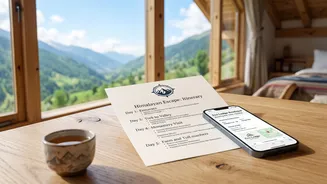
The weather in the Himalayas is notoriously unpredictable, and standard city-based weather apps are dangerously unreliable here. Conditions can change in minutes, with clear skies giving way to high winds or sudden snowfall. For stargazers, the most critical information is not just precipitation but cloud cover, wind speed at various altitudes, and atmospheric transparency. A good mountain weather app provides hyperlocal forecasts that account for elevation. Offline functionality is also crucial, as mobile connectivity is sparse to non-existent outside of Kaza.
Weather Apps The Experts Use
For detailed, multi-model forecasting, mountaineers and trekkers overwhelmingly rely on Windy. The app provides visual maps for wind, cloud cover at low, medium, and high altitudes, and allows you to compare different forecast models (like ECMWF and GFS), which is essential for getting a complete picture. Its ability to drop a pin anywhere on the map for a point-specific forecast is invaluable. Another excellent choice is Yr.no, from the Norwegian Meteorological Institute, known for its accurate and straightforward forecasts in mountainous regions. For astrophotography planning, PhotoPills and Stellarium are indispensable. They won't predict the weather, but they will show you the exact position of the Milky Way, moon phases, and rise/set times, allowing you to plan your shots with precision.