





What Makes Chandrayaan-4 Different?
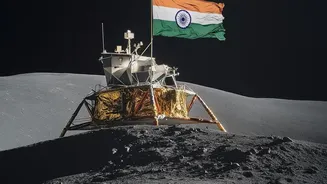
Chandrayaan-4 represents a monumental leap in ambition for India's space program. While previous missions like Chandrayaan-1 and Chandrayaan-2 were focused on orbiting and Chandrayaan-3 on soft-landing, this new endeavour is a sample-return mission. The
primary goal is to land on the Moon, collect samples of lunar soil and rock (regolith), and return them safely to Earth. If successful, India will join an exclusive club of nations—the United States, Russia, and China—that have accomplished this incredible feat. The mission is not just a scientific pursuit but also a crucial stepping stone, validating technologies essential for India’s long-term vision of landing an astronaut on the Moon by 2040.
An Ambitious Five-Module Architecture
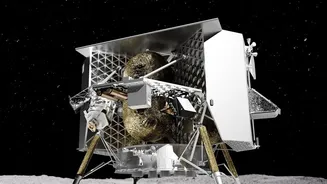
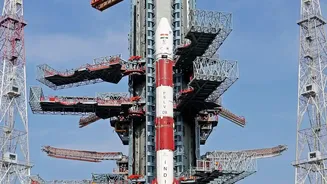
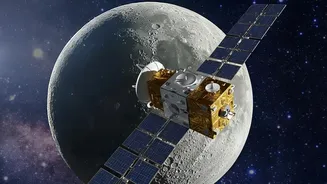
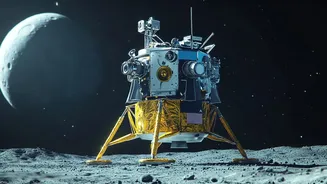
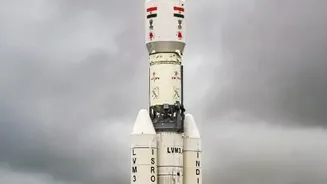
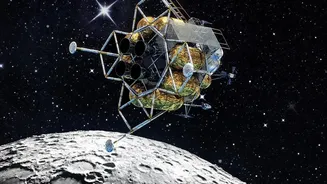
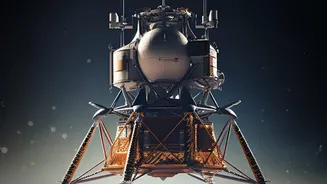
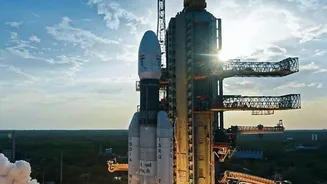
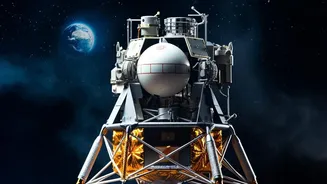
The complexity of Chandrayaan-4 is best understood through its architecture, which is far more intricate than its predecessors. The mission will utilize five separate modules: a Propulsion Module, a Descender Module (the lander), an Ascender Module, a Transfer Module, and a Re-entry Module. Due to the combined weight, these modules will be launched in two separate stacks using India's powerful LVM3 rockets. For the first time, ISRO will perform a critical docking manoeuvre in Earth's orbit, where the two launched sections will join to form the integrated spacecraft before beginning the journey to the Moon. This orbital assembly is a new and vital capability ISRO is developing, paving the way for future complex missions, including the planned Bharatiya Antariksha Station.
The Intricate Journey Home
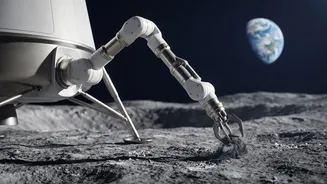
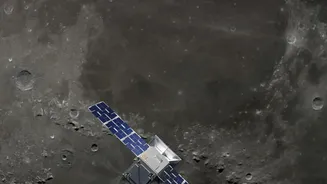
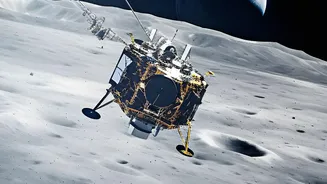
The process of bringing lunar samples back is a multi-stage cosmic ballet. After landing on the lunar surface, a robotic arm on the Descender will collect surface samples, while a drilling mechanism will gather material from below the surface. These samples, expected to weigh around 3 kilograms, will be transferred to the Ascender module. The Ascender will then lift off from the Moon—another first for India—and dock with the Transfer and Re-entry modules waiting in lunar orbit. The samples will be carefully transferred to the Re-entry module, which will then detach and begin its voyage back to Earth, designed to withstand the intense heat of atmospheric re-entry to deliver its precious cargo.
Why Bring Lunar Soil to Earth?
Studying lunar samples in labs on Earth offers possibilities far beyond what in-situ instruments on a lander can achieve. The lunar soil holds secrets about the formation of the Moon and the early history of our solar system. Unlike Earth, the Moon has no atmosphere to protect it, so its surface is a preserved record of billions of years of cosmic impacts and radiation. Analyzing these samples could reveal the presence of valuable resources, such as water ice and Helium-3, particularly in the southern polar region where Chandrayaan-4 is targeted to land. Furthermore, understanding the properties of lunar regolith is crucial for future construction of habitats and infrastructure on the Moon, potentially using the soil itself as a building material.