






What Exactly Is Dragon Fruit?
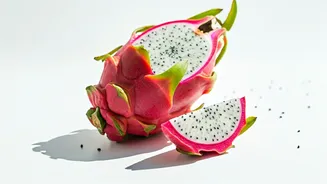
Known also as pitaya, dragon fruit is a tropical fruit that grows on a cactus. Its show-stopping appearance, with a vibrant pink or yellow peel and green scales, is what gives it its mythical name. Originally from Central and South America, it's now grown
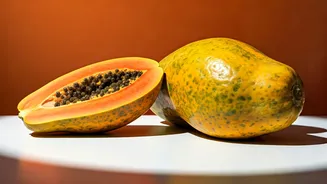
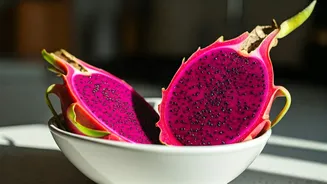
worldwide and has become a favourite for those looking to add a splash of excitement to their food. But the drama isn’t just skin deep. Slicing one open reveals a stunning flesh—either brilliant white or a deep, jaw-dropping magenta—flecked with tiny, edible black seeds. This visual contrast is what makes it an instant star in any dish, turning a simple meal into a photo-worthy creation.
Not Just a Pretty Face: The Benefits
While its looks are a major draw, dragon fruit is also a nutritional powerhouse. It's packed with antioxidants, which help protect your cells from damage, and it's a great source of Vitamin C, which is crucial for a healthy immune system and vibrant skin. It's also rich in fibre, which supports good digestion. Some studies suggest the prebiotics in dragon fruit can help promote the growth of beneficial gut bacteria. The fruit is also a source of essential minerals like iron and magnesium, contributing to everything from energy levels to bone health. And with its high water content, it's an incredibly refreshing and hydrating choice for hot summer days.
Choosing and Preparing Your Dragon
Picking the perfect dragon fruit is simple. Look for one with bright, evenly coloured skin. It should give slightly when you press it gently, much like a ripe avocado or kiwi. If it’s rock hard, leave it on the counter for a day or two to soften. To prepare it, give the fruit a rinse, place it on a cutting board, and slice it in half lengthwise. From here, you have options. The easiest method is to use a large spoon to scoop the flesh out from the skin, similar to an avocado. Alternatively, you can cut the halves into wedges and peel the leathery skin back with your fingers—it usually comes off quite easily. Once separated, you can chop the flesh into cubes, slices, or even use a melon baller for perfect little spheres.
Building the Perfect Bowl
The flavour of dragon fruit is surprisingly mild and often described as a cross between a kiwi and a pear. White-fleshed varieties are the mildest, while red-fleshed ones are typically sweeter. The yellow-skinned variety is known to be the sweetest of all. This delicate taste makes it an excellent team player in any bowl. For a classic smoothie bowl, blend frozen dragon fruit (you can find it in packets in the freezer aisle) with banana for creaminess and other tropical fruits like mango or pineapple. A splash of coconut water or almond milk will help it blend smoothly. For a yogurt bowl or parfait, layer fresh dragon fruit cubes with granola for crunch, berries for tartness, and a sprinkle of chia or hemp seeds for extra nutrients. Its flavour is versatile, so don't be afraid to experiment.
Flavor Pairings and Inspiration
Because its sweetness is subtle, dragon fruit pairs beautifully with bolder flavours. Think tangy citrus, sweet mango, sharp pineapple, and juicy berries. These combinations create a balanced and exciting taste profile. For added texture, consider topping your bowl with crunchy granola, toasted coconut flakes, or a handful of nuts like almonds or walnuts. A drizzle of honey or maple syrup can enhance the sweetness if desired. You can also incorporate it into savoury dishes; its mildness works surprisingly well in a tropical salsa with onion, lime, and a hint of chilli. The goal is to let the dragon fruit be the visual star while other ingredients provide contrasting flavours and textures.