



The Surprising Health Boost in Orange Peels
Before you get cooking, it’s worth understanding why orange rinds are more than just kitchen scraps. The peel, often discarded, is a powerhouse of beneficial compounds. It's particularly rich in pectin, a type of soluble fibre. While we can't digest pectin, the
beneficial bacteria in our gut can. They ferment it to produce short-chain fatty acids, which are crucial for maintaining a healthy gut lining. Orange peels are also loaded with flavonoids like hesperidin and naringenin. These potent plant compounds act as antioxidants and can help encourage the growth of beneficial gut bacteria while discouraging less helpful strains. Studies have shown that compounds in orange peel can positively influence the gut microbiome, which plays a vital role in everything from digestion to immunity. So, while marmalade contains sugar, using the whole peel means you’re also getting a dose of valuable fibre and phytonutrients often missing from our diets.
Your Simple Ingredient and Equipment List
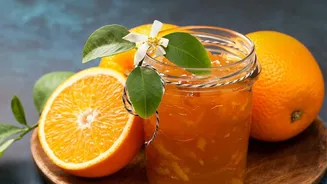
Making marmalade is simpler than you might think and doesn't require any special preservatives. The natural pectin in the orange rinds helps it set. Here's what you'll need: Ingredients: Peels from 4-5 large oranges, preferably organic and well-scrubbed Juice of 1 large lemon 3 cups of sugar (you can adjust to taste) 4 cups of water Equipment: A large, heavy-bottomed pot or Dutch oven A sharp knife and cutting board A vegetable peeler (optional) Several clean glass jars with tight-fitting lids * A small plate, kept in the freezer (for testing the set)
Step-by-Step: From Peel to Preserve
Follow these steps for a flavourful, perfectly set marmalade. The key to a less bitter result is to boil the peels twice before you begin the main cooking process. 1. Prepare the Peels: Slice the orange peels into thin, long strips. How thin is up to you, but finer strips will result in a more delicate texture. Place the strips in your pot, cover them with water, and bring to a boil. Let them boil for 10 minutes, then drain thoroughly. Repeat this process once more with fresh water. This double-boil method significantly reduces the bitterness of the pith. 2. Cook the Marmalade: Return the drained peels to the pot. Add the 4 cups of fresh water, the lemon juice, and the sugar. Stir over medium-high heat until the sugar has completely dissolved. Bring the mixture to a rolling boil, then reduce the heat to a steady simmer. 3. Simmer and Set: Let the marmalade simmer for 40-60 minutes, stirring occasionally to prevent it from sticking to the bottom of the pot. The marmalade is ready when it has thickened and reached its setting point. To test this, spoon a small amount onto the cold plate from your freezer and wait a minute. If it wrinkles when you push it with your finger, it’s done. If it’s still runny, continue to simmer and test again every 5-10 minutes.
Proper Jarring for a Longer Shelf Life
To ensure your marmalade stays fresh, you need to use sterilized jars. This step is crucial to prevent bacteria from spoiling your hard work. There are several easy methods for sterilization. One of the simplest is the oven method: preheat your oven to 140°C. Wash your jars and lids in hot, soapy water, rinse them well, and place them upside down on a baking sheet. Put them in the hot oven for at least 10 minutes or until completely dry. It's important to pour the hot marmalade into the hot jars, as a sudden temperature change can cause the glass to crack. Carefully ladle the finished marmalade into the sterilized jars, leaving a little space at the top. Seal the lids tightly while the jars are still hot. As the marmalade cools, you should hear a 'pop' from the lids, indicating a proper vacuum seal has formed.