







The End of a Solo Era
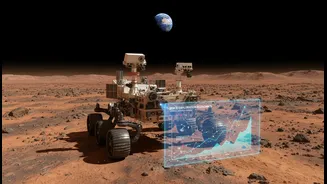
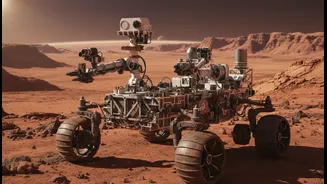
Historically, NASA has been the architect, engineer, and operator of its own destiny in deep space. From the Viking landers to the iconic Curiosity and Perseverance rovers, the agency shouldered the entire burden of designing, building, and flying these
multi-billion-dollar marvels. This approach ensured high reliability and groundbreaking science but came at a steep price and with long gaps between major missions. The sheer cost and complexity of these flagship projects meant that a single mission could dominate a decade's budget, limiting the number of scientific questions that could be answered. This model, a legacy of the Apollo era's government-led approach, has been incredibly successful but is now seen as a bottleneck to more rapid and sustained exploration.
A New Blueprint for Mars
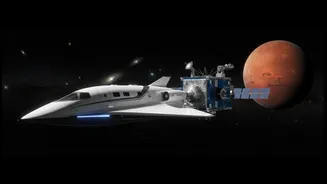
The public-private partnership (PPP) model marks a fundamental shift in strategy. Instead of doing everything in-house, NASA is now looking to act more like a client, buying services from the commercial sector. The agency defines the scientific goals and provides the specialized instruments, while private companies compete to provide the rest: the spacecraft, the launch, and the flight operations. This is not entirely new; NASA has successfully used this model for years to deliver cargo and crew to the International Space Station, a move that helped create a vibrant commercial launch market. Applying this concept to interplanetary missions, however, is a game-changer. It allows NASA to offload the immense cost and complexity of building and flying rockets and spacecraft, freeing up its budget and expertise to focus purely on the science.
Driving Down Costs
The primary driver behind this new model is cost. By fostering competition among private firms, NASA anticipates significant savings. Commercial companies, driven by market forces, are incentivized to innovate, streamline processes, and develop reusable technologies that can dramatically lower the price tag of getting to Mars. A concrete example is the upcoming Aeolus mission, slated for 2028. In this partnership, NASA is providing the scientific instruments while Relativity Space is handling the launch and spacecraft, a collaboration designed to deliver more science for less money. This efficiency is crucial. For the ambitious Mars Sample Return mission, which initially faced budget estimates spiraling over $10 billion, NASA is actively studying commercial proposals that could cut the cost by half, making the mission more feasible.
Increasing the Scientific Cadence
Lowering the cost per mission has a powerful ripple effect: it allows for more missions. This is what experts refer to as increasing the 'scientific cadence'. Instead of one massive, do-it-all rover every ten years, NASA could potentially launch a series of smaller, more focused missions more frequently. This approach accelerates the pace of discovery, allowing scientists to get critical data faster and follow up on new findings without waiting a decade for the next flight opportunity. As NASA Administrator Jared Isaacman stated, pairing the agency’s world-class instruments with commercial innovation allows them to “deliver more science, more often.” This strategy enables a more dynamic and responsive exploration program, capable of addressing a wider range of scientific objectives in a shorter timeframe.
Fueling the Commercial Space Economy
Beyond the direct benefits to NASA, this strategy is a powerful engine for the entire commercial space industry. By creating a new market for interplanetary delivery services, NASA is encouraging private companies like SpaceX, Blue Origin, and Rocket Lab to invest in deep-space capabilities. These partnerships give commercial firms high-profile opportunities to prove their technologies on challenging missions, gaining invaluable flight experience that makes them more competitive globally. Successfully delivering a NASA payload to Mars is a stamp of approval that can attract further investment and other customers. This symbiotic relationship helps build a robust and sustainable space economy, where government and private industry work together to push the boundaries of exploration.