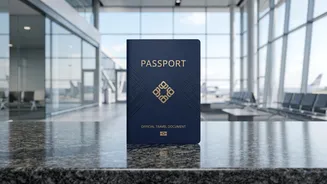





Navigating the complexities of international travel just became simpler for those heading to India. The country has overhauled its visa system, consolidating a confusing web of over 20 classifications into a streamlined set of primary categories.
Why the Change Was Needed
For years,
prospective visitors to India were faced with a dizzying array of visa options. The system had expanded over time to include more than 22 distinct categories, each with its own specific eligibility criteria, documentation requirements, and processing nuances. This created significant confusion for applicants, who often struggled to determine the correct visa for their trip. A tourist might wonder if they needed a standard tourist visa or a specific one for a yoga retreat. A business professional attending a conference could be unsure whether a business visa or a separate conference visa was appropriate. This complexity was seen as a barrier to entry, potentially discouraging tourism and complicating foreign investment. The government recognised that a simpler, more intuitive system was essential for projecting a welcoming image and improving the ease of travel.
Introducing a Clearer Framework
In response, India has streamlined its visa regime into a more manageable structure. The primary change involves grouping the numerous previous sub-types under broader, more logical umbrella categories. Instead of niche visas for very specific activities, the new system focuses on the fundamental purpose of the visit. This consolidation is designed to make the application process more straightforward for the vast majority of travellers. The goal is to ensure that an applicant can easily identify the correct visa based on their core travel intent — be it tourism, work, study, or medical care. This move aligns India with the visa practices of many other major global economies, which also use purpose-driven categories.
The Core Visa Categories Explained
The simplified system is built around a core set of primary visa types that cover the most common reasons for visiting India. While the exact number can be broken down further, they generally fall under nine main umbrellas. The most prominent among these are the Tourist Visa, for recreation, sightseeing, and casual visits, and the Business Visa, for commercial activities not amounting to employment. The Employment Visa is designated for skilled professionals taking up jobs in India. For those pursuing education, the Student Visa is the designated route, often covering everything from primary schooling to university-level studies. Another critical category is the Medical Visa, which facilitates entry for individuals seeking medical treatment in India, with a provision for an accompanying attendant under a Medical Attendant Visa.
Visas for Specific Purposes
Beyond the main categories, the framework retains specific visas for distinct activities to ensure clarity. This includes the Conference Visa, for attending international seminars and workshops, and the Journalist Visa, for professional media activities. A Film Visa caters to cast and crew involved in film production within the country. An Intern Visa is also available for foreign nationals intending to pursue an internship in an Indian company or educational institution. By creating these well-defined but limited categories, the system eliminates the ambiguity of the past while still accommodating a wide range of visitor needs. This structure ensures that while the process is simpler, it remains robust enough to manage different types of entries effectively.
What This Means for Travellers
For the average traveller, this simplification is a significant improvement. The primary benefit is clarity. Applicants can now more confidently select the appropriate visa, reducing the risk of application errors and rejections. This change is particularly beneficial for the tourism and business sectors. Tourists can apply with greater ease, boosting a critical part of the Indian economy. For businesses, the clear distinction between a Business Visa (for meetings and commercial discussions) and an Employment Visa (for salaried work) simplifies the process of bringing in foreign talent and fostering international partnerships. The overall message is one of openness and efficiency, aiming to make India a more attractive destination for global citizens, whether they are coming for a short holiday, a long term project, or a specialised course of study.