
The Old View: A Quintillion-Year Lifespan
For centuries, scientists from Isaac Newton onwards have pondered the stability of the planets. While the solar system is known to be technically chaotic, with tiny gravitational nudges adding up over aeons, our best computer models suggested a remarkable
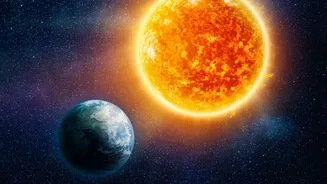
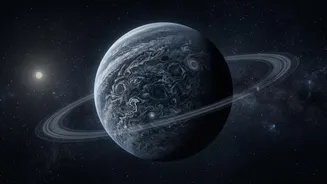
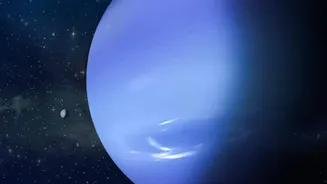
durability. The thinking was that even after our Sun exhausts its fuel in about 5 to 7 billion years, expanding into a red giant and then shrinking into a white dwarf, the giant outer planets — Jupiter, Saturn, Uranus, and Neptune — would mostly carry on. Their orbits would expand, but they were expected to remain stable for an almost unimaginable length of time, perhaps up to a quintillion (a billion billion) years, with their eventual disruption only coming from a chance encounter with a passing star.
The Sun's Violent End-of-Life
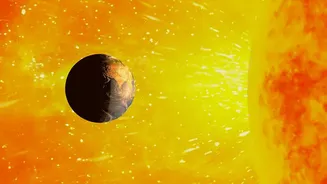
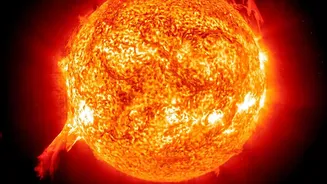
A groundbreaking new study, published in The Astrophysical Journal Letters, throws a wrench in this tidy picture. The previous long-term forecasts were based on a crucial assumption: that as the Sun dies, it will lose mass in a smooth, consistent way. The new research challenges this, proposing that the process will be much more violent and unpredictable. Instead of a gentle shedding of its outer layers, the Sun will likely eject mass in random bursts. These sudden ejections will create powerful gravitational 'kicks', delivering jolts to the remaining planets.
A Cosmic House of Cards
These gravitational kicks are the key to the new, shorter timeline. Imagine shaking a carefully balanced mobile; that’s essentially what the dying Sun will do to its own planetary system. The simulations run by the researchers, led by a team at Caltech, show that these random kicks can significantly alter the orbits of the giant planets. This dramatically increases the chances of instability. Instead of a quintillion years, the new estimate suggests the outer solar system will likely fall into disarray within just one billion years after the Sun becomes a white dwarf — a reduction in its lifespan by a factor of a billion.
An Even Earlier End?
The chaos might not even wait for the Sun to become a white dwarf. According to the new models, the instability could begin much earlier. In about 40 percent of the simulations, planetary disruption and violent scattering of the outer worlds occurred while the Sun was still in its red giant phase. This means the carefully ordered dance of Jupiter, Saturn, Uranus, and Neptune that we see today could be thrown into turmoil long before the Sun's final act. The authors of the study note that the cause of the solar system's eventual end isn't some external force like a passing star, but the Sun itself, which 'shakes' and 'spills' the very system it created.
Why This Matters (Even Billions of Years Away)
To be clear, none of this has any practical consequence for humanity. The Sun's evolution into a red giant will make Earth uninhabitable long before these outer planet instabilities occur. But this research is a powerful reminder of how science constantly refines our understanding of the universe. For a long time, the solar system was the very symbol of predictable, clockwork-like order. This new evidence paints a picture that is far more dynamic and chaotic. It shows that even on the grandest scales, nothing is truly permanent. The cosmos is not a static museum piece but a place of constant, and sometimes violent, change. This shift in perspective, from a stable clock to a chaotic dance, helps us better understand not only our own solar system's fate but also the evolution of countless other planetary systems across the galaxy.