





Your Darkest Window of Opportunity
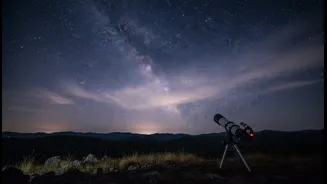
The secret to great stargazing is darkness, and nothing helps more than a new moon. On and around Tuesday, July 14, 2026, the moon will be completely absent from the night sky, creating ideal conditions for spotting fainter celestial objects. Without
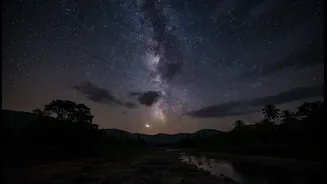
the moon's powerful glare washing everything out, the sky reveals its true depth. This period, roughly from July 12th to July 18th, is your best bet for seeing star clusters, distant planets, and the faint, milky band of our own galaxy. Of course, in India, July is peak monsoon season. This doesn’t make stargazing impossible, but it does require patience and strategy. The goal is to seize the clear spells that often follow a downpour, when the rain has washed dust and pollutants from the atmosphere, leaving behind exceptionally crisp air.
What to Look For: Planets and Constellations
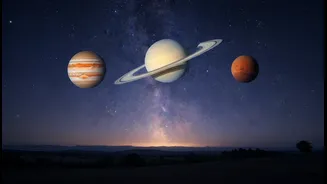
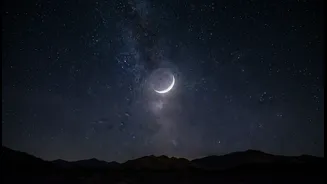
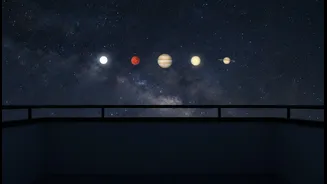
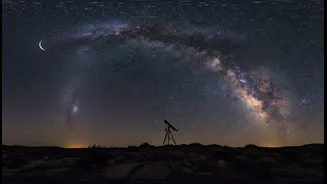
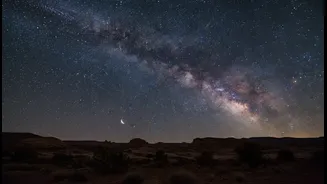
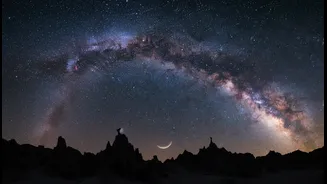
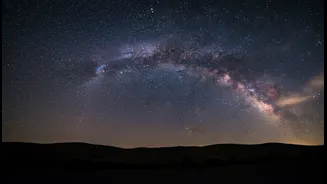
If you get a clear night, you're in for a treat. Venus, the brilliant “Evening Star,” will be visible in the west shortly after sunset. Look for it to pair up with a slender crescent moon on July 16th and 17th. Early risers can look to the east before dawn to spot two other planets: the steady, golden glow of Saturn and the reddish hue of Mars. On the mornings of July 7th and 8th, a waning moon will appear close to Saturn. A few days later, on July 11th, a crescent moon will form an attractive trio with Mars and the beautiful Pleiades star cluster, also known as the Seven Sisters. The core of the Milky Way, with the constellations Scorpius and Sagittarius, will be positioned low in the southern sky—a breathtaking sight from a truly dark location away from city lights.
Catching a Shooting Star
July is also the month when two meteor showers begin: the Southern Delta Aquariids and the Alpha Capricornids. The Delta Aquariids are active from mid-July onwards and can produce up to 20 meteors per hour under perfect conditions. The Alpha Capricornids are less frequent but are known for producing exceptionally bright and slow-moving fireballs. Unfortunately, the peak of both showers at the end of July will be spoiled by a bright full moon. However, your best chance to see some early meteors from these showers is during the dark, moonless nights around the new moon in mid-July. Find a comfortable spot, lie back, and be patient—you might just be rewarded with a cosmic streak across the sky.
Tips for Monsoon Skywatching
Success during the monsoon requires planning. First, get away from city lights. Light pollution is the biggest obstacle after clouds, so heading to rural areas, hills, or designated dark-sky spots is crucial. Locations in the rain-shadow regions or at high altitudes might offer better chances of clear skies. Use weather apps to track cloud cover and look for post-rainfall clearings. Second, give your eyes time to adapt. It takes about 20 to 30 minutes for your eyes to become fully sensitive to low light, so avoid looking at your bright phone screen. Use a stargazing app with a red-light mode, like Stellarium or Sky Safari, to help you identify what you're seeing without ruining your night vision. Finally, even a pair of binoculars can dramatically enhance your view, revealing craters on the moon (when it returns), the moons of Jupiter, and the dense star fields of the Milky Way.