





The Invisible Threat in Drinking Water
Microplastics are tiny plastic particles, less than five millimetres in diameter, that have become a widespread environmental concern. They originate from the breakdown of larger plastic items, industrial discharge, and even synthetic fibres from clothing.
These minuscule fragments are now found in our rivers, oceans, soil, and, alarmingly, in our drinking water systems. While the full long-term impact on human health is still being studied, the presence of these persistent pollutants in our bodies is a growing concern for scientists and public health officials worldwide. Conventional water treatment plants can remove a high percentage of microplastics, but many smaller particles can still slip through, making their way to household taps.
An Unlikely Hero: From Farm Waste to Filter
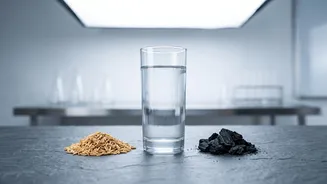
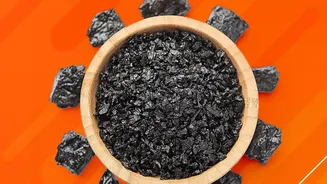
The solution may lie in a concept known as the circular economy, which focuses on reusing and repurposing materials. India, being a major rice producer, generates millions of tonnes of rice husks as an agricultural byproduct every year. Often, this waste is burned or disposed of in landfills. However, scientists have discovered that by heating these rice husks in an oxygen-limited environment—a process called pyrolysis—they can be converted into a carbon-rich, highly porous material called bio-char. This 'black gold' is not just a way to manage agricultural waste; its unique structure makes it an incredibly effective natural filter.
How Bio-Char Captures Microplastics
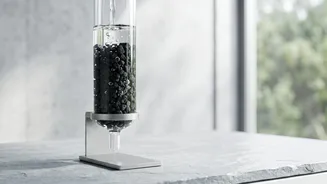
The magic of rice husk bio-char lies in its microscopic structure. Pyrolysis creates a material with a vast internal surface area, filled with a network of tiny pores and channels, resembling a honeycomb. This structure works in several ways to remove contaminants. Firstly, it acts as a physical sieve, physically trapping larger microplastic particles within its pores. Secondly, the surface of the bio-char has specific chemical properties that attract and bind smaller plastic particles through mechanisms like electrostatic interactions and other chemical bonds. Studies have shown that bio-char made from rice husks and other agricultural waste can remove over 90% of microplastics from water, proving to be particularly effective at capturing the smallest, most difficult-to-filter particles.
More Than Just Plastics
The benefits of bio-char filters don't stop at microplastics. This versatile material has also demonstrated a remarkable ability to adsorb other harmful contaminants often found in water sources. Research shows its effectiveness in removing heavy metals like lead and arsenic, as well as organic pollutants such as pesticides. Some studies have even focused on using bio-char to reduce harmful bacteria like E. coli and excess nutrients that can cause damaging algal blooms in water bodies. By modifying the bio-char, for example, by adding iron, scientists can even enhance its ability to act as a catalyst, breaking down more complex pollutants into less harmful substances.
From the Lab to City Water Systems
While laboratory results are incredibly promising, scaling this technology up for widespread municipal use is the next major hurdle. Researchers are currently conducting field tests and pilot studies to determine the best ways to integrate bio-char filters into existing water treatment infrastructure. Challenges include optimizing the production of bio-char to ensure consistent quality and determining how often the filters will need to be replaced or regenerated. However, the potential is enormous. Because bio-char can be produced from locally available agricultural waste, it represents a potentially low-cost, sustainable, and decentralized water purification solution, especially for rural and developing communities.