






The terms 'AI' and 'mRNA' have become household names, but their next act could be their most ambitious yet: fighting cancer. A Hyderabad-based startup, PopVax, is at the forefront of this revolution, using both technologies to create personalised vaccines.
A New Frontier in Oncology
Hyderabad-based biotechnology startup PopVax is making waves by combining artificial intelligence, machine learning, and messenger RNA (mRNA) technology to develop personalised cancer vaccines. Founded in late 2021 by computer scientist Soham Sankaran, the company aims to create treatments that are tailor-made for each patient's unique tumour. This approach marks a significant shift from traditional one-size-fits-all therapies. Instead of a universal drug, the goal is to create a vaccine that trains a person's own immune system to identify and destroy their specific cancer cells. The company has launched an integrated research, development, and manufacturing facility in Hyderabad called the RNA Foundry to accelerate this work.
mRNA: A Familiar Tool with a New Target
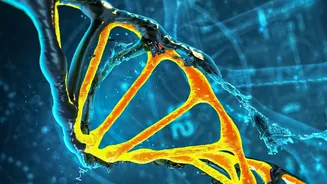
Many people are now familiar with mRNA technology thanks to the COVID-19 vaccines. That same basic principle is being repurposed for oncology. Instead of carrying instructions to recognise a virus, these cancer vaccines carry mRNA sequences that teach the body’s cells to produce specific proteins found on the patient's tumour. These proteins, known as antigens or neoantigens, act like a red flag, helping the immune system recognise the cancer cells as foreign invaders that need to be attacked. The mRNA is encased in a lipid nanoparticle (LNP), a tiny fat bubble that protects it and helps deliver it into the cells. This method stimulates a potent T-cell response, which is crucial for attacking solid tumours.
How AI Supercharges Vaccine Design
The challenge with personalised vaccines is speed and precision. Every cancer is genetically different, producing thousands of unique mutations. This is where Artificial Intelligence becomes a game-changer. PopVax uses AI and machine learning algorithms to rapidly analyse the genetic sequence of a patient's tumour. The AI sifts through vast amounts of data to identify which of the tumour's neoantigens are most likely to trigger a strong and effective immune response. This predictive power allows scientists to bypass traditional bottlenecks, dramatically speeding up the process of designing a custom vaccine candidate that is optimised for a specific individual. Tools like these can accelerate the identification of optimal ingredients and designs much faster than human researchers could alone.
From Tumour to Treatment
The process begins by taking a sample of a patient's tumour and sequencing its genetic material. AI algorithms then predict the best protein targets (neoantigens) to include in the vaccine. Scientists then design and manufacture a custom mRNA strand that codes for these specific neoantigens. This personalised mRNA is then injected into the patient. Once inside the body, the patient's own cells use these instructions to produce the tumour proteins, presenting them to the immune system. This essentially serves as a training camp for T cells, teaching them what the cancer looks like so they can hunt down and eliminate the actual tumour cells throughout the body.
The Road Ahead for Personalised Cancer Vaccines
While the technology is incredibly promising, it's important to understand that this research is still in its early stages. PopVax's cancer vaccine program, like others in the field, must still go through rigorous clinical trials to prove its safety and effectiveness before it can become a standard treatment. As of late 2026, the first personalised mRNA cancer vaccine from other developers has only recently shown positive results in a large scale Phase 3 trial for melanoma, signalling a major breakthrough for the entire field. For PopVax, the focus is currently on hard to treat solid tumours like liver and pancreatic cancer. The company's work, along with recent policy support for biotech innovation in India, could place the nation at the forefront of this new era of precision medicine, but the path from the lab to the clinic is a long one.