




A Dish Forged in Fire
The story of the kebab is as rich and layered as its marinades. The word itself comes from Persian, meaning “to grill” or “roast”. History traces its origins to the Middle East, with tales of Persian soldiers grilling meat on their swords over open fires.
This practical method of cooking quickly spread from battlefields to royal courts and bustling marketplaces, evolving with each new culture it encountered. From the shish kebab of Turkey to the seekh kebab that arrived in India with Mughal influence, the core concept remained: delicious, fire-cooked morsels perfect for sharing. For centuries, the kebab has been synonymous with succulent cuts of lamb, beef, and chicken, a celebrated centrepiece of carnivorous feasts around the globe.
The Great Indian Veg Kebab
While the world largely associates kebabs with meat, India’s culinary landscape tells a different story. Here, the kebab underwent a green revolution long before it was a global trend. The concept was brilliantly adapted to a vegetarian palate, giving rise to an incredible diversity of plant-based creations that are now iconic. Think of the melt-in-your-mouth 'Dahi Ke Kebab', made from spiced hung curd, or the vibrant 'Hara Bhara Kebab', packed with spinach and green peas. Paneer, of course, became a star player in dishes like Paneer Tikka, where cubes of fresh cheese are marinated and grilled to smoky perfection. These aren't mere substitutes; they are celebrated dishes in their own right, proving that the spirit of the kebab—a flavourful, shareable bite—thrives without meat.
Enter the Vegetarian Snack Board
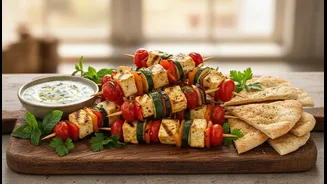
Fast forward to today, and another evolution is taking place. As global food trends move towards communal, visually appealing, and inclusive dining, the snack board—or grazing platter—has become immensely popular. It’s a canvas for creativity, a feast for the eyes, and a perfect format for modern gatherings. Combining this trend with India's rich vegetarian kebab tradition offers a fresh way to celebrate World Kebab Day. Imagine a large platter, artfully arranged not just with one type of kebab, but a vibrant assortment: smoky Paneer Tikka skewers, soft Dahi Ke Kebabs, earthy Mushroom Galouti, and crispy Hara Bhara Kebabs. It transforms the humble kebab from a single starter into the star of a magnificent, multi-textured feast.
Crafting Your Celebration Platter
Building the ultimate vegetarian kebab board is about variety in flavour, texture, and colour. Start with three to four types of kebabs. Include a creamy option like Dahi Ke Kebab, a robust one like Rajma Ke Kebab, and a classic like Paneer Tikka or Vegetable Seekh Kebab. Next, add the accompaniments. An array of chutneys is essential—think classic mint-coriander, tangy tamarind, and perhaps a spicy tomato chutney. Bowls of cooling yogurt dip or raita provide balance. Add textural contrast with fresh elements: crunchy onion rings, crisp lettuce leaves, juicy lemon wedges, and a small salad of sliced tomatoes and cucumbers. Finally, include breads for scooping and wrapping, such as mini naan, pita bread, or even bite-sized parathas. The goal is to create an interactive, abundant spread that invites guests to mix, match, and create their perfect bite.