



The Basics of a 'Shooting Star'
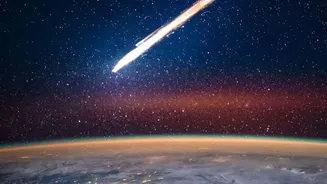
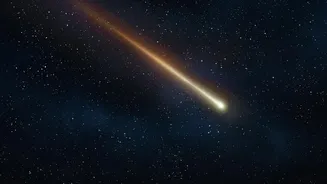
To understand the main event, we first need to get the basics right. What most people call a 'shooting star' is not a star at all. It's a small piece of space rock or dust, called a meteoroid, entering Earth's atmosphere at incredibly high speed. The
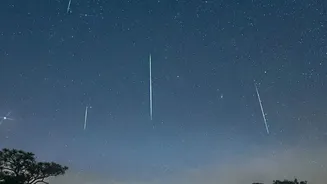
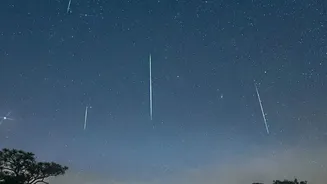
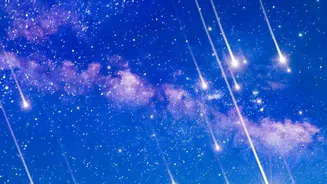
intense friction with the air causes it to heat up and glow, creating the fleeting streak of light we call a meteor. Most of these are tiny, often no bigger than a grain of sand. These individual meteors can appear on any given night, coming from any direction. They are known as sporadic meteors because their appearances are random and unpredictable. They are cosmic loners, not part of any coordinated group, and on an average night, you might be lucky to spot a few per hour.
So, What Is a Meteor Shower?
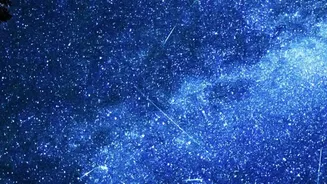
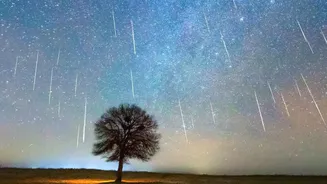
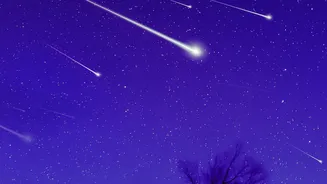
A meteor shower, on the other hand, is a group event. It happens when Earth, in its orbit around the Sun, passes through a dense trail of debris left behind by a celestial object, usually a comet or sometimes an asteroid. As a comet gets closer to the Sun, its ice vaporises, releasing a stream of dust and rock along its orbital path. When Earth intersects this stream, we get a flurry of meteors. Because all the particles are travelling in the same direction through space, they appear to radiate from a single point in the sky, known as the radiant. This is why meteor showers are named after the constellation where their radiant appears to be located.
Meet the Famous Parent: Halley's Comet
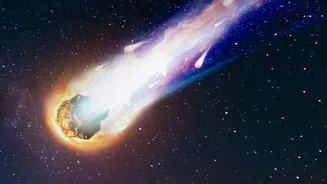
The Orionid meteor shower, which graces our skies every October, has a very famous parent: Halley's Comet. This celebrated comet, which visits the inner solar system about every 76 years, has left a substantial trail of cosmic dust over millennia. Twice a year, Earth’s orbit crosses this path. In October, we get the Orionids. In May, we experience another shower called the Eta Aquariids from the same debris stream. The particles from Halley's Comet are known for being exceptionally fast, hitting our atmosphere at about 66 kilometres per second. This incredible speed can result in very bright, fast meteors, some of which leave glowing trails behind them that can linger for a few seconds.
Orionids vs. Shooting Stars: Key Differences
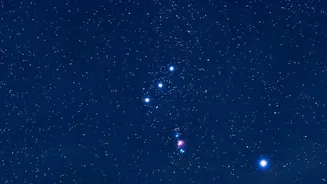
Let's break it down. An ordinary shooting star, a sporadic meteor, is a solitary event from a random piece of space dust. The Orionids are a collective event, part of a predictable, annual shower caused by Earth flying through the specific debris trail of Halley's Comet. While you might see a few sporadic meteors per hour, the Orionids can produce up to 20 or more meteors per hour at its peak under ideal conditions. Furthermore, sporadic meteors can appear from anywhere in the sky. Orionid meteors, however, will all appear to originate from a point within the constellation Orion, the Hunter, which is how the shower gets its name.
How to Watch the 2026 Orionid Shower
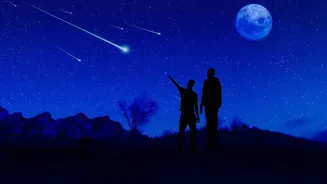
The Orionid meteor shower is active from early October to early November, but is expected to peak in 2026 on the night of October 21st and into the early morning of October 22nd. A bright waxing gibbous moon will interfere with viewing until it sets, so the best time to watch will be in the few hours before dawn. Find a location far away from city lights, as light pollution is the biggest enemy of meteor watching. You don’t need a telescope or binoculars; the show is best observed with the naked eye. Lie back on a blanket or reclining chair and give your eyes at least 20 to 30 minutes to fully adapt to the darkness. While the meteors appear to come from Orion, they can streak across any part of the sky.