






The Art of Awakening the Serpent
Long before thousands of spectators line the banks of Punnamada Lake for the Nehru Trophy Boat Race, the real work is done in quiet, waterside sheds. Here, artisans and villagers gather to awaken the Chundan Vallam, or snake boat, from its year-long slumber.
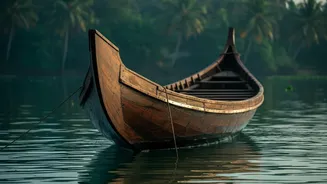
These majestic boats, often over 100 feet long, are more than just vessels; they are the pride of a village, treated with a reverence usually reserved for deities. The preparation is a painstaking, hands-on process that spans weeks. Men, who traditionally must be barefoot to touch the boat, meticulously sand every inch of the Anjili wood hull. The rhythmic scraping is the first note in a symphony of restoration, a collaborative effort to ensure the boat is not just race-ready but spiritually pure.
A Secret Recipe for Speed
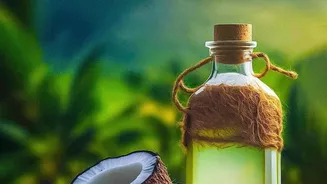
The most crucial part of the preparation is the oiling. This is no ordinary varnish but a traditional, time-tested concoction designed to make the boat glide through the water with minimal resistance. The recipe is a closely guarded secret, passed down through generations of boat masters, or 'Asaris'. The primary ingredients include fish oil for its waterproofing properties, mixed with the ash of burnt coconut shells and charcoal for a slick, dark finish. Some village recipes even include eggs, which are believed to strengthen the mixture. This potent, pungent brew is rubbed deep into the wood by hand, a laborious task that fills the air with a distinctive aroma. The goal is twofold: to reduce water absorption and to create a lubricious surface that allows the 'serpent' to slice through the water.
More Than Just a Boat
The Chundan Vallam has a history as long and dramatic as its elegant form. Their design originates from the 14th century, when they were commissioned as fast and stealthy war boats for the feudal kings of Kayamkulam and Chembakassery. Designed to carry over 100 warriors and navigate the narrow backwater channels, their eel-like construction gave them a strategic advantage. When the wars ended, the boats transformed from vessels of conflict to symbols of community pride and sporting prowess. Today, each boat belongs to a village, and its performance in the annual races is a matter of immense honor. The construction and maintenance are a community effort, embodying a spirit of cooperation that transcends the competition itself.
The Rhythm of the Race
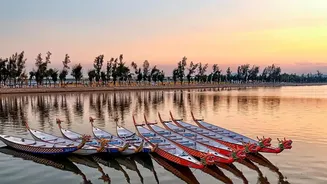
The culmination of these weeks of hard work is the racing season, which typically runs from July to September, coinciding with the Onam harvest festival. The most prestigious of these events is the Nehru Trophy Boat Race, held on the second Saturday of August. On race day, the tranquil backwaters erupt in a carnival of sound and colour. Up to 100 oarsmen power each boat, their paddles striking the water in perfect unison, driven by the rhythmic chants of the 'Vanchipattu' (boat songs). These songs, led by singers standing in the middle of the boat, are more than just music; they are the metronome that sets the pace, ensuring every stroke is synchronized for maximum speed. It is a breathtaking display of teamwork, stamina, and cultural expression.
Guardians of a Living Legacy
The artisans who lead the boat's annual restoration are the unsung heroes of Vallam Kali. They are the 'Moothasharis', or master carpenters, who inherit the ancient knowledge of boat building, known as the Sthapatya Veda. Their skills, passed down orally through families, ensure that these magnificent vessels are not just maintained but preserved as living artifacts. Their work is a delicate balance of engineering and artistry, ensuring the boat is both structurally sound and hydrodynamically perfect. In an age of rapid modernization, their dedication is what keeps this vibrant tradition afloat, ensuring that the snake boats of Kerala will continue to race for generations to come, embodying the heart and soul of the region.