




A Creature from a Lost World
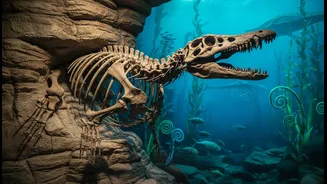
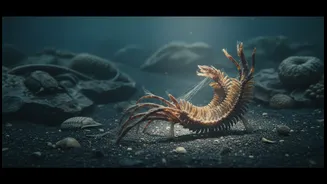
In Earth’s ancient oceans, long before animals colonized land, the seafloor was a forest of strange, beautiful creatures called crinoids. Often mistaken for plants and nicknamed “sea lilies,” these animals are actually relatives of starfish and sea urchins.
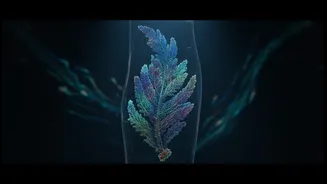
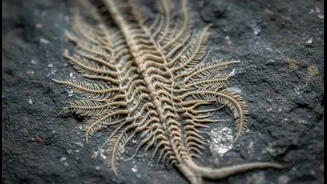
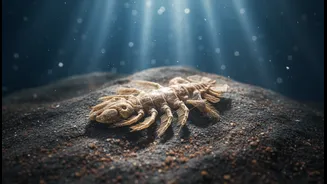
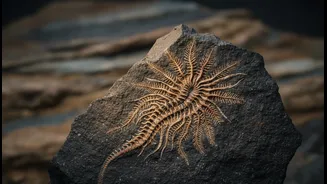
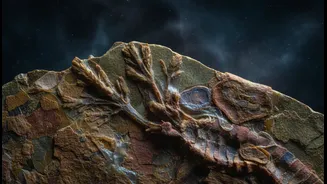
They anchored themselves to the seabed with a stalk, using feathery arms to filter food from the water. Recently, paleontologists from the University of Oklahoma made a “one in a million” discovery while examining a museum specimen: a 450-million-year-old crinoid fossil with its soft tissues miraculously intact. This is an incredibly rare event, as delicate parts like skin and organs are almost always the first to decay, leaving only hard skeletal remains behind.
The Miracle of Preservation
This particular fossil, of the species Dendrocrinus simcoensis, is only the second crinoid ever found with preserved soft tissue, and it is by far the oldest. The discovery was made on a specimen held in a small community museum in Montréal, its true importance unrealized for years. The fossilized tissues were identified as the crinoid’s “tube feet,” which, despite the name, were used for feeding, not walking. For this level of preservation to occur, the conditions had to be perfect: rapid burial in fine mud, low oxygen levels, and the right chemical environment to halt decay almost instantly. This fossil snapshot gives scientists an unprecedented look at how these ancient animals lived and fed, revealing that their anatomy was quite different from their modern relatives, suggesting they occupied unique roles in Earth's earliest reefs.
India's Own Prehistoric Legacy
This discovery might seem distant, but it highlights a fantastic truth: our planet is a living museum, and India holds some of its most spectacular galleries. The land you walk on has its own deep history. Millions of years ago, vast stretches of modern-day India were submerged under the ancient Tethys Sea. When the Indian subcontinent collided with Asia, giving rise to the Himalayas, this sea vanished, but it left behind a staggering wealth of marine fossils embedded in the newly formed mountains. These are not just in remote, inaccessible locations. Rich fossil beds are found across the country, from the Himalayan highlands to the sedimentary rocks of central and southern India.
Where to Find Your Own Piece of History
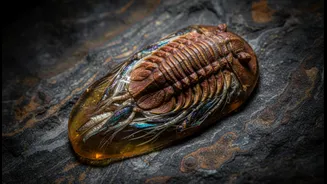
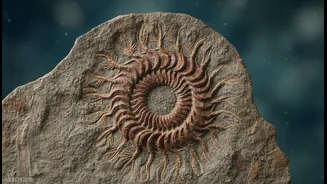
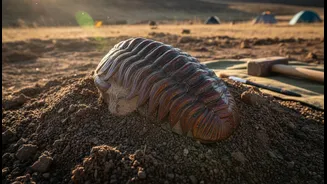
For aspiring fossil hunters, India offers several incredible destinations. The Spiti Valley in Himachal Pradesh is famously known as the “Fossil Village of India,” particularly the area around Langza. Here, you can find ammonites—the beautiful, spiral-shaped shells of extinct molluscs—sometimes just lying on the ground. Further south, the Ariyalur region in Tamil Nadu is another hotspot, where Cretaceous-era rocks have yielded dinosaur eggs and marine fossils. In Madhya Pradesh, sites like Ghughua Fossil National Park showcase an entire petrified forest of ancient trees. These places offer a tangible connection to a world that existed millions of years before humans.
A Guide for the Amateur Fossil Hunter
Ready to start your own paleontological adventure? First, choose a known fossil-rich area like Spiti or Ariyalur. Hiring a local guide is highly recommended; they know the terrain and can lead you to the best spots responsibly. Look for sedimentary rocks like shale, sandstone, and limestone, where fossils are most commonly preserved. Keep your eyes peeled for unusual shapes and textures that stand out from the surrounding rock. However, it's crucial to be an ethical hunter. India currently lacks a specific law protecting fossils, which leaves them vulnerable. The best practice is to observe, photograph, but not take. Leave fossils where you find them for others to discover and for scientists to study. Buying locally made replicas is a great way to take home a souvenir while supporting the community.