


The Dazzling Evening Star
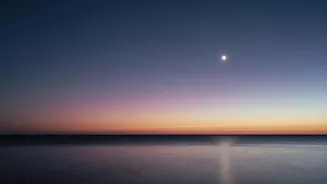
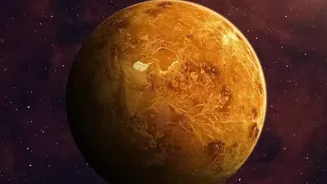
Throughout September 2026, Venus is set to dominate the evening sky. Often called the 'Evening Star', this is the planet’s time to shine, and it will be brighter than any other star or planet. Its brilliance is so striking that it will be easily visible
even from brightly lit cities, appearing as a stunningly bright, white beacon low in the western sky just as dusk settles in. You don’t need any special equipment or a trip to the countryside to witness this celestial event; you just need to look up in the right direction at the right time. Venus will be a constant and captivating presence all month long, inviting everyone to enjoy the show.
The Science of Its Shine
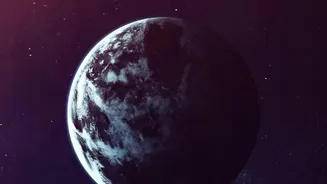
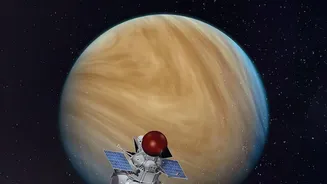
So, what makes Venus so exceptionally bright? It’s a combination of two key factors. First, Venus is our planetary neighbour, and during September, its orbit brings it relatively close to Earth. But proximity isn't the whole story. The planet is shrouded in a thick blanket of clouds composed of sulfuric acid droplets. These clouds are incredibly reflective, acting like a brilliant mirror. They bounce about 70% of the sunlight that hits them back into space, a property astronomers call albedo. For comparison, the Moon only reflects about 10% of sunlight. This powerful combination of being relatively close and wrapped in highly reflective clouds makes Venus the third-brightest object in our sky, trailing only the Sun and the Moon.
A Paradox of Brightness
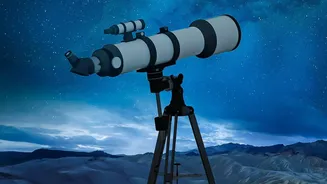
Here’s a fascinating detail that surprises many: Venus reaches its peak brightness not when it appears as a full, round disk, but as a crescent. Through a telescope, Venus shows phases just like our Moon. When it’s on the far side of the Sun from us, it appears 'full' but is also distant and looks small. As Venus swings around its orbit and gets closer to Earth, its apparent size grows dramatically. However, because it's moving between us and the Sun, we see less of its illuminated side, causing it to appear as a crescent. Around September 18th, we get the perfect balance: Venus is close enough to look large in our sky, while its crescent phase is still substantial enough to reflect a tremendous amount of light towards us. This event, known as its 'greatest brilliancy', is the reason for its stunning September appearance.
When and Where to Look
Finding Venus is simple. Begin looking toward the western horizon about 30 to 45 minutes after sunset. You can't miss it; it will be the first and brightest 'star' to appear in the twilight glow. While Venus is visible all month, it will appear lower on the horizon as September progresses. Mark your calendar for the evening of September 14th. On this date, a slender waxing crescent Moon will appear beautifully close to Venus, creating a breathtaking pair in the sky that will be perfect for photos and a memorable sight for families. For sky-watchers in many parts of Asia, the Moon will actually pass in front of Venus during the daytime, an event called an occultation.