




A Marathon in Martian Time
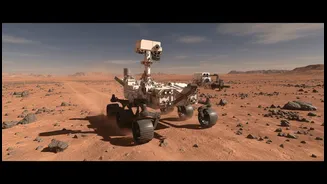
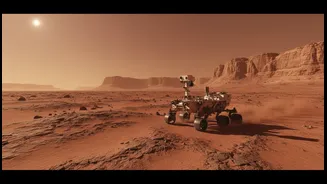
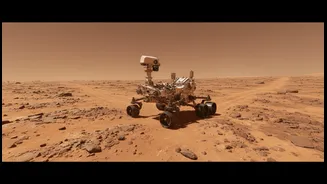
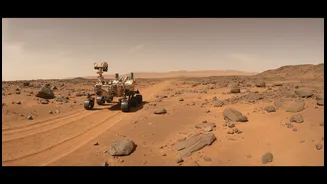
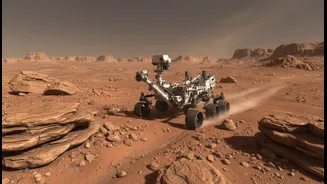
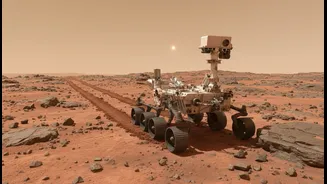
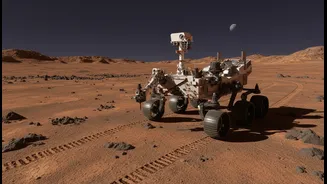
On June 14, 2026, Perseverance officially passed the 42.195-kilometer (26.2-mile) mark, becoming only the second rover to do so on another planet. The first was NASA's Opportunity rover, which took a staggering 11 years and two months to complete the distance.
Perseverance achieved this in just over five years, a testament to its advanced technology. However, this was no two-hour race. The rover's top speed is a blistering 0.1 miles per hour (about 152 meters per hour), and it often moves much slower. The real story isn't about speed; it's about the extraordinary patience, precision, and intelligence required to operate a one-ton, car-sized laboratory millions of miles away.
The Ultimate Remote Work Challenge
The primary reason for the rover's deliberate pace is the communication delay between Earth and Mars. Depending on the planets' orbits, a one-way signal can take anywhere from five to 20 minutes. This means a round-trip conversation—sending a command and receiving confirmation—can take up to 40 minutes. You can't just joystick the rover in real-time. Instead, engineers at NASA's Jet Propulsion Laboratory (JPL) painstakingly plan each day's journey. They use 3D glasses and images from the previous Martian day (or "sol") to map out a path, identify potential hazards like sharp rocks or soft sand, and upload a series of commands for the rover to execute hours later. Every move is a calculated risk for an irreplaceable asset.
A Rover That Thinks for Itself
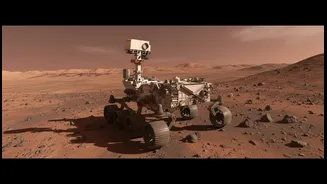
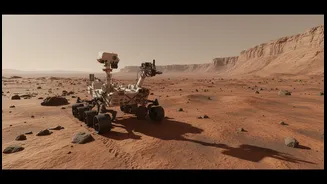
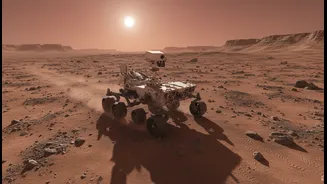
This is where Perseverance truly shines. While human operators set the general route and final destination, the rover handles much of the moment-to-moment driving on its own. Its powerful autonomous navigation system, called AutoNav, creates 3D maps of the terrain ahead, identifies obstacles, and plots the safest and most efficient path to its next waypoint. Unlike its predecessor, Curiosity, which had to stop, take images, and then process them before moving, Perseverance can do all of this while its wheels are still turning. This "thinking while driving" capability allows it to cover more ground, more safely, than any previous rover, sometimes traveling over 300 yards in a single day.
It's a Geologist, Not a Race Car
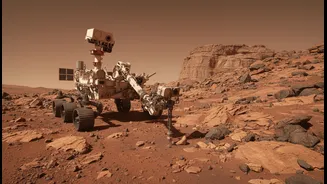
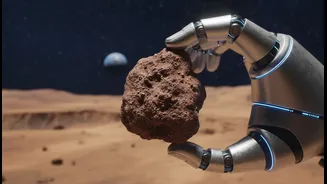
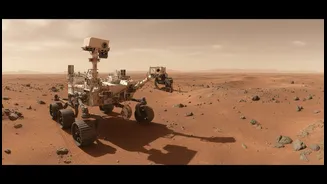
Ultimately, driving is just a means to an end. Perseverance's primary mission is astrobiology—the search for signs of ancient microbial life. It's a field geologist on six wheels, equipped with a suite of sophisticated instruments to analyze rocks and soil. The journey is punctuated by frequent stops to zap rocks with lasers, drill core samples, and capture high-resolution images. Each stop can take hours or even days as the science team on Earth analyzes the data and decides what to do next. The goal is not to get from Point A to Point B as quickly as possible, but to conduct meaningful science along the way. The marathon distance is simply a byproduct of its relentless, systematic exploration of Jezero Crater and beyond.
The Daily Grind on Mars
A typical day of operations is a slow, careful dance between planets. The rover team at JPL receives data from Perseverance, analyzes the terrain, and builds a new command sequence. That plan is sent to Mars, where the rover "wakes up," executes its drive, performs science observations, and then sends its results back to Earth before powering down to conserve energy through the cold Martian night. This methodical process is what has allowed Perseverance to not only cover record-breaking distances but also to collect dozens of rock and soil samples that could one day be returned to Earth, potentially holding the very secrets of life on Mars.