






The Blueprint in the UN Charter
The rulebook for selecting the Secretary-General is surprisingly brief. Article 97 of the UN Charter states that the Secretary-General “shall be appointed by the General Assembly upon the recommendation of the Security Council.” This simple sentence establishes
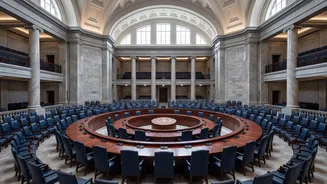
a two-part process: the 15-member Security Council must first recommend a single candidate, and then the 193-member General Assembly formally appoints them. While the General Assembly's approval is essential, it has never rejected a candidate put forward by the Security Council, making the Council's recommendation the decisive stage.
Inside the Security Council's Private Meetings
This is where the real contest happens, largely behind closed doors. Member states nominate candidates, who now often present vision statements and participate in public dialogues—a recent move towards greater transparency. The Security Council then holds several rounds of informal secret ballots, known as 'straw polls', to gauge support for each candidate. In these polls, members vote to 'encourage', 'discourage', or express 'no opinion' on a candidacy. The goal is to find a candidate who can secure at least nine 'encourage' votes. However, the most significant hurdle lies with the Council's most powerful members.
The Decisive Power of the P5 Veto
The Security Council includes five permanent members, known as the P5: China, France, Russia, the United Kingdom, and the United States. Each holds the power of veto. This means that a 'discourage' vote from any P5 country is enough to block a candidacy, regardless of how much support that candidate has from other members. To make this clear, later rounds of straw polls use colour-coded ballots to distinguish the votes of permanent members from elected ones. This veto power transforms the selection into a geopolitical chess match, as the P5 seek a candidate who will not challenge their national interests. This has led to deadlocks, as seen in the ongoing 2026 selection process where, even in late November, no candidate has managed to avoid a veto threat from the P5.
The General Assembly's Formal Appointment
Once the Security Council overcomes its internal divisions and agrees on a single candidate, it passes a resolution recommending that person to the General Assembly. The Assembly then holds a vote to formally appoint the Secretary-General. Historically, this vote is passed by acclamation, signifying unanimous approval. In recent years, the General Assembly has pushed for a more transparent and inclusive process, leading to the introduction of public dialogues where candidates can be questioned by member states and civil society. This has given the wider UN membership a greater voice, but the final decision-making power remains effectively with the Security Council.
Unwritten Rules of the Game
Beyond the formal rules, a set of informal conventions guides the selection. One is the principle of regional rotation, which suggests that the post should rotate between different geographical areas of the world. For the selection to succeed the current Secretary-General, António Guterres, whose term ends on December 31, 2026, many believe it is the turn of a candidate from Latin America and the Caribbean. Another unwritten rule is that a national from one of the P5 countries is not eligible for the position. There has also been a growing call for the UN to appoint its first female Secretary-General, although this has yet to happen.