




The Common Mistake You Might Be Making
When you think of a 'twist,' it’s natural to want to rotate your entire lower body along with your torso. Many people do this instinctively, swinging their hips and even their legs as they turn. However, this common error fundamentally changes the exercise.
Instead of isolating the core muscles, you end up relying on momentum. This not only reduces the workout's effectiveness for your abdominal walls, particularly the obliques, but it also places unnecessary and potentially harmful rotational stress on your lower back and spine. The goal isn’t to see how far you can turn; it’s to control the movement and make the target muscles do all the work.
Why Keeping Your Hips Forward is Key
The magic of the standing torso twist happens when you create separation between your upper and lower body. By keeping your hips and pelvis stationary and facing forward, you force the rotational movement to originate from your thoracic spine (your mid-back) and be powered by your core muscles. This isolation is what sculpts and strengthens the internal and external obliques, the muscles running along the sides of your waist. Think of your hips as an anchor. The more stable your anchor, the more your torso has to work to twist against it. This targeted effort builds true core stability, improves rotational power for sports like golf or tennis, and enhances your overall posture and balance, all while protecting your vulnerable lower back from improper torque.
Your Step-by-Step Guide to the Perfect Twist
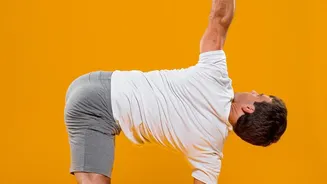
Ready to do it right? Follow these steps for a safe and effective standing torso twist. You can perform this with just your body weight or hold a light dumbbell, medicine ball, or resistance band for an added challenge. 1. Set Your Stance: Stand with your feet shoulder-width apart, with a slight bend in your knees. This athletic stance provides a stable base. 2. Engage Your Core: Before you move, tighten your abdominal muscles as if you're about to be punched in the stomach. This is crucial for stability. 3. Position Your Arms: Clasp your hands together and extend your arms straight out in front of you at chest height. Alternatively, you can cross your arms over your chest. 4. Initiate the Twist: Exhale and slowly rotate your torso to one side. The movement should come from your waist and mid-back, not your arms or hips. Imagine your head and shoulders are turning as one unit. 5. Keep Hips Stable: This is the most important part. As you twist, actively resist the urge to let your hips follow. Your belly button should continue to point straight ahead. A great mental cue is to imagine your hips are encased in concrete. 6. Pause and Return: Hold the twist for a moment at the point of maximum contraction, then slowly and with control, return to the center. Inhale as you return. 7. Alternate Sides: Repeat the movement on the other side. Aim for an equal number of repetitions on both sides for balanced development.
Quick Tips for Better Form
To ensure you are getting the most out of every repetition, keep these pointers in mind. First, control the tempo. Avoid rushing the movement or using momentum to swing your body. A slow, deliberate pace ensures your muscles are under tension for longer. Second, check your reflection. Performing the exercise in front of a mirror is an excellent way to monitor your hip position. Watch to see if they are swivelling; if they are, reduce your range of motion until you can perform the twist correctly. Finally, focus on your breathing. Exhaling as you twist helps you engage your core more deeply, while inhaling on the return helps you reset for the next rep.