



What Exactly Is Space Weather?
Unlike earthly weather, space weather doesn't involve wind and rain. Instead, it refers to the conditions in space caused by our Sun. The Sun constantly releases a stream of charged particles called the solar wind. Sometimes, it does more than just blow
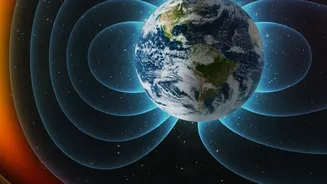
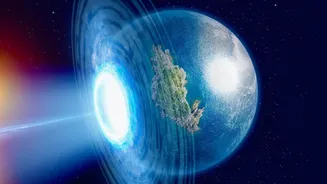
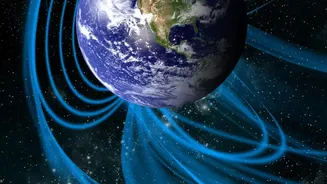
a cosmic breeze; it has massive eruptions. These events, known as solar flares and coronal mass ejections (CMEs), launch vast clouds of energy and plasma hurtling through space. While Earth's magnetic field protects us from most of this onslaught, powerful events can still breach our defences and interact with our atmosphere and technology.
Satellites on the Front Line
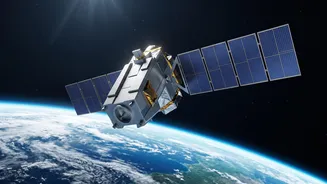
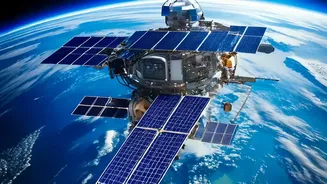
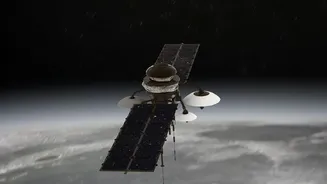
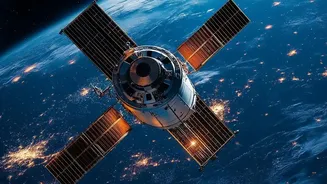
Satellites orbiting outside Earth’s protective atmosphere are highly vulnerable to space weather. Energetic particles from solar storms can damage sensitive electronics, corrupt data, or even cause 'phantom commands' that make a satellite behave erratically. Over time, this radiation degrades solar panels and instruments. Furthermore, intense solar storms can heat and expand Earth's upper atmosphere. This increases atmospheric drag on satellites in low-Earth orbit, slowing them down and potentially causing them to fall out of their designated path, disrupting everything from weather forecasting to television broadcasts.
The GPS and Navigation Problem
Our reliance on the Global Positioning System (GPS) is immense, guiding everything from our cars to commercial shipping and precision agriculture. Space weather poses a significant threat to this accuracy. GPS signals travel from satellites through a layer of the atmosphere called the ionosphere. Solar storms can energise this layer, causing fluctuations that delay or distort the GPS signal. This can result in positioning errors ranging from a few metres to a complete signal loss, a phenomenon known as 'loss of lock'. During severe events, this can disrupt aviation, logistics, and any system that depends on precise timing and location data.
Disrupting Global Communications
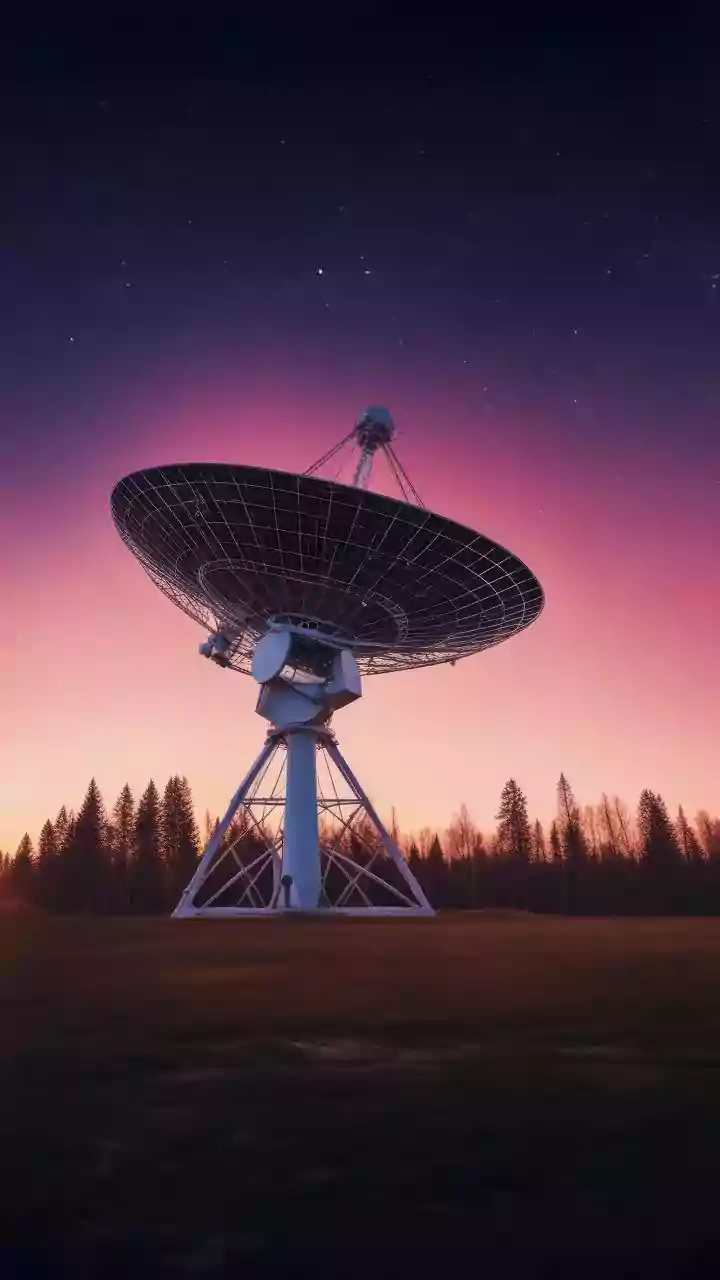
Space weather is a major cause of communication breakdowns. The X-rays from a powerful solar flare can disrupt the ionosphere, leading to high-frequency (HF) radio blackouts on the sunlit side of the Earth. This particularly affects aviation, maritime, and emergency services that depend on long-range radio. The charged particles can also interfere with satellite communication signals, causing scintillation—rapid fluctuations in signal strength and phase—that can lead to dropped connections for satellite phones and data services.
India's Eye on the Sun
Recognising the importance of this phenomenon, India is actively contributing to space weather research. The Indian Space Research Organisation's (ISRO) Aditya-L1 mission is a dedicated observatory studying the Sun. Positioned 1.5 million kilometres from Earth, it has a continuous view of the Sun, allowing it to monitor solar flares and CMEs. By observing the Sun's activity, Aditya-L1 aims to provide crucial data to better understand and forecast space weather events. This advance warning is vital, as it can help satellite operators take protective measures, such as putting spacecraft into a safe mode, and allow grid operators to prepare for potential impacts.