



Makhan Mishri: The Quintessential Offering
No Janmashtami bhog is complete without Makhan Mishri. This simple yet profound offering is believed to be Lord Krishna’s absolute favourite. His childhood tales are filled with playful episodes of him stealing fresh white butter, earning him the affectionate
name 'Makhanchor' or the butter thief. This offering is a direct homage to his innocent and mischievous childhood in Gokul. It is made by simply combining freshly churned, unsalted white butter (makhan) with rock sugar (mishri). The pure, creamy butter represents selfless love and devotion, while the sweet mishri crystals signify the sweetness of that divine connection. It’s more than a sweet; it’s a symbol of pure devotion offered to Krishna in his child form, Laddu Gopal.
Mathura Ke Pede: A Taste of Krishna's Birthplace
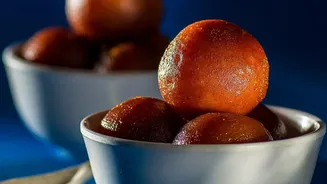
Originating from Mathura, the sacred birthplace of Lord Krishna, the peda is a rich, semi-soft sweet deeply intertwined with the festival. Offering peda during Janmashtami is a cherished tradition, and Mathura Ke Pede, in particular, holds special significance. These are traditionally made by slowly cooking khoya (milk solids) with sugar until it caramelizes, giving them their characteristic brownish colour and granular texture. Flavoured with cardamom, this sweet is believed to be another of Krishna's favourites. Its presence in the bhog is a way to bring the authentic flavour and spiritual essence of Braj Bhoomi into the home celebration, connecting devotees directly to Krishna's roots.
Kheer: The Divine Rice Pudding
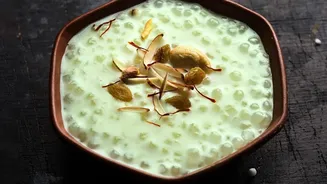
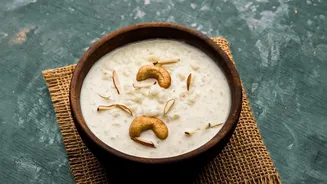
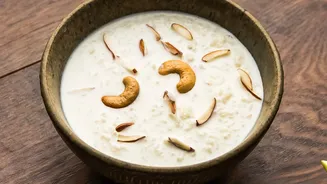
Kheer, a creamy rice pudding, is a staple dessert in almost every Hindu festival, and Janmashtami is no exception. This comforting sweet is made by slow-cooking rice in milk until it thickens into a rich, luscious consistency, then sweetening it with sugar and flavouring it with cardamom, saffron, and nuts. According to legends, Krishna was very fond of kheer, with some tales recounting his mother Yashoda lovingly preparing it for him. Its white colour is seen as a symbol of purity and peace, making it a sattvic food perfect for religious offerings. Preparing kheer for bhog is an expression of love and gratitude, a nourishing offering that signifies prosperity and the sweetness of devotion.
Rabri: A Rich, Layered Delicacy
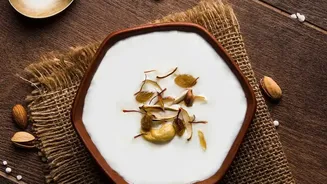
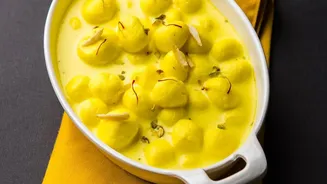
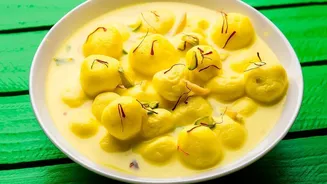
Rabri is a decadent and luxurious sweet made by simmering full-fat milk in a heavy-bottomed pan for a long time, allowing layers of cream (malai) to form on top. These layers are repeatedly collected and pushed to the side of the pan. Once the milk has significantly reduced and thickened, the collected cream layers are mixed back in, along with sugar, nuts, and saffron. The result is a dense, creamy, and textured dessert that is irresistibly delicious. As Lord Krishna is known for his fondness for all milk-based preparations, this rich and creamy dish is a fitting tribute. Offering rabri is a gesture of abundance and deep affection, perfect for the celebratory midnight feast that marks his birth.
Kalakand: The Soft Milk Cake
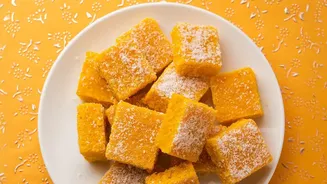
Kalakand, often described as an Indian milk cake, is a delightful sweet with a soft, grainy texture that melts in the mouth. It is made from solidified, sweetened milk (chenna or paneer) and condensed milk, cooked together until the mixture thickens. Flavoured with cardamom and garnished with pistachios and almonds, kalakand is a relatively quick-to-make yet incredibly satisfying sweet. Because milk-based foods are considered sattvic or pure, they are ideal for spiritual offerings. Kalakand, with its pure ingredients and rich flavour, has become a popular choice for the Janmashtami bhog platter, symbolising the purity and richness of a devotee's love for Krishna.