



What Is a Planetary Alignment?
A planetary alignment, sometimes called a conjunction, occurs when two or more planets appear close together in the sky from our perspective on Earth. It's important to remember that they aren't actually close to each other in space; they are millions
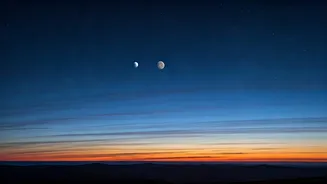
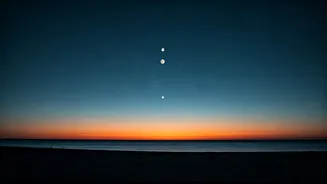
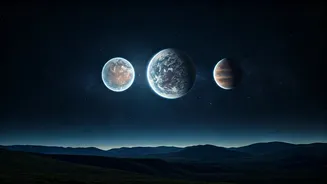
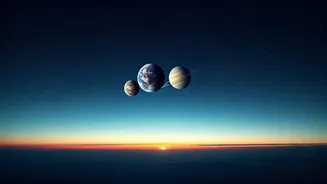
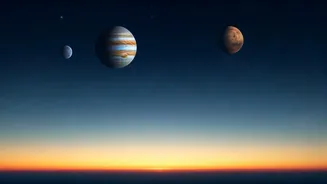
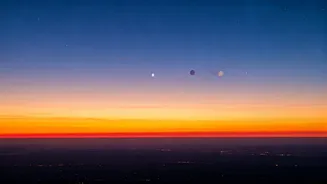
of kilometres apart. This is purely a line-of-sight illusion, but a stunning one nonetheless. Tonight's event brings three familiar planets into a small patch of the western sky, making them easy to spot at the same time. These events are not astronomically rare, but they are always a wonderful excuse to step outside and appreciate the grand scale of our solar system.
Meet the Three Celestial Players
The trio you'll be looking for consists of three distinct worlds. The brightest of the group will be Jupiter, the king of planets. It will appear as a brilliant, steady star-like point of light. You won't be able to miss it. Nearby, you'll spot Mars, identifiable by its distinct reddish-orange tint. While not as bright as Jupiter, its colour gives it away. The real challenge, and the prize of the evening, is spotting Mercury. As the closest planet to the Sun, it never strays far from its glare, making it visible only for a short window during twilight. Spotting all three together is a true stargazing achievement.
The Best Time and Direction to Watch
Timing and location are everything for this event. The best window for viewing will be roughly 30 to 60 minutes after sunset. This is the magic hour when the sky is dark enough for the planets to pop, but before they dip below the horizon. As the headline suggests, you need to be looking towards the west, in the same direction the sun just set. The planets will be gathered relatively low, so a clear, unobstructed view of the western horizon is crucial. If you have tall buildings or trees blocking your view, try to find a more open space, like a park, a terrace, or an open field.
Are Binoculars Really Necessary?
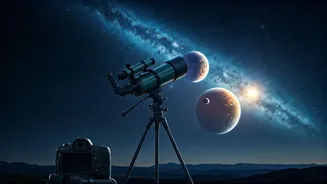
While you can certainly spot Jupiter and Mars with the naked eye, a pair of binoculars will significantly enhance your experience. For one, they will make it much easier to pick out the faint light of Mercury from the twilight glow. With binoculars, you'll resolve the planets from mere points of light into tiny, distinct discs. If you have a steady hand or can rest your elbows on a stable surface, you might even be able to glimpse Jupiter's four largest moons—Io, Europa, Ganymede, and Callisto—appearing as tiny pinpricks of light flanking the giant planet. So, while not essential, binoculars are highly recommended to get the most out of the alignment.
Tips for an Unforgettable Viewing
To maximise your chances of a great view, get away from the glare of city lights if possible. Even moving to a local park can make a difference. Give your eyes at least 10-15 minutes to adapt to the darkness; this will make fainter objects much easier to see. Patience is key, especially when trying to spot Mercury. Scan the area just above the horizon where the sun went down. Once you find bright Jupiter, use it as a reference point to locate the other two planets nearby. You can also use a stargazing app on your phone (like Stellarium or SkyView) to help you pinpoint their exact location in real-time. Just be sure to switch the app to its red-light 'night mode' to preserve your night vision.