





The Vertical Advantage for Urban Cats
Cats are natural climbers. In the wild, their ancestors sought high vantage points to survey their territory, spot prey, and stay safe from predators. This instinct is hardwired into your fluffy companion, even if the only predator they face is the vacuum
cleaner. Providing vertical space isn't just a luxury; it's a biological necessity. For cats in multi-pet households, it offers a crucial escape route to de-escalate conflicts. For a single cat, it provides security, enrichment, and a much-needed outlet for exercise. By going vertical, you effectively multiply your home's usable square footage from your cat’s perspective, reducing stress and boredom-related behaviours.
What Exactly is a Cat Wall Bridge?
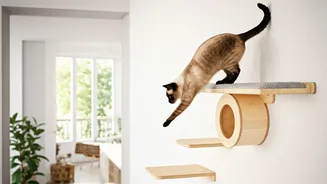
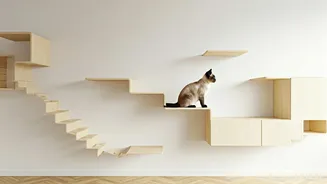
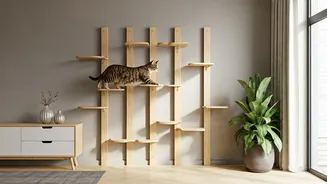
Think of it as a highway system for your cat, built on your walls. A cat wall bridge is a piece of feline-friendly furniture designed to connect various perches, shelves, or cat condos. It allows your pet to travel from one point to another without ever touching the floor. These bridges come in various styles. The most common is the rope bridge, featuring wooden slats connected by sturdy ropes, giving it a charming, adventurous look. Others might be solid wooden or carpeted planks that offer a more stable path. Multi-tier systems combine these elements with steps, hammocks, and scratching surfaces, creating a complete vertical playground. They transform unused wall space into an engaging and functional environment for your pet.
Designing Your Cat's Superhighway
Before you start drilling, take a moment to think like a cat. The most successful cat walls are designed with purpose. The goal is to create pathways that connect high-value locations. Does your cat love gazing out the window? Start a shelf there. Do they like to nap near where you work or watch TV? Make that a destination. A good layout has flow. It should allow your cat to get up and down easily from multiple points. Create a loop or a complex path rather than a simple dead-end shelf. This encourages movement and exploration. Sketch out your ideas on paper first. Consider the 'traffic flow' of your own home to ensure the cat superhighway doesn't interfere with opening doors or walking paths.
Choosing the Right System and Materials
When shopping for a cat wall bridge, your primary concerns should be safety and durability. Look for systems made from solid wood (like pine or birch) rather than particleboard, which can sag over time and may not hold up well in India’s humid climates. The rope used should be thick and natural, like sisal or jute, which doubles as a scratching surface. Check the weight limit of any shelf or bridge and ensure it can comfortably support your cat—or multiple cats, if they are likely to share. Aesthetically, many modern systems are beautifully designed and can act as a unique piece of decor. You can find minimalist wooden designs that blend seamlessly into a modern home or more rustic rope bridges that add a playful touch.
Safe and Secure Installation
This is the most critical step. A poorly installed cat shelf is a danger to both your pet and your family. The type of wall you have in your home will dictate the hardware you need. Most urban Indian apartments have solid brick or concrete walls, which are ideal for a secure mount. You will need a good drill and the correct wall plugs (anchors) and screws to ensure a solid fix. If you have plasterboard or drywall, you must locate the wooden or metal studs behind the wall and drill directly into them. Never mount heavy cat furniture only to the plasterboard itself. Always test each component for stability by applying significant weight and pressure before allowing your cat to explore.
Encouraging Your Cat to Explore
Don't be discouraged if your cat doesn't immediately take to their new aerial playground. Cats can be wary of new things in their territory. Introduce them to the new space gradually and with positive reinforcement. Place their favourite treats or a sprinkle of catnip on the shelves to entice them up. Use a feather wand or laser pointer to guide them along the bridges and perches, turning exploration into a game. Make the new space inviting by placing a soft blanket or a familiar-smelling t-shirt on a shelf. Patience is key. Once they realize it's a safe, high-up space of their own, they'll claim it as part of their kingdom.