



The Real Story on Air Purification
The idea that houseplants can clean indoor air gained widespread attention after a 1989 NASA study. This research found that certain plants could absorb volatile organic compounds (VOCs) like formaldehyde and benzene from sealed environments. Both Pothos
and Snake Plants were included in these initial findings. However, it's important to have realistic expectations. Subsequent reviews of the research have noted that you would need a very large number of plants—potentially hundreds—to significantly purify the air in a typical home or office, as natural ventilation already plays a huge role. While a few plants on your desk won't replace a proper air filter, they do contribute modestly to a healthier indoor ecosystem, all while boosting your mood and beautifying your space.
Pothos: The Forgiving Vine
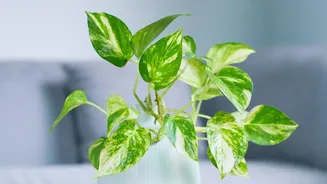
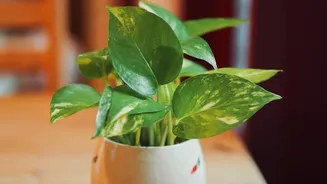
Often called Devil's Ivy, Pothos (Epipremnum aureum) is a vining plant with heart-shaped leaves that come in a variety of colours, from deep green to variegated white and gold. It's famously easy to grow, making it a perfect starting point for new plant owners. Pothos is known for its ability to filter airborne toxins like formaldehyde. Its trailing vines look stunning cascading from a hanging basket or down the side of a bookshelf. This versatility allows it to be used as a 'spiller' in container arrangements or kept bushy with regular trimming. It’s an incredibly adaptable plant that signals its needs clearly; drooping leaves mean it's thirsty, while yellowing leaves might indicate too much direct sun.
Caring for Your Pothos
Pothos is the definition of low-maintenance. It thrives in a wide range of lighting conditions, from bright, indirect light to low-light corners found in many offices and dorm rooms. However, it should be kept out of direct, intense sunlight, which can scorch its leaves. When it comes to watering, the best approach is to let the soil dry out completely between waterings. Overwatering is a common mistake and can lead to root rot. Generally, watering every one to two weeks is sufficient for an indoor Pothos. They aren't heavy feeders, so a balanced indoor plant fertiliser a few times a year during the growing season is plenty to keep them happy.
Snake Plant: The Sculptural Survivor
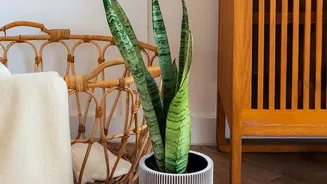
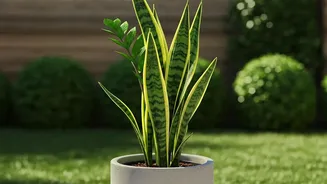
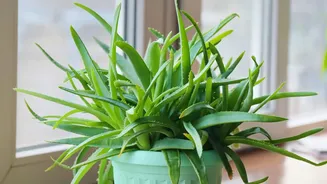
The Snake Plant (Dracaena trifasciata), also known as Mother-in-Law's Tongue, is a succulent with stiff, upright leaves that lend a modern, architectural feel to any room. It’s renowned for being nearly indestructible. A key benefit, especially for bedrooms, is its ability to convert carbon dioxide into oxygen at night. While most plants do this during the day, the Snake Plant's unique process helps improve air quality while you sleep. It's also effective at filtering common household toxins, including formaldehyde, xylene, and toluene. Its resilience makes it a popular choice for beginners and those who travel often.
Caring for Your Snake Plant
The golden rule of Snake Plant care is to avoid overwatering. Because its thick leaves store water efficiently, it's highly drought-tolerant and prefers its soil to dry out completely. Watering sparingly, especially in winter, is key to preventing root rot. Snake Plants are highly adaptable to different light levels. While they grow best with several hours of bright, indirect sunlight daily, they will readily tolerate low-light conditions, making them perfect for dim corners or offices with fluorescent lighting. They are truly one of the most forgiving houseplants you can own, asking for very little in return for their striking appearance and air-purifying efforts.
A Note on Safety for Pets and Children
The word 'safely' in the headline deserves a closer look. While these plants are fantastic for your home's air, both Pothos and Snake Plants are considered mildly toxic to cats, dogs, and children if ingested. They contain calcium oxalate crystals, which can cause irritation, swelling, and digestive upset if chewed or swallowed. Fortunately, the irritation is usually immediate, which discourages pets from consuming large amounts. The risk is generally low and not considered fatal, but it is important to be aware. To enjoy these plants safely, simply place them on high shelves, in hanging baskets, or in rooms where curious pets and small children don't have unsupervised access.