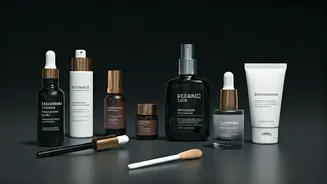









A Quick Refresher: The Classic Cycle
Born from a need to prevent irritation from overusing potent skincare, skin cycling became a viral sensation. Popularised by dermatologist Dr. Whitney Bowe, the classic routine is a simple four-night schedule designed to give skin the benefits of active
ingredients while building in crucial recovery time. It typically looks like this: Night 1 is for exfoliation, using a chemical exfoliant like an AHA or BHA to slough off dead skin cells. Night 2 is for a retinoid, a powerhouse ingredient known for boosting cell turnover and collagen. Nights 3 and 4 are recovery nights, where you skip the actives and focus solely on hydrating and repairing the skin barrier with gentle moisturisers. This structure helps reduce irritation and improve the effectiveness of your products.
Why 'One-size-fits-all' Is Over
The original four-night cycle is a fantastic starting point, especially for beginners or those with sensitive skin. However, skincare is never a one-size-fits-all solution. Dermatologists have long recommended alternating actives with rest days, and the 'skin cycling' trend simply gave this advice a catchy name and a memorable structure. The issue arises when people treat the four-day cycle as a rigid rule rather than a flexible framework. Your skin's needs can change based on your skin type, age, climate, and specific concerns like acne or hyperpigmentation. For some, two recovery nights might be too many, slowing results, while for others, it might not be enough to prevent irritation. This is where personalisation becomes key.
Customising For Dry or Sensitive Skin
If your skin is prone to dryness, redness, or sensitivity, the goal is to maximise recovery. You can extend the cycle to five or even six nights, adding extra rest days. On your exfoliation night, opt for a gentler acid. Polyhydroxy acids (PHAs) or lactic acid are great choices as they are less likely to cause irritation than stronger acids like glycolic acid. For your retinoid night, start with a low concentration and consider the 'sandwich method': apply a layer of moisturiser, then the retinoid, and then another layer of moisturiser to buffer the ingredient and reduce potential irritation. On recovery nights, use rich, barrier-supporting creams with ingredients like ceramides, hyaluronic acid, and peptides.
Adapting For Oily or Acne-Prone Skin
For those with oily or acne-prone skin, the standard four-night cycle is often a good fit, but it can be adjusted for better results. You may be able to shorten the cycle to three nights (exfoliate, retinoid, recover) once your skin has adapted. On exfoliation night, a beta-hydroxy acid (BHA) like salicylic acid is particularly effective, as it's oil-soluble and can penetrate into pores to clear out congestion. Consistent use of retinoids on a structured cycle can be a game-changer for managing acne by increasing cell turnover and keeping pores clear. During recovery, choose oil-free or lightweight moisturisers to provide hydration without clogging pores.
Targeting Aging and Hyperpigmentation
When addressing signs of aging or uneven skin tone, consistency with powerful ingredients is crucial. Once your skin has built tolerance to the classic four-night cycle, you might consider advancing your routine. This could mean reducing to just one recovery night, creating a three-night cycle: exfoliate, retinoid, recover. This increases the frequency of your active ingredients for more significant results over time. You can also incorporate targeted serums on recovery nights to address specific concerns. For instance, a serum with alpha arbutin can help with dark spots, or a multi-peptide serum can enhance skin firmness. The key is to listen to your skin; if any irritation occurs, add back a recovery night.