

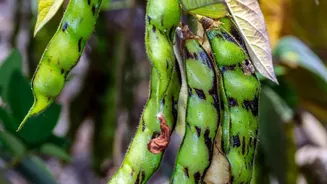
An Old Enemy in the Cotton Fields
Cotton is more than just a crop in India; it's the foundation of livelihoods for millions. Yet, this vital resource is under constant attack. Pests like the pink bollworm can be responsible for up to 70% of crop damage, silently eating away at a farmer's
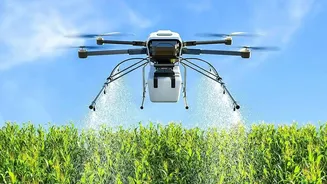
profits before they are even noticed. For years, the primary defence was broad, preventative spraying of pesticides, an expensive and often inefficient approach that harmed the environment and ate into meagre incomes. Farmers faced a difficult choice: spray blindly and incur high costs, or risk losing a significant portion of their harvest. This annual battle against invisible invaders has left many smallholder farmers trapped in cycles of debt and uncertainty. The need for a smarter, more precise solution was not just an agricultural challenge, but an economic necessity.
A Digital Agronomist in Every Pocket
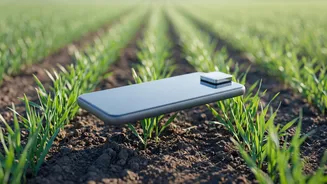
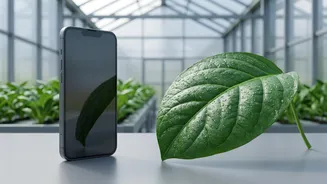
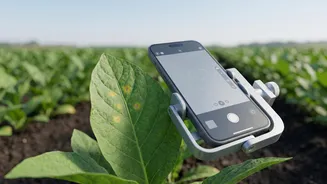
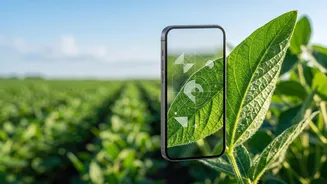
The solution arrived not in the form of a new chemical, but through the device already in millions of farmers' pockets: the smartphone. Non-profit organisations like the Wadhwani Institute for Artificial Intelligence (Wadhwani AI), with support from partners like Google.org, have developed powerful AI-driven applications designed specifically for farmers. One of the most impactful is CottonAce, an app that acts as a digital pest management expert. This technology leverages the smartphone's camera—the 'sensor' in this system—to give farmers a crucial advantage. Instead of guessing, they can now get real-time, data-driven advice. The app is designed to be accessible, available in nine languages and capable of working even in areas with poor internet connectivity, ensuring technology is not a barrier but an enabler.
How AI Sees What the Eye Cannot
The process is remarkably simple yet technologically sophisticated. Farmers install inexpensive pheromone traps in their fields to attract specific pests. Periodically, they take a photo of the trapped insects using the app. This is where the AI works its magic. The application’s computer vision model, trained on thousands of images, instantly identifies and counts the number of target pests in the photo. The AI then compares this count against the 'Economic Threshold Limit' (ETL)—the scientifically determined point at which the pest population is large enough to cause significant financial damage. Based on this analysis, the app provides a clear recommendation: whether to spray pesticides, when to do it, and which specific chemicals will be most effective. This turns pest control from a guessing game into a precise, targeted operation.
The 'Low-Cost' Revolution is About Savings
The term 'low-cost' isn't just about the app itself, which is often free. The real economic benefit comes from a dramatic reduction in input costs. By advising farmers to spray only when necessary, the AI helps eliminate wasteful pesticide use. Farmers using these tools have reported a reduction in pesticide costs by up to 25% and an increase in overall profits by around 20%. This is a monumental shift. It means less money spent on chemicals, which in turn reduces the farmer's debt burden. Furthermore, the data collected from one farmer's phone can be used to create a localised early warning system, alerting nearby farmers to potential infestations, creating a community-wide shield against pests. This smarter approach also has significant environmental and health benefits, reducing the amount of chemical runoff into soil and water sources.
From Pilot Project to National Policy
This innovative approach is no longer just a small-scale experiment. The success of apps like CottonAce has paved the way for broader government adoption. The Maharashtra government has been actively integrating this technology into its digital agriculture initiatives, such as the MahaVISTAAR-AI app, developed in collaboration with institutions like IIT Bombay. These tools are expanding beyond cotton to cover a wide range of crops including soybean, turmeric, and onion. This is part of a national push, with platforms like the National Pest Surveillance System (NPSS) being deployed across dozens of states to create a real-time map of pest and disease outbreaks. By turning millions of smartphones into a network of crop monitors, India is building one of the world's most advanced digital defences for its agricultural sector.