





What Is Sound, Really?
Before we can understand why space is silent, we need to understand what sound actually is. Sound is a mechanical wave, which means it's a type of energy that needs to travel through a substance, or 'medium'. [1, 12] Think of it like ripples in a pond.
When you toss a stone in, it creates a disturbance that travels outwards through the water. Sound works similarly. When an object vibrates—whether it's a guitar string, your vocal cords, or a clapping hand—it pushes and pulls on the molecules of the medium around it (like air). [7, 8] These molecules then bump into their neighbours, passing the vibration along in a chain reaction of compressions and rarefactions. [7, 13] This chain of vibrating particles is what our ears detect and our brains interpret as sound. [9] Without a medium, there's nothing for the initial vibration to pass through. [11]
The Emptiness of Space
The next piece of the puzzle is the nature of space itself. We often describe space as a vacuum, which simply means a space that is empty of matter. [12, 14] Now, it's not a *perfect* vacuum. [3] Even in the vastness between galaxies, you'll find stray particles, mostly hydrogen atoms. [5] But the key difference is density. On Earth, the air we breathe contains about 10^25 molecules per cubic meter. [5] In interstellar space, the particle density can drop to as low as one atom per cubic centimetre. [2] This means the particles are incredibly far apart from one another. Gravity has pulled most of the universe's matter together over billions of years to form planets, stars, and galaxies, leaving the space between them nearly empty. [14]
No Medium, No Message
When you combine these two facts, the reason for space's silence becomes clear. Sound is a vibration that needs to be passed from particle to particle. [11, 18] In the near-vacuum of space, the particles are so spread out that they rarely, if ever, collide. [17] A vibrating object, like an exploding star, would move back and forth, but there would be no medium to carry those vibrations to an observer. [15, 16] The chain reaction is broken before it can even start. It's like trying to create a domino rally where the dominoes are placed kilometres apart—the first one can fall, but the energy has nowhere to go. This is why, despite the dramatic, fiery explosions we see in science fiction films, they would occur in total silence. [17]
So How Do Astronauts Talk?
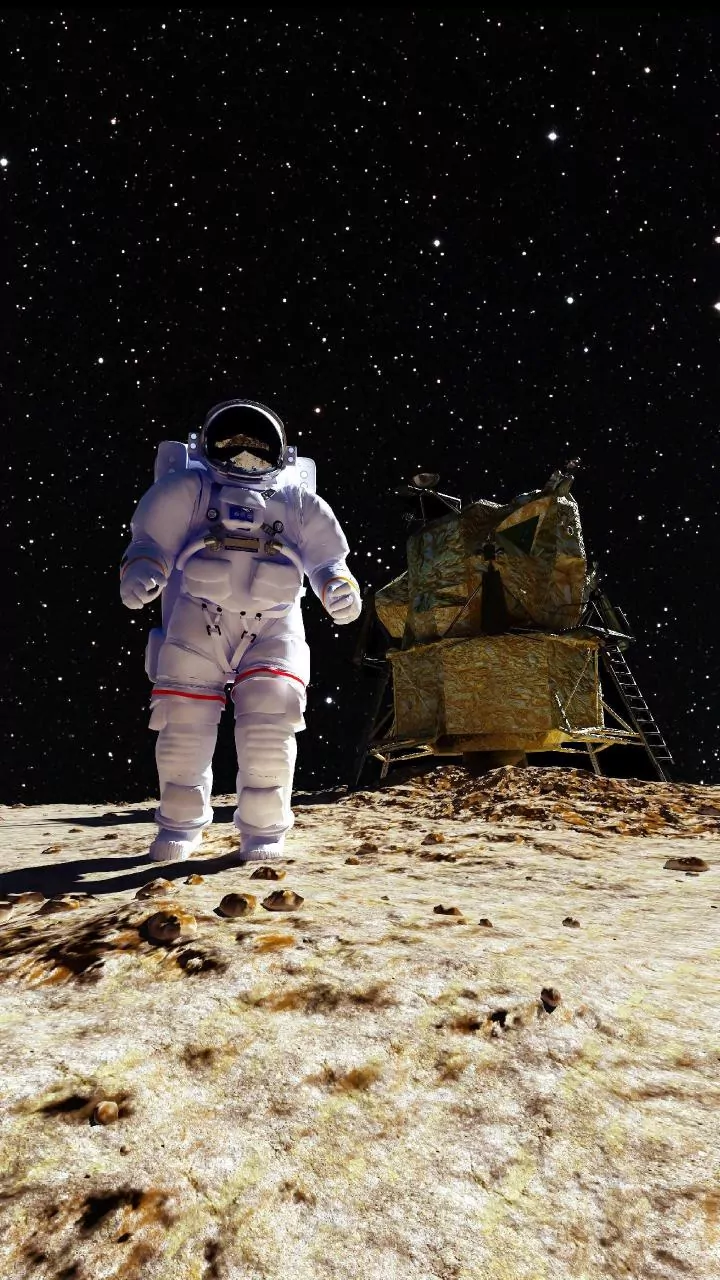
This raises a logical question: if space is silent, how do astronauts communicate during a spacewalk? The answer is that they cheat. They create their own tiny, artificial atmospheres. Inside an astronaut's helmet, there is breathable air. [21] When an astronaut speaks, their vocal cords vibrate that air, creating sound waves just like on Earth. [21] A microphone in their helmet picks up this sound, converts it into electromagnetic radio waves, and transmits it. [17, 22] Radio waves, unlike sound waves, are a form of light and do not need a medium to travel, so they can cross the vacuum of space effortlessly. [6] A receiver in another astronaut's helmet converts the radio signal back into sound waves inside their own personal bubble of air, allowing them to hear the message. [17] They can also hear sounds if their helmet physically bumps into an object, as the vibrations can travel through the solid material of the suit—a process called bone conduction. [17, 23]
Hearing the 'Unhearable' Sounds of Space
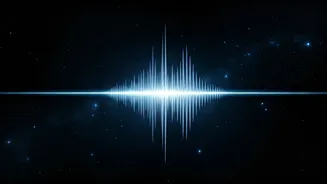
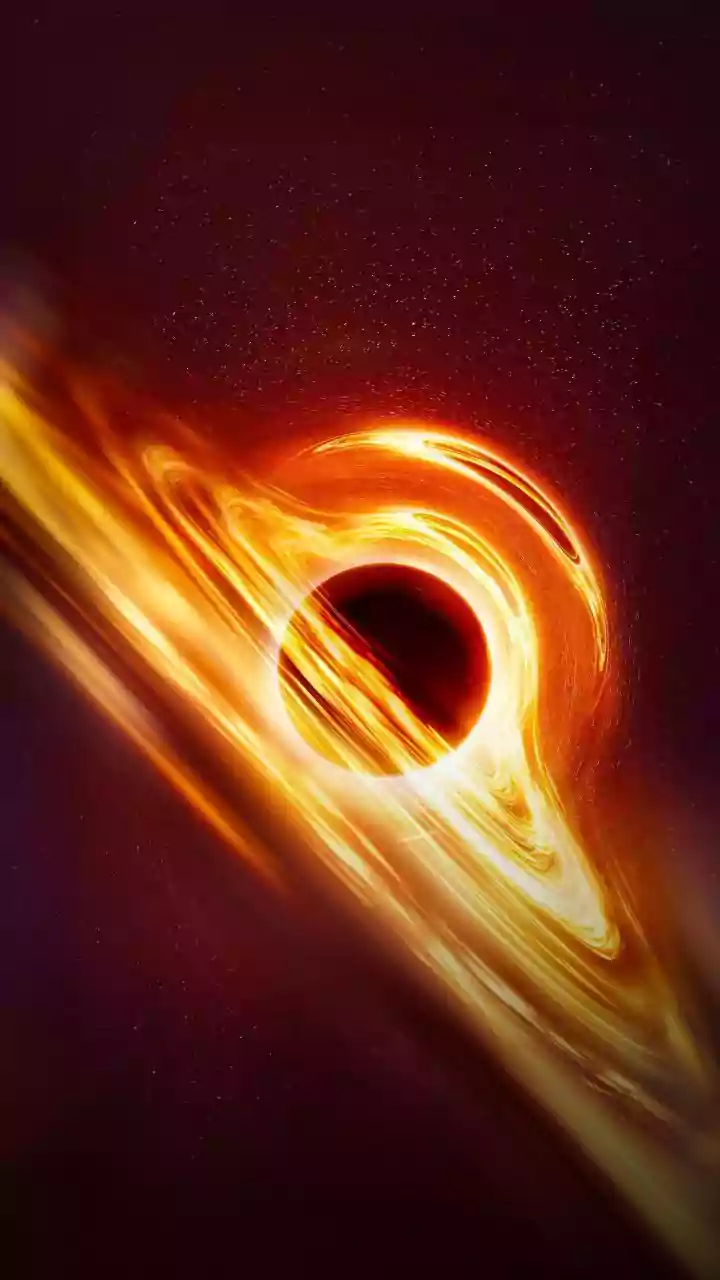
While our ears can't hear in space, that doesn't mean the cosmos is devoid of information we can interpret as sound. Scientists use a technique called 'data sonification' to convert other types of waves, which can travel through a vacuum, into audible sound. [25, 28] For example, telescopes can detect electromagnetic radiation (like radio waves or X-rays) or even pressure waves moving through the thin plasma in galaxy clusters. [20, 26] Scientists then map properties of this data—like brightness, frequency, or intensity—to characteristics of sound, like pitch and volume. [20] This allows us to 'listen' to everything from colliding black holes to the pulsing of distant stars, turning invisible cosmic phenomena into hauntingly beautiful audio experiences and providing a new way to analyse scientific data. [28, 29]