
The Red Planet's Hidden Hazard
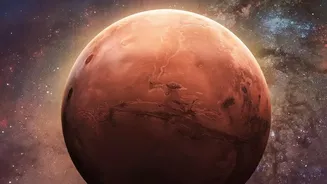
To the naked eye, Martian dust gives the planet its iconic reddish hue. Up close, however, it’s a complex and dangerous substance. Unlike the relatively benign dust on Earth, which is weathered by water and organic processes, Martian dust is a finely
ground rock that poses significant health risks. It’s incredibly fine, with an average grain size as small as 3 micrometers—tiny enough to bypass the natural filters in human lungs and enter the bloodstream. This isn't just a hypothetical problem; Apollo astronauts who came into contact with lunar dust reported symptoms like runny eyes and irritated throats, which some likened to hay fever. With Martian missions expected to last for a year and a half or more, long-term exposure becomes a major concern.
More Than Just a Nuisance
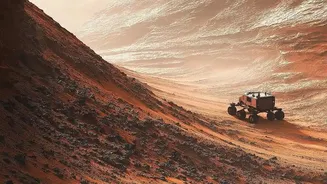
The dangers of Martian dust are twofold: mechanical and chemical. Mechanically, the fine particles can infiltrate equipment, jam seals, and cover solar panels, as seen with the Opportunity rover. For humans, the primary concern is inhalation. The dust contains high amounts of silica, which on Earth is known to cause silicosis, an incurable lung disease characterized by scarred tissue that makes breathing difficult. Chemically, the dust is even more problematic. It’s loaded with toxic compounds, including gypsum, iron oxides, and trace metals like arsenic and beryllium. Perhaps the most significant chemical threat comes from perchlorates, a class of salt that is widespread across the Martian surface. These compounds can interfere with the thyroid gland's ability to absorb iodine, potentially leading to hormonal issues and even aplastic anemia. Even inhaling a few milligrams of this dust could be hazardous to astronauts.
An Atmosphere of Prevention
Given that a trip back to Earth for medical treatment won't be an option, prevention is the only viable strategy. Future Mars habitats will need to be designed as fortresses against this pervasive contaminant. This starts with advanced air filtration systems. Multi-stage HEPA filters, possibly combined with magnetic filters to attract the iron-rich particles, will be essential for keeping the breathable air inside a habitat clean. Beyond filtration, engineers are developing active dust mitigation technologies. One promising concept is the Electrodynamic Dust Shield (EDS), which uses an electric field to repel dust particles from surfaces. This technology could be applied to everything from solar panels and camera lenses to the windows of the habitat itself, actively keeping them clean. Spacesuits will also require new designs, such as dust-resistant fabrics and self-cleaning functions, to prevent astronauts from tracking the toxic material inside after an extravehicular activity (EVA).
The Future Martian Dust Report
Simply having the technology isn't enough; future Martian colonists will need to know when and where the threat is highest. This is where routine dust monitoring comes in. Just as we check the daily weather and air quality on Earth, settlers on Mars will likely rely on a network of sensors both inside and outside the habitat. These systems would provide real-time data on the concentration, particle size, and chemical composition of airborne dust. Inside the habitat, constant monitoring would act as an early warning system, indicating if filtration systems are failing or if a significant breach has occurred. A recent NASA working group in 2026 recommended a specific exposure limit for Martian dust inside habitats—a time-weighted average of 0.1 mg/m³ over 24 hours for missions up to 30 days. Adhering to such standards will be a non-negotiable part of daily life, making the dust monitor as common a household fixture as a smoke detector is on Earth.