





The Science of Sweetness
At a chemical level, both honey and table sugar are composed of two simple sugars: glucose and fructose. In table sugar, also known as sucrose, these two are bonded together in a neat 50/50 split. In honey, glucose and fructose float around separately,
with fructose typically being more abundant (around 40% fructose to 30% glucose). This difference is key to why we perceive them differently. Fructose is known to be sweeter than both glucose and sucrose. As a result, honey often tastes sweeter than an equivalent amount of sugar, meaning you might be able to use less of it to achieve the same level of sweetness in your tea or on your porridge.
A World of Flavour vs. Neutrality
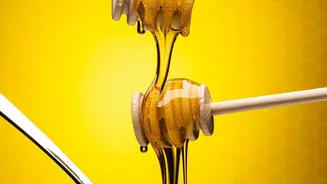
This is where the two sweeteners diverge most dramatically. Refined white sugar offers a singular, neutral sweetness. Its purpose is to sweeten without adding any other flavour notes, making it a predictable and consistent ingredient in baking. Honey, on the other hand, is a world of complexity. Its flavour profile is entirely dependent on the source of the nectar collected by the bees. Clover honey might be mild and floral, while buckwheat honey is dark, robust, and malty. Orange blossom honey can have citrus notes, and Jarrah honey might have a caramel-like depth. This makes honey not just a sweetener, but a flavouring agent that can add a unique character to dishes, dressings, and drinks.
The Nutritional Divide
While table sugar is often referred to as 'empty calories' because it contains no other nutrients, raw honey tells a different story. Honey contains trace amounts of vitamins, minerals like potassium and zinc, and amino acids. It is also prized for its antioxidants, particularly flavonoids and phenolic acids, which are completely absent in refined sugar. Darker honeys generally contain a higher concentration of these minerals and antioxidants. However, it's important to keep this in perspective; the amounts of these nutrients in a typical serving of honey are very small and unlikely to make a significant impact on your daily needs. Calorie-wise, a tablespoon of honey actually contains more calories than a tablespoon of sugar (around 64 vs. 49 calories), mainly because it's denser.
Impact on Blood Sugar
The glycemic index (GI) measures how quickly a food raises blood sugar levels. Table sugar has a GI of around 65. Honey's GI is typically lower, averaging around 58, though this can vary widely depending on the type. The lower GI means honey raises blood sugar a bit more slowly than sugar does. This is due to its higher fructose content, which is primarily processed by the liver instead of entering the bloodstream directly. Despite this modest advantage, honey is still a sugar and will cause blood sugar to rise, so it should be consumed in moderation, especially by individuals with diabetes.
Best Uses in the Kitchen
Choosing between honey and sugar in the kitchen often comes down to the desired outcome. For baking, sugar's crystalline structure provides crucial texture and aeration in things like cookies and cakes. Honey, being a liquid, adds moisture and can create a denser, softer texture. If you do substitute honey for sugar in a baking recipe, you generally need to use less of it, reduce the other liquids in the recipe, and lower the oven temperature by about 25°F, as honey browns faster. Honey's unique flavours make it a star in marinades, glazes, and dressings, or as a finishing drizzle over yogurt or cheese, where its taste can shine.